ENGINE SPHERE
PeopleBruce McLaren
Bruce McLaren
Engine Sphere · Person
Catalogued Entry No. 026

Bruce McLaren

1937–1970New ZealanderFOUNDER

New Zealand racing driver and engineer who founded the McLaren racing team in 1963.

The House They Shaped
Founder
McLaren Racing
FOUNDER_OF
The Record

Who are they?

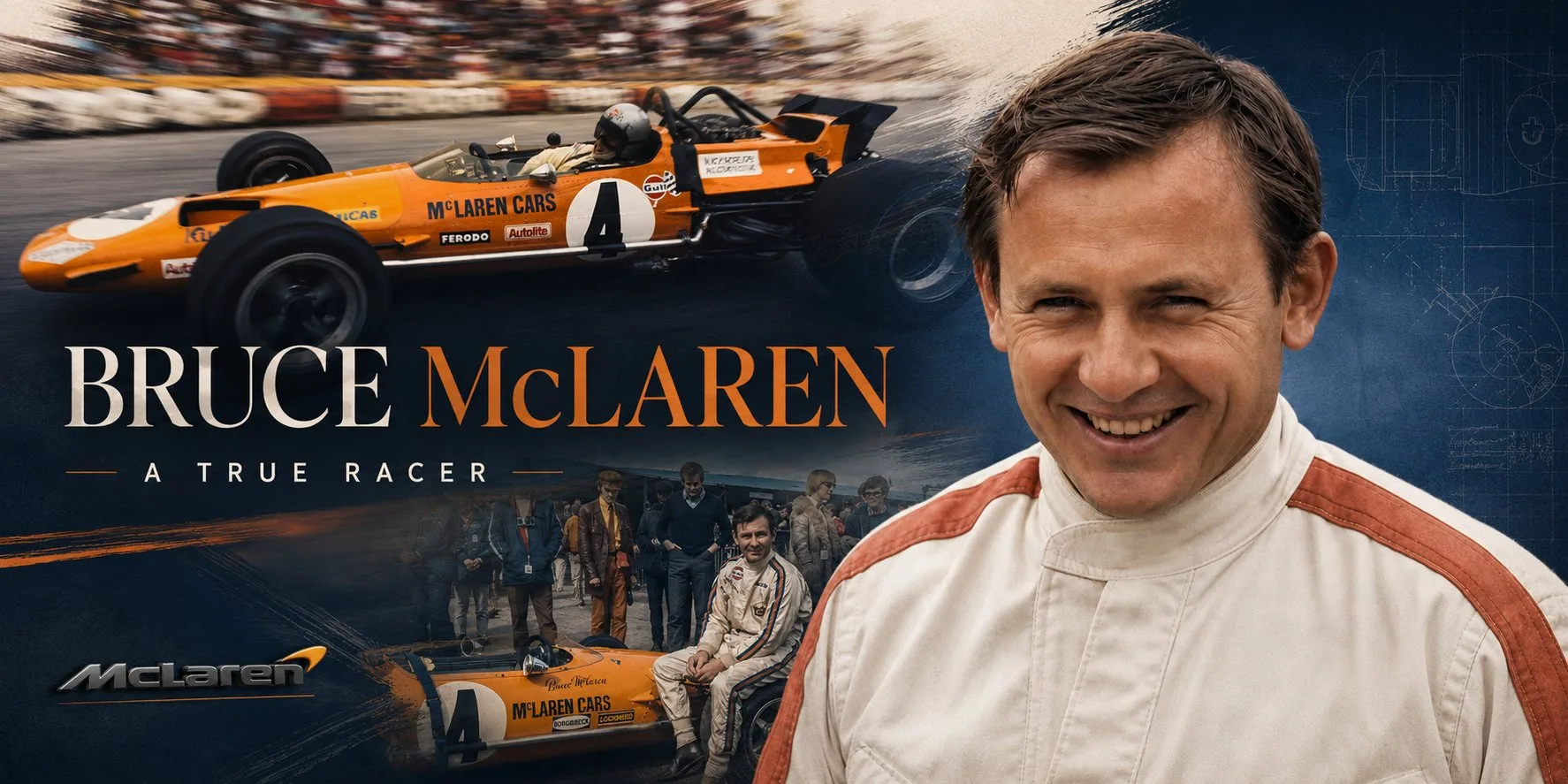
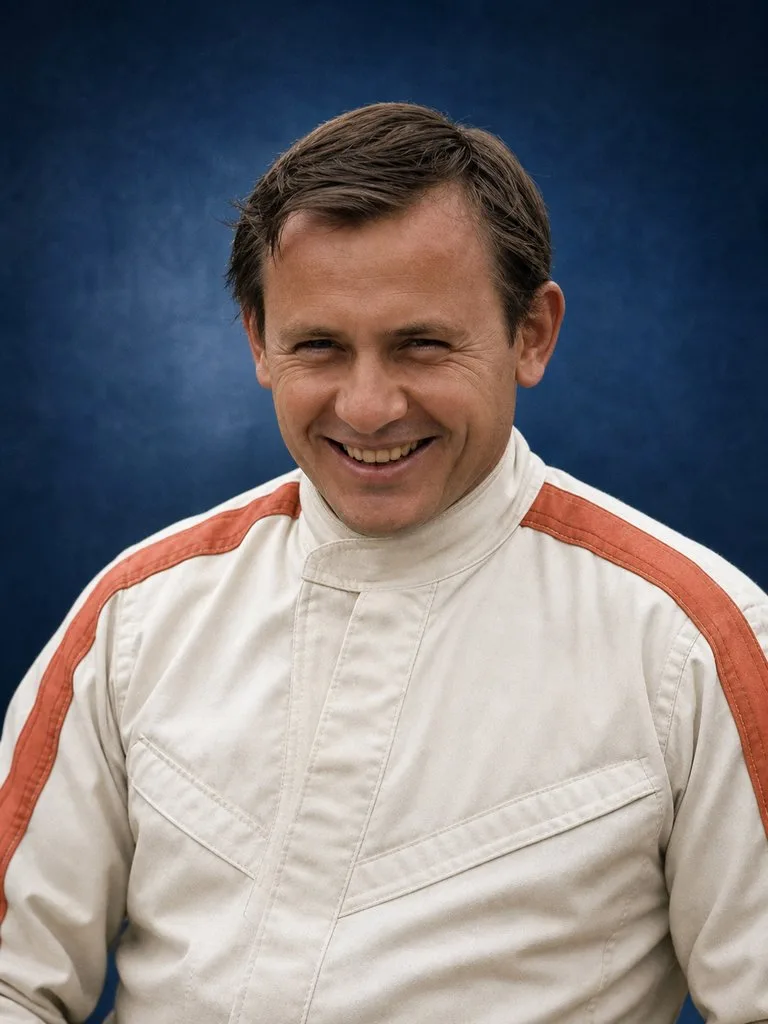
Bruce McLaren belongs to the rare company of people who were genuinely excellent at both driving and building the machines they drove. Born in Auckland in 1937, he was racing competitively in New Zealand and Australia by his mid-teens, arrived in Formula One with the Cooper works team in 1959, and became - at 22 - the youngest Grand Prix winner in history up to that point, a record that stood for decades. By 1963 he had founded his own team, Bruce McLaren Motor Racing, initially to compete in the Tasman Series and sports car racing before its Formula One entry in 1966. He died in June 1970, aged 32, testing one of his own team's Can-Am cars at Goodwood - a loss that cut short a career still visibly ascending, both as a driver and as the head of a team whose orange cars were already winning. That the team not only survived his death but grew into one of Formula One's most successful and enduring constructors is itself part of what makes his legacy distinctive: McLaren Racing, and later McLaren Automotive, carried his name and his engineering instincts forward for more than half a century after his death.
↓ Read deeper
McLaren's early career in New Zealand was shaped by a serious childhood illness - Perthes disease, a hip condition that left him with a limp and periods of immobility as a boy - which, by his own and others' accounts, sharpened rather than dulled his determination to compete. He won a 'Driver to Europe' scholarship from the New Zealand International Grand Prix Association in 1958, which funded his move to race in Europe and led directly to his Cooper works drive. At Cooper, McLaren proved himself not just a capable driver but an engineer with genuine technical insight, contributing to car development alongside Cooper's own designers - a habit of dual driver-engineer involvement he carried into his own team. His 1959 United States Grand Prix win, at 22 years and 104 days, made him the youngest Grand Prix winner in Formula One history at the time, a record that stood until Fernando Alonso broke it more than four decades later. Founding Bruce McLaren Motor Racing in 1963 while still an active Cooper driver was itself a statement of ambition; the team's early years combined sports car and Tasman Series racing with a gradual build toward full Formula One constructor status, achieved in 1966. McLaren's own driving continued alongside running the team - a dual role that ended abruptly on 2 June 1970, when the rear bodywork of the McLaren M8D Can-Am car he was testing detached at speed at Goodwood, causing a fatal crash.
Formation

Where did it come from?

McLaren grew up in Auckland, the son of a garage owner, which put him around cars and mechanical work from an early age even before his own competitive career began. A bout of Perthes disease as a child left him with a lasting limp and periods of restricted mobility, but rather than sideline him from motorsport it appears, by most contemporary accounts, to have deepened his focus once he was able to compete. His breakthrough came through New Zealand's own competitive scene and, decisively, through winning the 'Driver to Europe' scholarship in 1958 - a program specifically designed to give promising Australasian drivers a funded route into European motorsport, which for McLaren meant a direct path to the Cooper Car Company.
↓ Read deeper
New Zealand and Australia's Tasman-region racing scene in the 1950s was a genuine proving ground rather than a backwater, and McLaren's rapid rise through it - racing an Austin 7 Ulster his father had built, then more competitive machinery - demonstrated the technical instincts that would define his later engineering career as much as his driving ability. The 'Driver to Europe' scholarship he won in 1958 was administered by the New Zealand International Grand Prix Association specifically to fund a promising local driver's move into top-level European competition, and McLaren's selection reflected results that were already turning heads internationally.
Career

What did they do?

McLaren's professional career split cleanly into two overlapping phases: works driver for Cooper (1959-1965), where he won multiple Grands Prix and helped develop the cars alongside driving them, and team founder-owner-driver for his own operation, which he began in 1963 while still under contract to Cooper and grew steadily from sports car and Tasman racing into a full Formula One constructor by 1966. As both driver and de facto technical lead of his own team, McLaren oversaw a rapid diversification into Can-Am sports car racing in North America, where McLaren cars became dominant through the late 1960s, alongside the Formula One program - an unusually broad competition portfolio for a team still in its first decade.
↓ Read deeper
The Cooper years gave McLaren both his racing credentials and a genuine engineering education, since Cooper's works drivers of that era were expected to contribute meaningfully to car development, not simply drive what they were given. That hands-on technical involvement carried directly into his own team's culture once he founded it, where McLaren himself remained closely involved in car development even as the operation scaled from a small independent outfit into a full Grand Prix constructor. The Can-Am program in particular became a commercial and competitive cornerstone for the young team, with McLaren cars winning the championship in consecutive seasons through the late 1960s - success that provided both revenue and engineering credibility that fed back into the Formula One side. This dual-series strategy, running Formula One and Can-Am programs simultaneously, was ambitious for a team barely into its second decade, and it was precisely a Can-Am car, the M8D, that McLaren was testing at Goodwood when he was killed in 1970.
Body of Work

What did it create?

McLaren's defining work is the team itself - not a single car, but an organization built to last well beyond his own lifetime. From its 1963 founding through Tasman and sports car racing, into Formula One in 1966 and Can-Am dominance in the late 1960s, the operation he built established a technical and competitive culture that survived his death in 1970 and carried the McLaren name to multiple Formula One World Championships in the decades that followed. Within his own lifetime, the McLaren M8D Can-Am car and the team's early Formula One chassis stand as his most direct engineering legacy, but it is the durability of the organization - not any individual chassis - that represents his most significant achievement.
↓ Read deeper
It is worth stating plainly that McLaren did not live to see his team's greatest successes - the Formula One World Championships won under Emerson Fittipaldi (1974), James Hunt (1976), and later Ayrton Senna and Alain Prost in the McLaren-Honda era of the late 1980s all came after his death, built on a foundation and a culture he had established but did not personally oversee to fruition. That the team not only survived losing its founder mid-decade but grew into one of the sport's dominant forces is itself the clearest evidence of how solid that foundation was.
What are the stories behind it?

Fatal testing accident at Goodwood, 1970

verified

McLaren was killed when the rear bodywork of his team's M8D Can-Am car detached at speed during a test session.

Childhood hip condition shaped his early determination

attributed

Perthes disease left McLaren with a lasting limp; biographers describe it as sharpening rather than dulling his competitive drive.

Encyclopedia
2 sections
legacy

What did it leave behind?

Editorial inference
McLaren's legacy is unusually direct for a founder who died so young: the organization he built kept his name, his papaya-orange racing colors resurfaced decades later, and the technical culture he established - driver involvement in engineering, ambitious multi-series competition - persisted through leadership changes for more than fifty years. The road-car marque, McLaren Automotive, launched in 2010, is a much later development built on the racing team's reputation rather than anything McLaren personally engineered, but it exists because the team he founded survived and thrived without him. His early death at 32, in a testing accident rather than a race, is itself a significant and sobering part of motorsport history from an era when safety standards lagged far behind competitive ambition - a fact the team and the wider sport have never obscured.
motorsport-competition

Did it race?

Editorial inference
McLaren's own competitive record is substantial in its own right, independent of the team he later built: a Formula One works drive for Cooper from 1959, multiple Grand Prix victories, and the youngest-winner record set at the 1959 United States Grand Prix. Once his own team entered Formula One in 1966, he continued competing as a driver-owner, a dual role increasingly rare as the sport professionalized around him. The Can-Am series, running in North America through the late 1960s, became a particular stronghold for McLaren's own cars, with the team's chassis winning consecutive drivers' championships - success that both funded and validated the young operation's engineering credibility ahead of its later Formula One achievements.
Sources & Confidence
Claims here reflect well-established Formula One and Can-Am historical record. Categories of source that would further verify specific claims include official Formula One statistical archives, McLaren Racing's own published team history, and period motorsport press coverage of both his driving career and the 1970 Goodwood accident.
Questions readers ask

When did Bruce McLaren found his racing team?

In 1963, initially competing in sports car and Tasman Series racing before entering Formula One as a full constructor in 1966.

How did Bruce McLaren die?

He was killed on 2 June 1970 testing a McLaren M8D Can-Am car at Goodwood, when the car's rear bodywork detached at speed.

Was Bruce McLaren a race winner himself, or just a team owner?

Both. He won multiple Formula One Grands Prix as a Cooper works driver before founding his own team, and was, at the time, the youngest Grand Prix winner in F1 history.

Did Bruce McLaren live to see McLaren's Formula One championships?

No. He died in 1970; the team's first Formula One World Championships came later in the 1970s and beyond, built on the foundation he established.

Bruce McLaren — Driver, Engineer, McLaren Team Founder | Engine Sphere