ENGINE SPHERE
CarsPorsche 911 GT2 (993)
Engine Sphere · Car
Catalogued Entry No. 001

Porsche 911 GT2 (993)

PorscheMANUFACTURER
Porsche 911 GT2 (993)MODEL
Tony HatterPERSON
Porsche 911 GT2 (993)

Porsche 911 GT2 993 — air-cooled twin-turbo…

Era

1995–1998

Country

Germany

Manufacturer

PorscheMANUFACTURER

Model

911

Variant

GT2

Generation

993

Designer

Tony Hatter

Engine Type

3.6L Air-Cooled Twin-Turbo Flat-6

Engine

M64/60 R

Power

430 PS / 316 kW; later 450 PS

Transmission

6-speed manual

Layout

RWD Rear-Engine

Body Style

Coupe

Overview

What is it?

The Porsche 911 GT2 (993) is a rear-wheel-drive, twin-turbocharged, air-cooled 911 built for GT2 homologation and based on the 993-generation 911 Turbo.

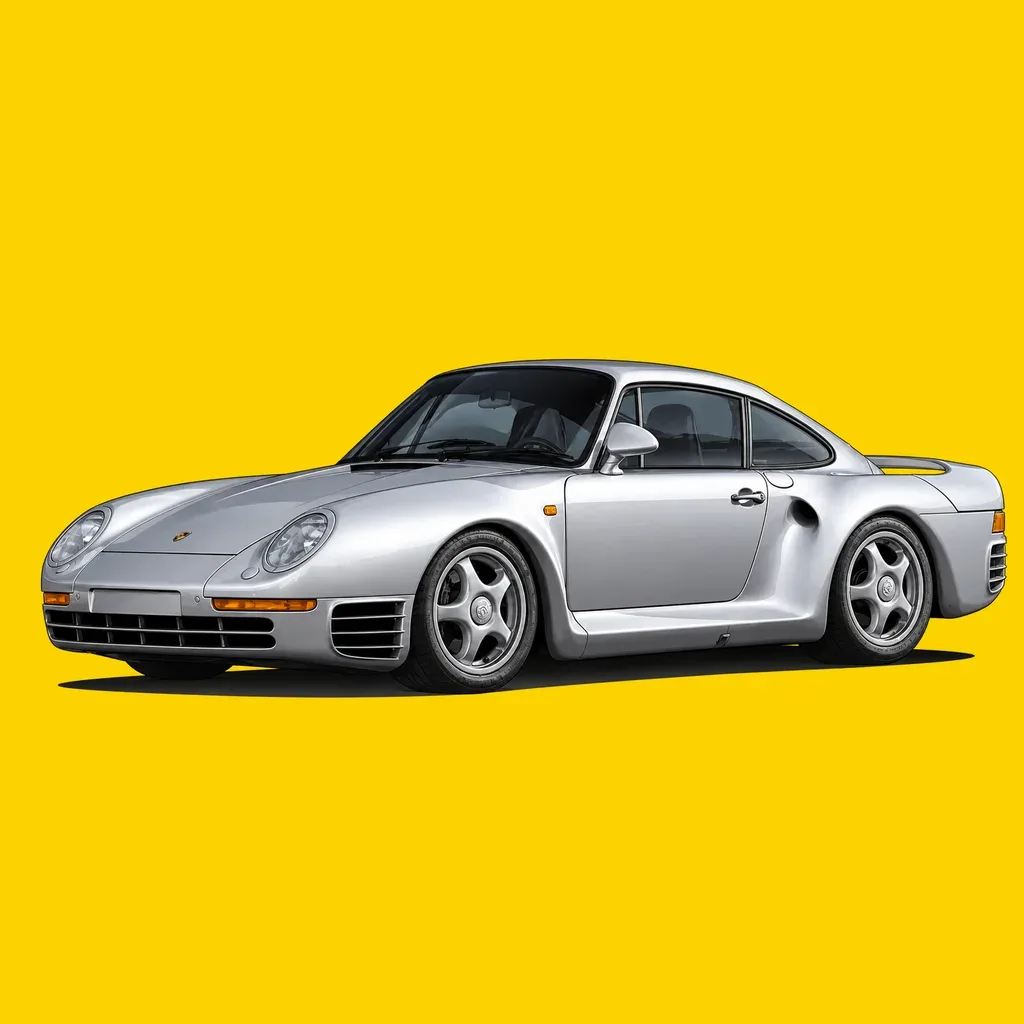
The Porsche 911 GT2 (993) is the first 911 GT2, and it remains the most feral of the line. It took the 993 Turbo’s twin-turbo flat-six, removed the front-driven axle, stripped weight, widened the body, and turned a refined all-weather supercar into a road-legal homologation weapon. Porsche describes the GT2 name as introduced to satisfy international GT2 racing homologation demands, with the 993 GT2 using the 993 Turbo’s twin-turbo flat-six raised from 408 PS to 430 PS, rear-wheel drive instead of four-wheel drive, less weight, wide arches, and a larger wing.
↓ Read deeper
The 993 GT2 matters because it sits at the collision point between two eras. It is the last air-cooled 911 at its most extreme, but also the beginning of Porsche’s modern GT2 lineage: turbocharged, rear-drive, lighter than the Turbo, and always slightly more dangerous in reputation than its contemporaries. The car’s architectural violence was simple and effective. Porsche removed the driven front axle of the 993 Turbo, deleted rear seats and the rear wiper, used aluminium for the boot lid and doors, and fitted thinner glass for the side and rear windows, saving 205 kg compared with the Turbo. In cultural terms, the 993 GT2 is the 911’s dark-room photograph: all the familiar forms are there, but the contrast has been pushed until the image becomes severe.
Origin & Context

Where did it come from?

The Porsche 911 GT2 (993) was developed from 1994 as a homologation car for GT2-class racing.

The GT2 was not created as a styling package or a luxury flagship. It came from rules. GT2 racing banned all-wheel drive, and Porsche needed a rear-wheel-drive 911 derived from the 993 Turbo to compete properly. The road car existed because the racing car needed legitimacy. Porsche’s own history says the GT2 development began in 1994 and combined the twin-turbo engine from the 993 Turbo, front spoiler and lightweight door panels from the Carrera RS, and bolt-on plastic arch extensions that could be replaced easily after contact on track.
↓ Read deeper
That origin gives the car its moral clarity. The 993 Turbo was a devastatingly competent machine, but it was also secure, polished, and four-wheel-drive. The GT2 removed that security. It reduced, simplified, and sharpened. The result was not merely faster. It was more transparent. Rear-wheel drive returned the 911’s old risk to a new level of forced-induction power. The GT2 was therefore not only a performance model; it was a deliberate return of consequence. This is why the 993 GT2 remains different from later GT2s. It was born close to the racing requirement itself, before the GT2 name became a broader road-car mythology.
Design

How was it designed?

The Porsche 911 GT2 (993) uses the 993-generation 911 body designed under Harm Lagaay and Tony Hatter, with GT2-specific bolt-on arches, front spoiler, rear wing, and cooling ducts.

The 993 GT2 looks brutal because it had to. Its bolt-on plastic wheel-arch extensions were not ornamental; they allowed wider wheels and easier replacement after track contact. Its enormous rear wing was not theatrical; it directed air to the charge-air coolers and contributed to downforce. Porsche states that the type 993 was designed by Englishman Tony Hatter under Dutch styling chief Harm Lagaay, while the GT2 added the RS front spoiler, removable arch extensions, and massive rear wing with lateral openings for intake air.
↓ Read deeper
The 993 is often called the most beautiful air-cooled 911, but the GT2 does not merely beautify that shape. It scars it. The arches look bolted on because they are. The wing looks too large because the car required air and stability more than politeness. This is the visual difference between a design object and a homologation object. The standard 993 hides its engineering in smooth surfaces. The GT2 exposes the engineering as punctuation. Porsche’s own Coppa Florio story notes that the wing remained a unique selling point, providing downforce while also directing airflow to the charge-air coolers.
Engineering

How was it engineered?

The Porsche 911 GT2 (993) uses a rear-engine, rear-wheel-drive layout with a six-speed manual gearbox, air-cooled twin-turbo flat-six, MacPherson front suspension, and multi-link rear suspension.

The GT2’s engineering architecture is defined by subtraction. Porsche began with the 993 Turbo, then removed the all-wheel-drive system, removed weight, and gave the car the rear-drive layout required by GT2 regulations. Porsche’s technical listing for the 911 GT2 type 993 identifies rear-wheel drive, a six-speed gearbox, MacPherson front suspension, independent rear suspension on five control arms, and an unladen weight of 1,295 kg.
↓ Read deeper
The 993 generation itself was already a major technical leap for the 911, particularly because of its LSA rear axle concept — Light, Stable, Agile — which used a multi-link rear suspension to make the rear-engined 911 more stable and composed. The GT2 took that sophisticated base and intensified it. More power, less mass, less drivetrain security, more tyre, more wing, and more consequence. The engineering brilliance is that the car remained a 911. It did not abandon the rear-engine formula; it made that formula louder, sharper, and more demanding.
Mythology & Meaning

What do people get wrong about it?

Common Porsche 911 GT2 (993) misconceptions concern production numbers, the GT2 name, its relationship to the 993 Turbo, and whether the Clubsport is a separate model.

The 993 GT2 attracts myth because it is rare, expensive, dangerous in reputation, and numerically confusing. Road cars, Clubsports, race cars, Evos, and later 450 PS cars are often blended together online. The correct approach is to separate what Porsche says, what auction houses say, and what enthusiast shorthand says.
↓ Read deeper
The 993 GT2 is just a 993 Turbo with rear-wheel drive.
It is based on the 993 Turbo, but Porsche also increased power, reduced weight, fitted GT2-specific bodywork, changed the driveline concept, and built it for GT2 homologation.verified
All 993 GT2s had 450 PS.
Porsche lists the first series at 430 PS and says 21 later cars had 450 PS.verified
The production number is simple and universally agreed.
Porsche’s recent text lists 172 first-series cars plus 21 later 450 PS cars, while RM Sotheby’s describes 194 street-legal GT2s and 33 Clubsports.verified
The Clubsport is a different car from the GT2.
The Clubsport is an M 003 specification of the 993 GT2, not a separate generation.verified
The 993 GT2 appears in Gran Turismo 7.
Porsche’s official GT7 list includes 993 Carrera RS models, but not the 993 GT2.verified
Timeline

How did it evolve?

The Porsche 911 GT2 (993) was developed from 1994, introduced in the mid-1990s, produced in small numbers, and later evolved into 450 PS and competition variants.

  1. 1994

    GT2 development begins

    Porsche develops the rear-drive GT2 concept to satisfy international GT2 homologation demands.

  2. 1995

    993 GT2 enters production

    The first road-going 993 GT2 appears with 430 PS, rear-wheel drive and extensive weight reduction.

  3. 1995

    Racing variants emerge

    GT2 customer racing cars begin carrying the 993 GT2 idea into international competition.

  4. 1996

    Clubsport specification becomes coveted

    The M 003 Clubsport package adds roll cage, harnesses and other track-focused equipment.

  5. 1998

    450 PS second series

    Porsche raises output to 450 PS for a small later series.

  6. 2001

    996 GT2 succeeds the 993

    The GT2 formula continues into the first water-cooled 911 GT2.

↓ Read deeper
The first series established the formula: 430 PS, rear-wheel drive, less weight, wide arches, huge rear wing, and air-cooled severity. The second series intensified it with 450 PS. Porsche states that only 21 of the more powerful 993 GT2 models were built. The GT2 idea then moved into the water-cooled 996, 997, and 991 generations, but the 993 remains the original: the one closest to homologation, air cooling, and late-analogue risk.
Provenance

Who has owned one?

No private famous owners of the Porsche 911 GT2 (993) should be listed without public documentation, so notable examples should focus on documented factory, auction, Sonderwunsch, and race-related cars.

Porsche 911 GT2 Coppa Florio
A unique 1996 Porsche Exclusive/Sonderwunsch 993 GT2 finished in Coppa Florio with extensive Can-Can Red leather.
verified
1996 Porsche 911 GT2 Clubsport, chassis WP0ZZZ99ZTS392156
RM Sotheby’s Monterey 2024 sale car, described as one of 33 Clubsports.
verified
993 GT2 privateer race cars
Competition examples should be documented individually through chassis and race records.
verified
↓ Read deeper
Claim: The Coppa Florio 993 GT2 was a highly customised Porsche Exclusive/Sonderwunsch commission from 1996, nicknamed Wölkchen by its current owner. verified Claim: RM Sotheby’s sold a 1996 Porsche 911 GT2 Clubsport for $2,012,500 at Monterey 2024 and described it as one of only 33 Clubsport examples. verified Claim: Specific private celebrity ownership of 993 GT2 road cars should not be inferred without direct auction provenance, registration-linked sale history, or owner statements. verified Claim: Competition 993 GT2s should be documented by chassis number and period race records, not by broad model reputation alone. verified
On Screen & In Games

Where have you seen it?

The Porsche 911 GT2 (993) appears in Forza Motorsport as the 1995 Porsche 911 GT2, while major verified film appearances should not be listed without direct evidence.

🎮 Game · 2023verified
Forza Motorsport
Porsche’s official Forza Motorsport list includes the 1995 Porsche 911 GT2.
🎮 Game · 2022verified
Gran Turismo 7
Porsche’s official GT7 list includes 993 Carrera RS models, but not the 993 GT2.
🎬 Film · Unverifiedverified
Major film appearances
No major verified film role for the production 993 GT2 should be listed without direct evidence.
Documentary · 1995–presentinterpretation
Auction and enthusiast media
Auction films, road-test videos and enthusiast features have shaped the modern mythology of the 993 GT2.
↓ Read deeper
Claim: Forza Motorsport includes the 1995 Porsche 911 GT2. verified Claim: Gran Turismo 7’s official Porsche list includes 993 Carrera RS and 993 Carrera RS Club Sport models, but not the 993 GT2. verified Claim: No major verified film appearance for the production Porsche 911 GT2 (993) should be listed without direct production evidence. verified The car’s media power is therefore not narrative cinema. It is interactive myth: the player selects it and immediately understands that a 911 can be both beautiful and hostile.
The Stories

What are the stories behind it?

The Porsche 911 GT2 (993) is notable for founding the GT2 line, converting the 993 Turbo into a rear-drive homologation car, creating production-count confusion, and becoming a seven-figure collector icon.

The First GT2

verified

Porsche introduced the GT2 name for international GT2 racing homologation, and the 993 became the first road-going GT2 lineage car.

Turbo Without the Front Axle

verified

The GT2 removed the 993 Turbo’s all-wheel-drive system and returned the car to rear-wheel drive for racing rules and weight reduction.

The Wing That Fed the Engine

verified

The rear wing provided downforce and channelled air to the charge-air coolers through lateral openings.

Numbers That Refuse to Sit Still

verified

Porsche and auction-market sources publish different production-count frameworks, so the archive should preserve both source claims.

The Seven-Figure Air-Cooled Weapon

verified

The 993 GT2 has become one of the most valuable air-cooled 911s, with CLASSIC.COM listing a $2,397,500 highest sale as of July 2026.

↓ Read deeper
Story: Porsche introduced the GT2 name to satisfy international GT2 racing homologation demands. verified Story: Porsche removed the 993 Turbo’s driven front axle, rear seats, rear wiper, and other weight-adding equipment, saving 205 kg compared with the Turbo. verified Story: The GT2’s rear wing supplied downforce and directed air to the charge-air coolers through its lateral openings. verified Story: Published production figures vary by source, with Porsche citing 172 first-series cars plus 21 later cars, while RM Sotheby’s describes 194 street-legal cars including 33 Clubsports. verified Story: As of July 2026, CLASSIC.COM records a highest sale of $2,397,500 for a 1997 Porsche 911 GT2. verified
Connected Graph

MANUFACTURER

MANUFACTURED BYPorsche
MANUFACTURERSTUB

PERSON

DESIGNED BYTony Hatter
PERSONSTUB
Encyclopedia
16 sections
interior-experience

What is it like inside?

Editorial inference

The Porsche 911 GT2 (993) interior is a stripped two-seat 911 cabin, with road, Clubsport, and motorsport-prepared specifications varying by equipment level.

Inside, the GT2 is more cockpit than cabin. The road version could still be trimmed as a Porsche road car, but the concept was always weight reduction. Rear seats were removed, the rear wiper was omitted, and comfort equipment was limited. Porsche’s Coppa Florio article states that the GT2 range was broken into road version M 002, Clubsport M 003, and motorsport-prepared M 005, with limited options such as radio, sports seats, air conditioning, airbags, and electric windows.
production-rarity

How rare is it?

Editorial inference

Porsche production-count references for the 993 GT2 vary, but Porsche’s own recent text lists 172 first-series cars and 21 later 450 PS cars.

The 993 GT2’s rarity is part of its authority. Porsche states that 172 units were produced in the first 430 PS run and 21 in the second 450 PS series. RM Sotheby’s describes the 993 GT2 Clubsport as one of 194 street-legal GT2s and one of 33 Clubsport cars, while CLASSIC.COM repeats RM’s 194-car street-legal framing in its market overview.
ownership-reality

What is it like to own?

Editorial inference

Owning a Porsche 911 GT2 (993) requires specialist care for its air-cooled twin-turbo engine, rare bodywork, Speedline wheels, lightweight components, and provenance-sensitive collector value.

The 993 GT2 is not simply an expensive old Porsche. It is a homologation car whose value lives in originality, documentation, correct parts, and history. A wrong repair can damage both the car and its meaning. Its mechanical base is robust in Porsche terms, but its rarity changes everything. Bolt-on arches, wing components, engine specification, transmission, lightweight glass, aluminium panels, and Clubsport equipment all require proper knowledge.
rivals-comparisons

What did it compete against?

Editorial inference

The Porsche 911 GT2 (993) competed culturally against cars such as the Ferrari F40, Ferrari F355 Challenge, McLaren F1, Porsche 911 Turbo, Nissan Skyline GT-R, and later homologation-era GT machinery.

The 993 GT2’s most important rival was the 993 Turbo, because the Turbo was the civilised brother from which it was derived. The GT2 had more power, less weight, rear-wheel drive, and far less concern for broad usability. Against European exotics, the GT2 was less glamorous but more surgical. Against the Nissan Skyline GT-R, it represented the opposite philosophy: not all-wheel-drive intelligence, but rear-drive severity.
legacy

What did it leave behind?

Editorial inference

The Porsche 911 GT2 (993) founded the 911 GT2 lineage and remains the only air-cooled GT2 road car.

The 993 GT2’s legacy is immense because it created a new archetype. Every later GT2 carries its DNA: Turbo engine, rear-wheel drive, reduced weight, serious aero, and a reputation for being the most severe road-going 911. Porsche calls the 993 GT2 the first car to receive the GT2 treatment and describes the GT2 line as one of the most iconic and revered versions of the 911.
performance-numbers

How fast is it?

Editorial inference

The Porsche 911 GT2 (993) produced 430 PS in its first road series, later 450 PS, and the 430 PS car reached 295 km/h with 0–100 km/h in 4.4 seconds.

The numbers are severe even today because they belong to a light, rear-drive, air-cooled 911 without modern layers of insulation. Porsche’s 430 PS specification lists 316 kW, 540 Nm, 1,295 kg unladen weight, 295 km/h top speed, and 0–100 km/h in 4.4 seconds. In 1998, Porsche raised output to 450 PS for a small second series, deepening the car’s collector and performance significance.
collector-market

What is it worth today?

Editorial inferenceas of 2026

As of July 2026, CLASSIC.COM lists the Porsche 911 GT2 (993) average sale price at $932,532, with standard road-car market benchmarks above $1.4 million.

As of July 2026, the 993 GT2 is one of the blue-chip air-cooled Porsches. It combines rarity, homologation purpose, air cooling, turbocharging, rear-wheel drive, manual transmission, and first-of-line GT2 status. CLASSIC.COM lists an average sale price of $932,532 for the 993 GT2 market, a highest recorded sale of $2,397,500 for a 1997 Porsche 911 GT2, and a standard-model CMB of $1,455,014; it also lists the Clubsport CMB at $2,012,500.
pop-culture-sightings

What does it mean in culture?

Editorial inference

The Porsche 911 GT2 (993) is best known in popular culture through games, auction culture, enthusiast media, and its “widowmaker” reputation rather than through a major verified film role.

The 993 GT2 is an internet-era legend built before the internet fully knew what to do with it. Its image spread through posters, game garages, magazine scans, auction listings, YouTube drives, and the myth of the most dangerous air-cooled 911. Porsche’s official Forza Motorsport list includes the 1995 Porsche 911 GT2 among the cars available in the 2023 Forza Motorsport title.
machine-avatar

What does it represent?

Editorial inference

As an Engine Sphere machine-avatar, the Porsche 911 GT2 (993) represents air-cooled turbo violence, homologation logic, rear-drive consequence, and late-analogue Porsche severity.

The 993 GT2 avatar is not a polished knight. It is a white-hot blade with plastic arches, aluminium doors, and a wing that breathes through its own shoulders. It should feel like a machine built in a Weissach back room after the lights had gone out: precise, narrow-eyed, and faintly unwilling to be civil.
aerodynamics

How does it cut through air?

Editorial inference

The Porsche 911 GT2 (993) uses a front spoiler, bolt-on wide arches, and a large rear wing that provides downforce and directs air to the charge-air coolers.

The GT2’s aerodynamics are wonderfully literal. The wing is not a flourish. The arches are not a cosmetic body kit. The front spoiler is not a trim piece. Each part exists because the car was made close to motorsport conditions. Porsche explains that the massive rear wing supplied downforce, directed airflow to the charge-air coolers, and fed intake air through lateral openings in the wing.
variants-editions

What versions were made?

Editorial inference

The Porsche 911 GT2 (993) existed as road version M 002, Clubsport M 003, and motorsport-prepared M 005, with later race variants including GT2 R and GT2 Evo.

The GT2 family is best understood as a ladder. The road car was already radical. The Clubsport was the more focused road-legal version. The motorsport-prepared and racing variants moved the idea toward privateer competition. Porsche’s own Coppa Florio article breaks the GT2 range into road version M 002, Clubsport M 003, and motorsport-prepared M 005.
connected-entities

What does it connect to?

Editorial inference

No connected entities were recorded for the Porsche 911 GT2 (993) in the supplied Engine Sphere prompt.

The supplied Engine Sphere prompt records no connected entities for Porsche 911 GT2 (993), so graph links should be treated as recommended additions rather than pre-existing relationships. Recommended graph links include Porsche, Porsche Motorsport, Porsche 911, Porsche 911 Turbo (993), Porsche 911 Carrera RS (993), Porsche 911 GT2 Clubsport (993), Porsche 911 GT2 Evo (993), M64/60 R, Tony Hatter, Harm Lagaay, Weissach, Zuffenhausen, Nürburgring Nordschleife, 24 Hours of Le Mans, Forza Motorsport, and Gran Turismo 7.
dynamics

How does it drive?

Editorial inference

The Porsche 911 GT2 (993) is dynamically defined by rear-wheel drive, reduced weight, twin-turbo torque, wide tyres, and the absence of the 993 Turbo’s all-wheel-drive system.

The 993 GT2’s reputation is not based only on speed. It is based on what happens when speed meets rear weight bias, turbo boost, and rear-wheel drive. It is a car that asks the driver to understand old 911 physics at much higher stakes. Porsche says the GT2 lost the driven front axle of the 993 Turbo and shed 205 kg through lightweight construction, while still using the twin-turbo engine raised to 430 PS.
engine-powertrain

What powers it?

Editorial inference

The Porsche 911 GT2 (993) is powered by the M64/60 R 3.6-litre air-cooled twin-turbo flat-six engine.

The 993 GT2’s engine is one of the last great air-cooled turbocharged Porsche units. In early road form, it produced 316 kW / 430 PS at 5,750 rpm and 540 Nm at 4,500 rpm. Porsche later raised output to 450 PS for the second series. The engine was not merely stronger than the 993 Turbo’s. It was paired with a lighter, rear-drive car, which changed the entire meaning of the power.
motorsport-competition

Did it race?

Editorial inference

The Porsche 911 GT2 (993) was created for GT2-class racing homologation and became a successful privateer racing platform.

The GT2 name exists because of competition. Porsche needed a turbocharged, rear-wheel-drive 911 for GT2 racing, and the road car was the price of entry. RM Sotheby’s states that the 993 GT2 was developed for Porsche’s efforts in the FIA GT2 class and that the 911 GT2 managed two class wins at the 24 Hours of Le Mans along with numerous privateer successes.
people-behind

Who built it?

Editorial inference

The Porsche 911 GT2 (993) was shaped by Porsche Motorsport and the 993 design team led by Harm Lagaay with Tony Hatter as design manager.

The 993 GT2 does not belong to a single heroic author. It belongs to Porsche’s design culture, Weissach engineering, and motorsport necessity. Porsche identifies the 993 design team as directed by Harm Lagaay, with Tony Hatter as design manager, and Porsche Newsroom separately notes Hatter’s responsibility for 993, 993 Turbo, GT1, and later GT2-related Porsche projects.
Sources & Confidence
The 993 GT2 demands careful sourcing because production numbers and variant definitions vary across Porsche texts, auction catalogues, and market databases. The safest method is to state the source behind each number. Porsche Newsroom and Porsche Stories are strongest for technical specifications, design background, lightweight construction, and official GT2 lineage.
Questions readers ask

What engine does the Porsche 911 GT2 (993) use?

It uses the M64/60 R 3.6-litre air-cooled twin-turbo flat-six.

How much power does the 993 GT2 make?

The first series makes 430 PS, while a later small series makes 450 PS.

Why is the 993 GT2 rear-wheel drive?

GT2 racing regulations banned all-wheel drive, so Porsche removed the 993 Turbo’s front-driven axle.

How many Porsche 911 GT2 (993) cars were built?

Porsche lists 172 first-series 430 PS cars and 21 later 450 PS cars; RM Sotheby’s describes 194 street-legal GT2s including 33 Clubsports.

What is the 993 GT2 Clubsport?

It is the M 003 track-focused GT2 specification with roll cage, harnesses, battery cut-off, fire-extinguisher system and bucket seats.

Who designed the Porsche 993?

Porsche identifies Tony Hatter as design manager under styling chief Harm Lagaay for the 993 generation.

Is the Porsche 911 GT2 (993) in Forza Motorsport?

Yes. Porsche’s official Forza Motorsport list includes the 1995 Porsche 911 GT2.

Why is the Porsche 911 GT2 (993) so valuable?

It is the first GT2, the only air-cooled GT2 road car, a homologation model, and an extremely rare rear-wheel-drive twin-turbo 911.