Est. 1911Mass-market vehicles and performance cars
American manufacturer founded in Detroit in 1911, now General Motors' mass-market volume brand and producer of the Corvette, America's longest-running sports car nameplate.
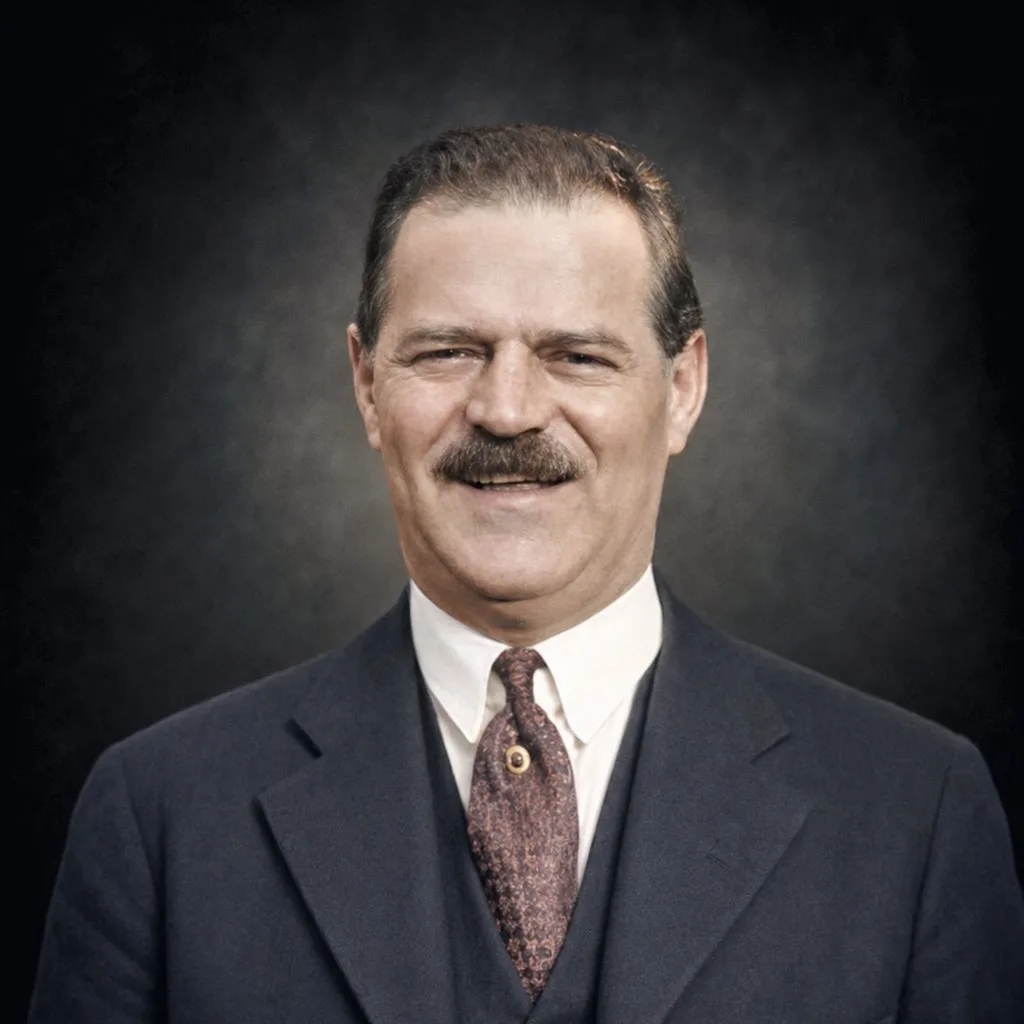
Chevrolet's founding is, fittingly for an American brand, a story of a comeback. It was created by two men with opposing instincts, Swiss-born race driver and engineer Louis Chevrolet, who wanted to build a serious touring car, and William C. Durant, the ousted founder of General Motors, who wanted a vehicle to leverage his way back into the company he had lost control of. Durant got his wish: by 1918, Chevrolet had grown successful enough, and its stock valuable enough, that Durant used it to reacquire control of General Motors itself, folding Chevrolet in as GM's high-volume division, a position it has held for more than a century.
Alongside its identity as GM's mainstream, affordable brand, Chevrolet has maintained one deliberate exception: the Corvette, introduced in 1953 and continuously developed since, exists specifically to prove that an American mass-manufacturer could also build a genuine sports car, and has done so, generation after generation, largely independent of the brand's everyday sedan-and-truck business.
↓ Read deeper↑ Less
Louis Chevrolet's own involvement in the company that bears his name was brief and often uncomfortable, he clashed with Durant's instinct toward economy cars rather than the higher-performance touring cars he wanted to build, and sold his remaining stake and left the company by 1915, years before it became the vehicle (in every sense) of Durant's return to GM's leadership. The irony that the company's most famous namesake had no hand in its later direction, including its eventual position as a GM division, is one of the odder footnotes in American automotive history.
The Corvette's origin in 1953 was itself an experiment: GM's own market research suggested no appetite for a two-seat American sports car in a market dominated by European imports (Jaguar, MG), but chief engineer Zora Arkus-Duntov's advocacy and continuous engineering refinement through the 1950s and 60s turned a slow-selling curiosity into an institution, the Sting Ray generation of the mid-1960s in particular established the fibreglass-bodied, V8-powered formula the nameplate has followed, with only evolutionary changes, for seven decades.
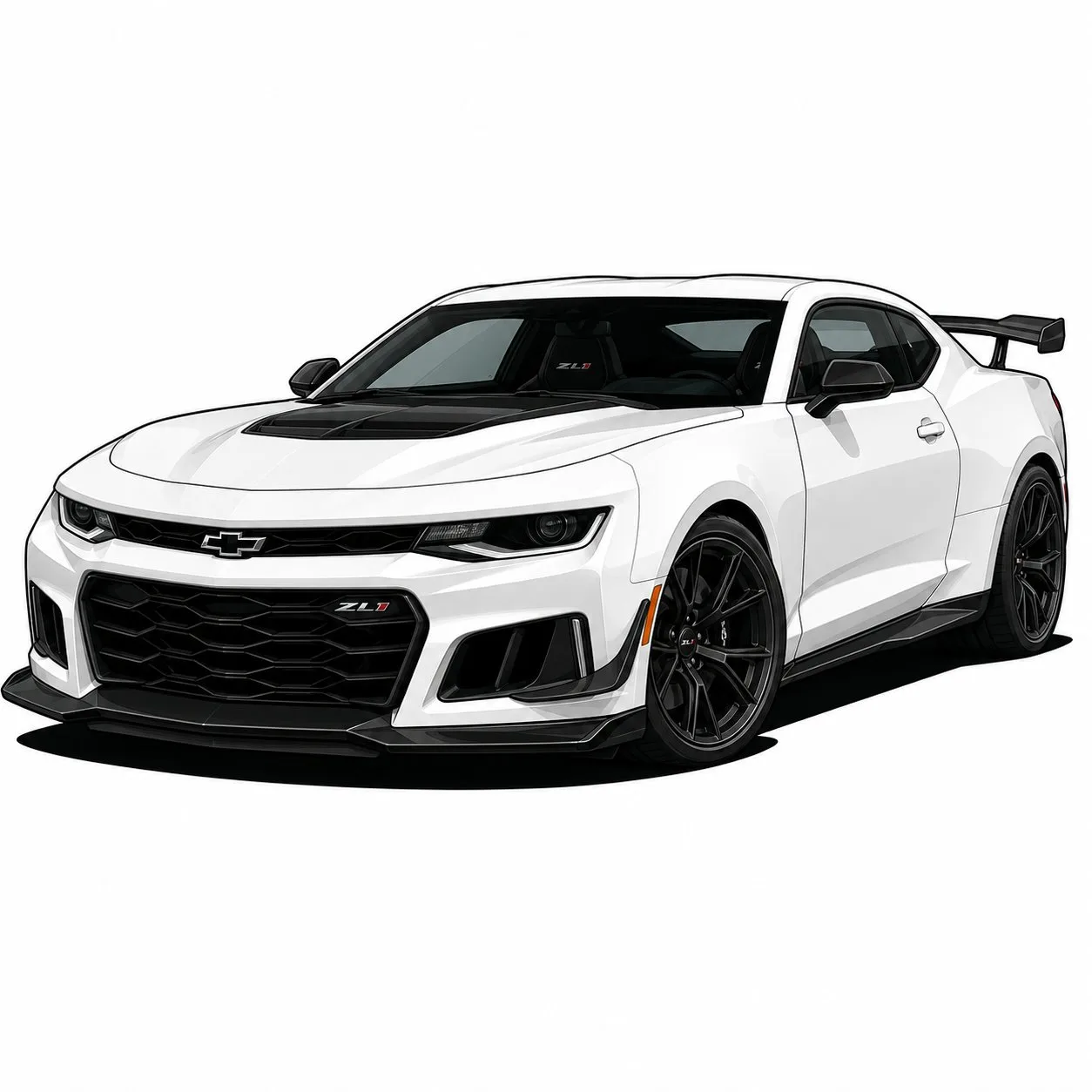
Chevrolet's later performance halo also extended to muscle cars proper: the Camaro, launched in 1966 as a direct response to Ford's Mustang, became the other pole of Chevrolet's dual identity, practical family transportation on one side of the showroom, uncompromising V8 performance on the other, a tension the brand has never fully resolved and has rarely tried to.
Origins
How did it begin?
Chevrolet's founding cannot really be separated from William Durant's personal ambitions. Durant had founded General Motors in 1908 through an aggressive buying spree of independent automakers, only to be forced out by his own board in 1910 after overextending the company financially. Rather than leave the industry, he partnered with Swiss-born race driver and engineer Louis Chevrolet to found a new company under Chevrolet's name in 1911.
The partnership was strained from early on: Chevrolet wanted to build serious, well-engineered touring cars, while Durant pushed for cheaper, higher-volume models better suited to competing directly with Ford. Chevrolet sold his stake and departed by 1915, ironically, just as the company's growing success was about to hand Durant the leverage he needed for his real goal.
↓ Read deeper↑ Less
Durant's plan worked precisely as intended: by 1917–1918, Chevrolet Motor Company's stock had grown valuable enough that Durant used it, through a complex series of share exchanges, to acquire a controlling interest in General Motors, the very company his own board had ejected him from years earlier. Chevrolet was folded into GM as a division rather than remaining independent, and Durant briefly resumed leadership of the conglomerate he had originally built.
Louis Chevrolet, having sold his stake for what turned out to be a fraction of its later value, went on to other automotive ventures (including aircraft engines and the short-lived Frontenac racing marque) with considerably less commercial success, and reportedly held some bitterness toward the company that carried his name for the rest of his life.
Durant's second tenure at GM's helm did not last either, he was ousted again in 1920 after another period of financial overreach, this time permanently, leaving professional management (most notably Alfred Sloan) to build the modern General Motors structure, with Chevrolet firmly established as its high-volume, mass-market anchor brand.
Design Philosophy
What does it stand for, visually?
Chevrolet has never pursued a single unifying design signature across its entire lineup the way some rivals have, its mainstream sedans and trucks have generally followed conservative, market-responsive American styling trends of their era, while the Corvette and Camaro have been given deliberately more expressive, aspirational design treatment as the brand's performance and cultural flagships.
The Corvette in particular has used fibreglass (and later composite) bodywork since 1953 specifically to enable more dramatic, low-volume-friendly styling than steel stamping technology of the era would have allowed economically, a material choice that shaped its design language as much as any stylist's specific vision.
↓ Read deeper↑ Less
The Corvette's Sting Ray generation (1963) marked its most dramatic design departure, sharp-edged "Coke bottle" surfacing and a distinctive split rear window (removed after just one model year due to visibility complaints) established a design language considerably more aggressive than the smoother, more restrained first-generation Corvette that preceded it.
The Camaro's 1966 launch, styled as a direct response to Ford's Mustang, adopted a long-hood, short-deck proportion common to the entire American "pony car" category of the era, a design formula Chevrolet has returned to in every subsequent Camaro generation, including its modern 2010s–2020s retro-influenced styling.
Chevrolet's broader design language has, at various points in its history, been shaped by General Motors' centralized styling department under figures like Harley Earl and Bill Mitchell, meaning Chevrolet's design identity was often set at the GM corporate level rather than by a dedicated Chevrolet-only studio for much of the 20th century.
Engineering Philosophy
How does it engineer?
Chevrolet's engineering culture has long prized mechanical simplicity and durability over technical complexity. The small-block V8, introduced in 1955, was engineered to be lightweight, easy to manufacture at scale, and highly adaptable across displacement and output ranges, qualities that made it one of the most widely used and modified engine architectures in automotive history.
This philosophy of accessible, tunable performance engineering (rather than exotic, complex technology) has shaped Chevrolet's performance-car identity broadly. The Corvette and Camaro have historically competed on straightforward power and value rather than the more exotic engineering approaches of European rivals.
↓ Read deeper↑ Less
The original small-block V8's design, led by engineer Ed Cole, prioritized a lightweight, compact architecture that could be produced cheaply at the scale General Motors required. Its thin-wall casting techniques and simple valvetrain design were genuinely innovative for the era and directly enabled its decades-long production run and enormous aftermarket tuning ecosystem.
Zora Arkus-Duntov's engineering leadership of the Corvette from 1953 onward pushed the car's chassis and suspension development considerably further than GM's initial, more conservative brief. His advocacy for independent rear suspension (introduced on the 1963 Sting Ray) and continuous performance refinement transformed the Corvette from a slow-selling curiosity into a genuine performance car.
Chevrolet's more recent engineering pivot toward electrification (the Volt's plug-in hybrid architecture in 2010, followed by the Bolt EV in 2016) represented a genuine attempt to apply the same "accessible technology at scale" philosophy that defined the small-block V8 to an entirely new powertrain category, years before EVs became a broader industry priority.
Notable Works
What did it create?
The small-block V8 (1955) stands as Chevrolet's most consequential engineering achievement, a simple, durable, highly tunable architecture that became foundational not just to Chevrolet's own performance reputation but to American hot-rod and racing culture broadly, remaining in some form of production for well over half a century.
The Corvette (1953) represents Chevrolet's most sustained model achievement: conceived against internal GM skepticism about American appetite for a two-seat sports car, it survived a slow initial reception to become an enduring institution, continuously developed across eight generations.
↓ Read deeper↑ Less
The small-block V8's design innovations, lightweight thin-wall casting, a simple valvetrain, and a design philosophy prioritizing manufacturability at scale, allowed it to be produced cheaply enough for mass-market use while remaining robust and tunable enough to become the foundation of American drag racing and hot-rod culture for decades, an unusually broad cultural footprint for a single engine architecture.
The Corvette's continuous seven-decade development, particularly under chief engineer Zora Arkus-Duntov's multi-decade leadership, transformed a market experiment GM's own research suggested had no real audience into an enduring institution, proof that sustained engineering commitment could overcome initial commercial skepticism.
The Camaro's 1966 creation, a direct response to the runaway commercial success of Ford's Mustang, established Chevrolet's other enduring performance nameplate and helped define the entire American "pony car" and later "muscle car" categories that dominated much of 1960s–70s US automotive culture.
Key People
Who shaped it?
Chevrolet's founding pair, an engineer-racer and a financier-strategist, pulling in different directions is a recurring pattern in early automotive history, but few examples resolved as dramatically as this one, with the financier's company ultimately absorbing the parent company that had originally cast him out.
Decades later, a different kind of engineer-advocate, Zora Arkus-Duntov, played an equally decisive role in keeping a single model, the Corvette, alive against internal scepticism, in a way that shaped Chevrolet's performance identity for the rest of the century.
↓ Read deeper↑ Less
Louis Chevrolet brought genuine engineering and racing credibility to the venture (he had competed at the Indianapolis 500 and built a reputation as both a mechanic and a driver), but had little patience for Durant's mass-market, cost-driven product instincts, a conflict common to many founder partnerships between an engineer and a financier, resolved here by the engineer's early exit.
William C. Durant's genius, such as it was, lay in financial engineering and acquisition strategy rather than automotive design, he built General Motors itself the same way, through rapid acquisition, and used Chevrolet as a deliberate instrument to reverse his own 1910 ousting, succeeding by 1918 only to be removed from GM's leadership again in 1920.
Zora Arkus-Duntov, a Belgian-born, Russian-raised engineer who joined GM in 1953, is credited almost single-handedly with saving the first-generation Corvette from cancellation through persistent internal advocacy and continuous technical improvement, and with steering the car toward the front-engine, V8-powered, fibreglass-bodied formula that made it a genuine performance icon rather than a short-lived curiosity.
Chevrolet's most historically significant models cluster around three periods: the mid-century mainstream icons (Bel Air, Impala) that defined 1950s–60s American car culture broadly, the muscle-car era (Chevelle SS, Camaro) of the 1960s–70s, and the continuously developed Corvette sports-car lineage running in parallel across all of it.
The list below favors genuinely distinct, historically significant nameplates and Corvette generations over every individual model-year trim.
timeline-evolution
How did it evolve?
Editorial inference
Chevrolet's timeline is defined early by its own founder's unusual exit and the company's role as William Durant's vehicle back into General Motors leadership, followed by decades as GM's mass-market volume anchor, punctuated by the deliberate performance exceptions (Corvette, Camaro, small-block V8) that built its enthusiast reputation.
The Corvette's continuous, uninterrupted seven-decade production run (since 1953) stands as a rare case of sustained institutional commitment to a single nameplate across changing corporate priorities and economic cycles.
pop-culture-sightings
What does it mean in culture?
Editorial inference
Few cars have as direct a modern pop-culture association as the Chevrolet Camaro's role as Bumblebee in the "Transformers" film franchise (beginning 2007), a modern-generation Camaro was cast specifically as one of the franchise's most prominent and beloved characters, introducing the nameplate to a global audience far beyond traditional American muscle-car enthusiast circles.
The Corvette has a longer, more diffuse pop-culture history, appearing across decades of American television and film as a recurring shorthand for aspirational, all-American sports-car ownership, including a starring role in the 1960s television series "Route 66."
motorsport-competition
Did it race?
Editorial inference
Chevrolet has been one of NASCAR's foundational manufacturers since the series' earliest decades, its stock-car racing programme deeply intertwined with the brand's broader performance-car marketing and engineering culture in the American market specifically.
The Corvette's dedicated racing programme (Corvette Racing, established in the late 1990s) has achieved sustained success in international GT and endurance competition, including numerous class victories at the 24 Hours of Le Mans and Daytona, proof that Chevrolet's road car philosophy translates into genuine competition credibility, not just domestic stock-car racing.
rivals-comparisons
What did it compete against?
Editorial inference
The Chevrolet-Ford rivalry is among the most enduring in American automotive history, playing out across nearly every segment the two companies have competed in, the Camaro-Mustang pony car rivalry beginning in 1966/1964 respectively, parallel NASCAR programmes for decades, and competing pickup truck lineups (Silverado versus F-Series) that remain commercially central to both companies today.
The Corvette's closest direct rival internationally has often been positioned as European sports cars at a fraction of their price, a "give up some outright refinement, gain enormous value" comparison that has defined the Corvette's market positioning for seven decades.
myths-misconceptions
What do people get wrong about it?
Editorial inference
Claim: Louis Chevrolet, the company's namesake, guided its engineering and business direction for years. Truth: Chevrolet sold his remaining stake and left the company by around 1915, just a few years after its 1911 founding, following disagreements with co-founder William Durant over the company's direction (Chevrolet wanted higher-performance touring cars; Durant pushed toward cheaper, higher-volume models), he had no hand in the company's later growth or its eventual role in Durant's reacquisition of General Motors. verified
Claim: the Corvette has always been a mid-engine car like its European rivals. Truth: the Corvette used a front-engine layout for nearly seven decades (1953–2019); the mid-engine layout was only introduced with the eighth generation (C8) in 2020, a deliberate and historically significant architectural departure. verified
legacy
What did it leave behind?
Editorial inference
Chevrolet's most enduring legacy is the Corvette's uninterrupted seven-decade existence, proof that a company primarily built around affordable, mass-market vehicles could sustain a genuine sports-car halo across changing economic conditions, corporate priorities, and technological eras, without either the mainstream business undermining the sports car's credibility or the sports car becoming an unsustainable indulgence.
The small-block V8's decades-long production run and its foundational role in American hot-rod, drag-racing, and tuning culture broadly represents a second, distinct legacy: a single, relatively simple engineering solution that outlived its original design brief by decades through sheer adaptability.
Sources & Confidence
Claims in this profile draw on categories of source material appropriate to their confidence level: company-published corporate history for founding and the Durant/GM connection; period motorsport results (NASCAR, Le Mans GT class) for competition claims; and established automotive-history texts for design and engineering narrative, including the Corvette's development under Zora Arkus-Duntov.
Questions readers ask
When was Chevrolet founded?
Chevrolet was founded in Detroit in 1911 by race driver Louis Chevrolet and industrialist William C. Durant.
Is Chevrolet part of General Motors?
Yes. Chevrolet became a General Motors division after William Durant used the company's growing success to reacquire control of GM in 1918.
When did the Corvette first launch?
1953, as a fibreglass-bodied two-seat roadster; it has been in continuous production since.
Is the Corvette a mid-engine car?
Only since 2020. The C8 generation was the first to adopt a mid-engine layout, after nearly seven decades with a front-engine layout.
What was the small-block V8?
An engine architecture introduced in 1955, engineered to be lightweight, durable, and highly tunable. It became foundational to American performance and hot-rod culture for decades.