Est. 1933Mass-market vehicles and performance cars
Japanese manufacturer headquartered in Yokohama, known for mass-market engineering discipline alongside the technology-driven GT-R performance lineage.
Nissan has always lived a double life. The company that built the practical, reliable Sunny and Sentra for commuting millions is the same one that, since the 1960s, has periodically set aside commercial caution to build a technological flagship whose only real brief is to embarrass far more expensive machinery on a racetrack. The Skyline GT-R name, and later the standalone GT-R itself, exists almost as a counterweight to the rest of the company's output, a demonstration project proving that the same engineers who tune a family hatchback for fuel economy can also build a computer-controlled all-wheel-drive supercar-killer when given the chance.
That tension between mass-market pragmatism and technical exhibitionism has defined Nissan's engineering reputation, particularly in Japan's touring-car era of the late 1980s and 1990s, when GT-R-badged cars became so dominant on track they were nicknamed "Godzilla" by the Australian press it had just demolished.
↓ Read deeper↑ Less
Nissan's roots reach back further than its own 1933 founding date suggests. The company traces its lineage to DAT Motorcar Co., established in Tokyo in 1911, the "Datsun" name (originally "Datson") is a direct descendant of the initials of DAT's three founding investors, later softened because "son" sounded like the Japanese word for "loss." Nissan Motor Co. itself was formally established in 1933 as part of industrialist Yoshisuke Aikawa's Nissan zaibatsu conglomerate, absorbing DAT's automotive operations.
The GT-R lineage that defines the brand's enthusiast reputation began in 1969 with the Skyline 2000 GT-R, developed with input from the Prince Motor Company engineering team Nissan had absorbed in a 1966 merger, the inline-six engine family that powered the fearsome R32–R34 generation traces its intellectual roots to that Prince heritage, not to Nissan's own original engineering line.
Since 1999, Nissan has operated within the Renault-Nissan-Mitsubishi Alliance, a cross-shareholding partnership initiated when Renault took a stake in a financially troubled Nissan and installed Carlos Ghosn to lead its recovery, an arrangement that has shaped, and periodically strained, the company's corporate governance ever since.
Origins
How did it begin?
Nissan's founding is really the story of two companies converging. DAT Motorcar Co., founded in Tokyo in 1911 by three investors whose initials spelled "DAT," built small passenger cars under the "Datson" ("son of DAT") name from the 1930s, later respelled "Datsun" because "son" carried an unfortunate homophone with the Japanese word for financial loss.
Industrialist Yoshisuke Aikawa, who had built a large industrial conglomerate (zaibatsu) around his Nihon Sangyo holding company (abbreviated "Nissan" in stock listings), formally established Nissan Motor Co. in 1933 and absorbed DAT's automotive business into it, giving the new company both an existing product and a manufacturing base to build from.
↓ Read deeper↑ Less
Aikawa's ambitions for Nissan were explicitly industrial-policy in scale: he intended the company to mass-produce affordable small cars for the Japanese market using American manufacturing methods, at one point negotiating with Ford and General Motors for technology and equipment before ultimately building Nissan's own production capability with support from the Japanese government, which saw automotive manufacturing as a matter of national industrial strategy.
The Second World War forced Nissan, like most of Japan's heavy industry, into military production, and the company's factories were requisitioned for a period afterward by occupying Allied forces, delaying a full return to civilian car manufacturing until the early 1950s.
The company's most consequential structural moment came much later, in 1999, when a heavily indebted Nissan entered a capital alliance with Renault, which took a significant equity stake and sent Carlos Ghosn to lead an aggressive restructuring. That alliance, later expanded to include Mitsubishi Motors, has defined Nissan's corporate governance for the past quarter century, including a period of serious turmoil following Ghosn's 2018 arrest and subsequent departure from Japan.
Design Philosophy
What does it stand for, visually?
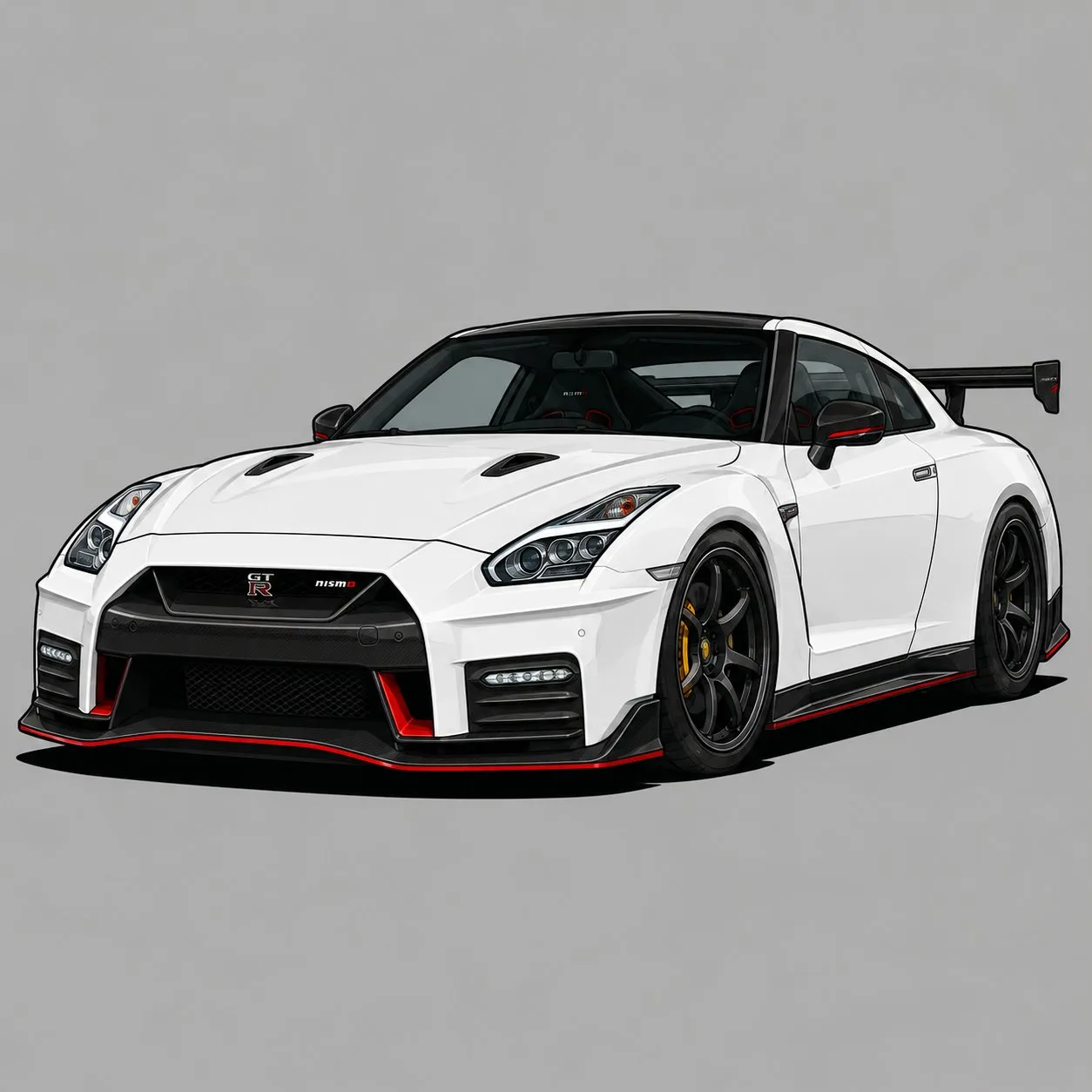
Nissan's performance-car design language, particularly through the Skyline GT-R lineage, has consistently favored function-first shapes: flared wheel arches to cover wider tracks, prominent air intakes sized for genuine cooling needs rather than styling, and a general willingness to look mechanically purposeful rather than sculpturally pretty. This is a design philosophy built by engineers as much as stylists, the GT-R's various rear wing designs across generations, for instance, were aerodynamically functional first and a styling signature second.
Nissan's mainstream passenger-car design has been more conventional and market-responsive, adapting to regional tastes across its Japanese, American, and European lineups rather than pursuing one unified global design language as consistently as some rivals, a pragmatic approach that mirrors the company's broader identity as an engineering-led, rather than design-led, manufacturer.
↓ Read deeper↑ Less
The original Skyline GT-R's design in 1969 was itself a modest, unassuming sedan shape given serious performance hardware, the "wolf in sheep's clothing" concept that has recurred through several GT-R generations, where the car's visual restraint belies genuinely aggressive engineering underneath.
By the R32 generation (1989), the design language had shifted toward a more overtly aggressive coupe silhouette, still restrained by contemporary supercar standards but purposeful in its proportions, wide fenders, a low stance, and functional brake-cooling ducts that reflected the car's genuine Group A racing homologation requirements rather than pure styling.
The standalone R35 GT-R (2007) broke fully from the Skyline sedan-based lineage design-wise, adopting a distinctly technical, almost aerospace-influenced form language (angular surfacing, prominent circular taillights inherited from earlier GT-Rs as a deliberate heritage cue) that positioned it visually as a dedicated supercar rather than a modified sedan for the first time in the nameplate's history.
Engineering Philosophy
How does it engineer?
Nissan's performance engineering philosophy leans heavily toward technology-managed handling rather than pure mechanical simplicity, the GT-R's ATTESA E-TS all-wheel-drive system, continuously refined since the R32 generation, uses real-time computer control to distribute power between axles in a way that prioritizes measurable lap-time performance over the more traditional, driver-feel-focused engineering philosophy of some European rivals.
This technology-forward approach extends to Nissan's broader engineering culture: the company has repeatedly used motorsport homologation (particularly Group A touring car racing in the late 1980s and early 1990s) as the direct justification for developing genuinely advanced production-car technology, then validated it through overwhelming competition dominance.
↓ Read deeper↑ Less
The RB26DETT inline-six engine that powered the R32 through R34 GT-R generations traces its engineering lineage to the Prince Motor Company, absorbed into Nissan via a 1966 merger, meaning much of what enthusiasts consider quintessentially "Nissan" engineering in this era actually originates from a smaller, technically ambitious company Nissan acquired rather than built in-house.
The R32 GT-R's Group A racing dominance in Australian and Japanese touring car championships in the early 1990s was so overwhelming (the car was nicknamed "Godzilla" by the Australian motoring press after it demolished the field) that it directly contributed to several racing series changing their rules specifically to curb the car's advantage, a rare case of a road-car-derived racer being effectively legislated out of a category by its own dominance.
The R35 generation's switch to a dedicated, non-Skyline-based platform in 2007 also marked an engineering philosophy shift: rather than adapting a sedan platform for performance use as every prior GT-R generation had done, Nissan engineered the R35 from a clean sheet specifically as a performance flagship, with its VR38DETT twin-turbo V6 and dual-clutch transmission designed together as an integrated system rather than adapted components.
Notable Works
What did it create?
Two threads define Nissan's most consequential contributions to automotive history: the affordable-yet-genuine sports car, exemplified by the Datsun 240Z's 1969 arrival as a Jaguar E-Type-influenced shape at a fraction of the price, and the technology-driven performance flagship, exemplified by the GT-R lineage's decades of using computer-managed systems to punch above its displacement and price class against far more expensive European and Italian rivals.
The Nissan Leaf, launched in 2010, represents a third, more recent significant work: one of the first mass-market, purpose-built electric vehicles from a major global manufacturer, years before EVs became a mainstream industry priority.
↓ Read deeper↑ Less
The Datsun 240Z (1969) is widely credited with proving that an affordable, mass-produced Japanese sports car could genuinely compete on driving experience with far pricier European rivals, opening the American market in particular to Japanese performance cars in a way that reshaped how the US automotive press and buying public perceived Japanese engineering credibility.
The Skyline GT-R lineage's most consequential single generation may be the R32 (1989), whose combination of ATTESA E-TS all-wheel drive, a twin-turbo RB26DETT inline-six, and HICAS rear-steering technology delivered a level of computer-managed performance sophistication that few rivals, at any price point, could match at the time, and whose Group A racing dominance directly built the "Godzilla" reputation the nameplate still carries.
The Nissan Leaf's significance is less about performance than industrial timing: launched in 2010 as a genuine mass-market EV rather than a low-volume compliance car, it became one of the best-selling electric vehicles of its first decade on sale, well before Tesla and the rest of the industry made electrification a central strategic priority.
Key People
Who shaped it?
Unusually for a major manufacturer, a significant part of Nissan's most celebrated engineering lineage, the GT-R's inline-six heritage, did not originate inside Nissan at all, but arrived fully formed through a 1966 merger with a smaller, technically ambitious rival.
Nissan's own founding generation, led by industrialist Yoshisuke Aikawa, was oriented around industrial scale and government-backed manufacturing strategy rather than any single engineer's personal vision, a contrast with founder-engineer-led rivals like Honda or Porsche.
↓ Read deeper↑ Less
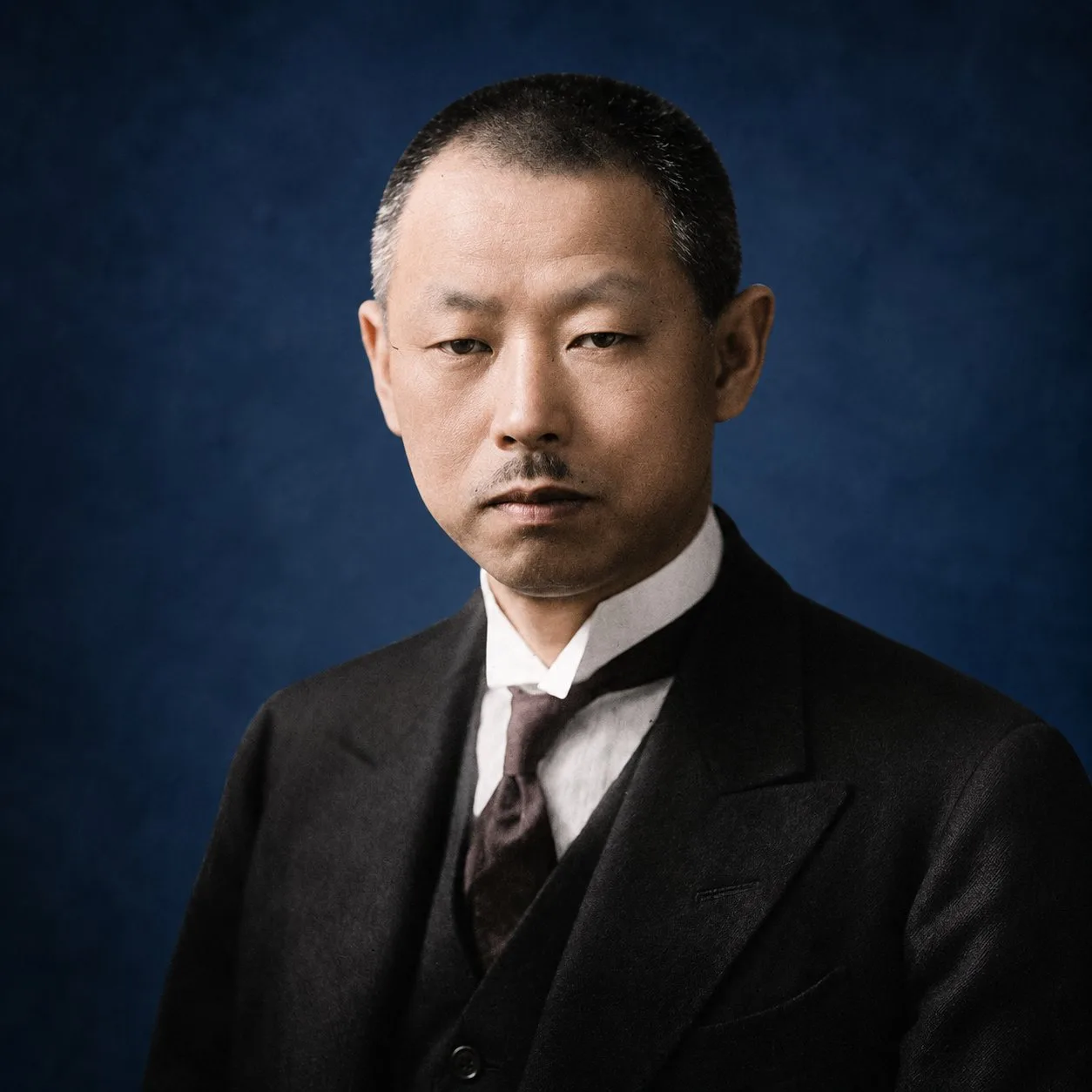
Yoshisuke Aikawa built Nissan as one part of a much larger industrial conglomerate, and his priority was establishing Japan's domestic mass-production capability for automobiles, a nation-building project as much as a commercial one, conducted with active Japanese government encouragement in the 1930s.
The Prince Motor Company, formed from the remnants of Japan's wartime Nakajima Aircraft engineering talent, developed a reputation through the 1950s and 60s for technically ambitious, motorsport-oriented cars far beyond its small production volumes, including the original Skyline and its GT-R variant. Nissan's 1966 merger absorbed this entire engineering culture and its inline-six expertise wholesale, and the resulting engineering lineage (culminating in the RB26DETT engine of the R32–R34 GT-R) is arguably more "Prince" in its intellectual roots than "Nissan."
Nissan's most historically significant models cluster around two enduring lineages, the Z-car (Datsun 240Z through the modern Nissan Z) and the Skyline/GT-R, supplemented by a handful of genuinely distinct homologation specials and the pioneering Leaf.
The list below favors genuinely distinct, historically significant nameplates and generations over every individual trim or facelift.
timeline-evolution
How did it evolve?
Editorial inference
Nissan's timeline is defined by several distinct corporate and product eras: the DAT/Datsun predecessor period (1911–1933), the zaibatsu-era founding and prewar growth under Yoshisuke Aikawa, the postwar rebuilding and Z-car/Skyline golden era (1960s–1990s), and the post-1999 Renault-Nissan Alliance period that brought both a dramatic financial turnaround under Carlos Ghosn and, decades later, serious corporate governance turmoil following his 2018 arrest.
Each era left a lasting mark on the company's engineering identity and corporate culture, from the Prince Motor Company merger's engineering legacy to the Alliance's ongoing influence on Nissan's global manufacturing footprint.
legacy
What did it leave behind?
Editorial inference
Nissan's most enduring legacy is demonstrating that a large, mainstream manufacturer can maintain a genuinely respected performance identity, built on computer-managed engineering sophistication rather than pure mechanical tradition, running in parallel with its everyday, mass-market business, without one undermining the credibility of the other. The GT-R's decades of engineering evolution stand alongside Porsche's 911 as one of the automotive world's clearest examples of a nameplate whose reputation was built through sustained technical refinement rather than one-off spectacle.
The company's early and genuine commitment to mass-market electrification with the Leaf also positions Nissan as an industry pioneer in a transition most major manufacturers only took seriously years later.
motorsport-competition
Did it race?
Editorial inference
Nissan's competition record is most famous for the R32 GT-R's near-total dominance of Group A touring car racing across Japan and Australia in the early 1990s, a run so overwhelming it directly influenced rule changes in multiple series. Beyond touring cars, Nissan has fielded sustained Le Mans prototype efforts across several eras and used rallying (particularly with the Pulsar GTI-R and earlier Violet/240RS models) as another motorsport-to-road-car technology pipeline.
Nissan's motorsport identity is distinct from rivals like Porsche in being more overtly linked to specific homologation road cars, the GT-R nameplate itself exists largely because of Group A racing regulations requiring a homologated road-going version.
rivals-comparisons
What did it compete against?
Editorial inference
The clearest and most frequently discussed Nissan rivalry is the GT-R versus the Porsche 911, repeatedly framed by the motoring press as computer-managed all-wheel-drive dominance versus decades of mechanical chassis refinement, two philosophically opposite answers to the same performance question. Within Japan's domestic market, Nissan has competed directly with Toyota and Honda across nearly every segment for decades, a three-way rivalry that shaped much of Japan's postwar automotive culture.
In the affordable rear-wheel-drive sports coupe segment, the Silvia/200SX competed directly against Toyota's Corolla-based coupes and Mazda's rotary-powered offerings, particularly within drift and grassroots motorsport culture.
pop-culture-sightings
What does it mean in culture?
Editorial inference
Few cars owe their global recognition to a single film franchise as directly as the Nissan Skyline GT-R owes its to "The Fast and the Furious" series, the R34 generation's appearance (most memorably in "2 Fast 2 Furious" and "Fast & Furious") introduced the nameplate, previously obscure outside Japan due to export restrictions, to an entire generation of Western audiences who had never had legal access to buying one.
The Gran Turismo video game series, which has featured Nissan's back catalogue extensively since its 1997 debut, played a similarly significant role in building international enthusiast familiarity with cars like the Skyline GT-R years before many Western markets could import them.
myths-misconceptions
What do people get wrong about it?
Editorial inference
Claim: the Skyline GT-R has always been a pure, in-house Nissan creation from its 1969 debut onward. Truth: the Skyline itself, and much of the inline-six engineering lineage that powered later GT-R generations, originates with the Prince Motor Company, a smaller, technically ambitious manufacturer Nissan absorbed via a 1966 merger, not something Nissan engineered from scratch. verified
Claim: the R34 GT-R was never sold new in the United States because Nissan chose not to export it. Truth: the more precise explanation is regulatory, the R34 did not meet US federal safety and emissions certification requirements at the time, and Nissan did not pursue the costly certification process for what was, at the time, a relatively low-volume model in that market; grey-market and later 25-year-exemption imports are the primary way the car has reached American owners. attributed
Sources & Confidence
Claims in this profile draw on categories of source material appropriate to their confidence level: company-published corporate history for founding and merger dates; period motorsport results (Japanese Touring Car Championship, Bathurst, Le Mans) for competition claims; and established automotive-history texts for design and engineering narrative.
Questions readers ask
When was Nissan founded?
Nissan Motor Co. was formally established in 1933 by industrialist Yoshisuke Aikawa, absorbing the automotive operations of DAT Motorcar Co. (founded 1911), whose name lives on in "Datsun."
Why is the GT-R called "Godzilla"?
The nickname came from the Australian motoring press after the R32 GT-R's near-total dominance of Australian touring car racing (including the Bathurst 1000) in the early 1990s.
Did Nissan invent the GT-R's engine technology in-house?
Much of the engineering lineage, including the RB-family engines, traces to Prince Motor Company, a smaller manufacturer Nissan absorbed via a 1966 merger, not a clean-sheet Nissan design.
Why couldn't Americans buy a new Nissan Skyline GT-R (R34)?
The R34 did not meet US federal safety and emissions certification requirements at the time; owners in the US primarily access the car through grey-market or 25-year import exemption channels.
Is Nissan owned by Renault?
Nissan and Renault are partners in the Renault-Nissan-Mitsubishi Alliance, a cross-shareholding arrangement formed in 1999, rather than a straightforward ownership relationship. Nissan remains its own distinct company within that alliance.