Engine Sphere · Person
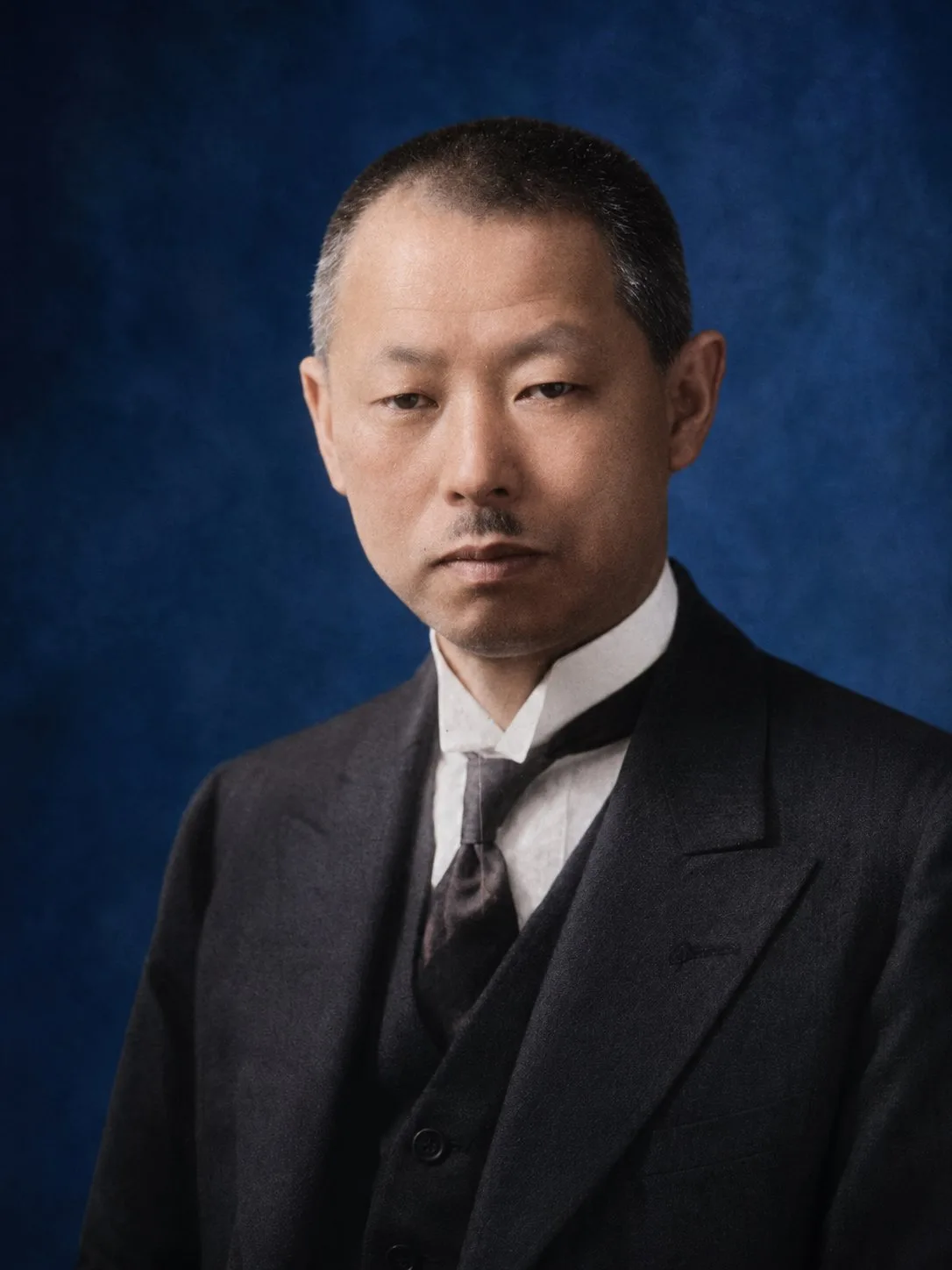
Catalogued Entry No. 025Aikawa Yoshisuke
1880–1967JapaneseFOUNDER
Japanese industrialist who built the Nihon Sangyo conglomerate that became Nissan Motor.
The House They Shaped
The Record
Who are they?
Aikawa Yoshisuke is a figure whose name is far less known outside Japan than the company his conglomerate ultimately produced. An engineer by training and an industrialist by career, he built Nihon Sangyo (literally 'Japan Industries', abbreviated in stock listings to 'Nissan') into one of the country's largest pre-war industrial combines, or zaibatsu, encompassing mining, manufacturing, and eventually automobile production through its acquisition of DAT Motorcar Company in the early 1930s.
His role in Nissan's history is closer to that of a holding-company architect than a hands-on car engineer - the automotive side of his empire grew from strategic acquisition and industrial ambition rather than a personal passion for automobile design, which distinguishes him from founder-engineers like Ferdinand Porsche or Soichiro Honda.
↓ Read deeper↑ Less
Aikawa trained in mechanical engineering, including study in the United States, before returning to Japan to build his industrial career, first in casting and foundry work before expanding into the broader Nihon Sangyo group. His approach to industrial expansion relied heavily on holding-company structures and stock-market financing, techniques relatively novel in Japan's industrial landscape at the time and central to how Nihon Sangyo grew so rapidly across unrelated sectors.
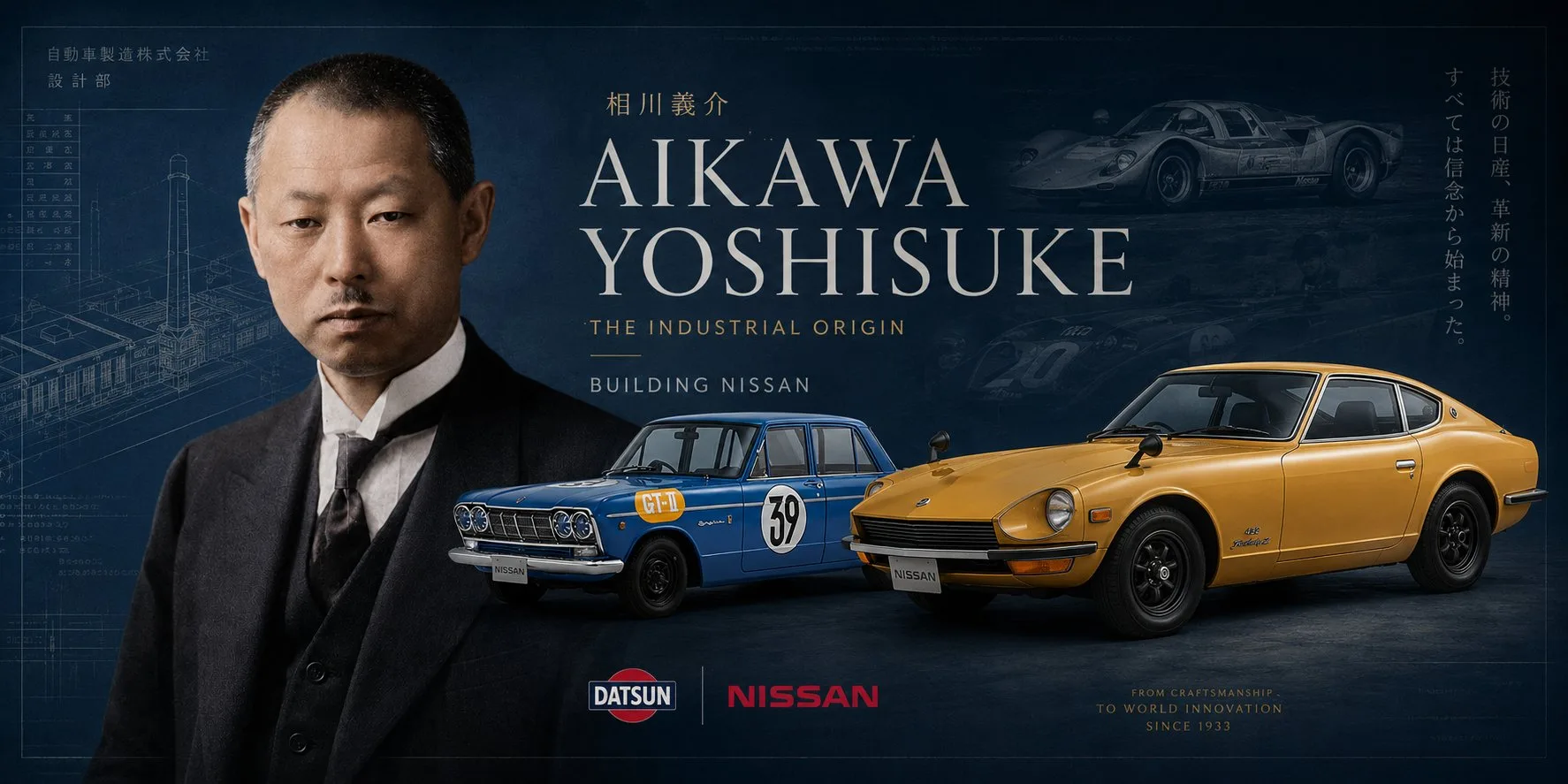
The absorption of DAT Motorcar Company - whose 'Datsun' small cars gave Nissan Motor its early product line - into the Nihon Sangyo group in the early 1930s is the direct link between Aikawa and the automotive marque that endures today. He is documented as having personally driven the strategic decision to consolidate automobile manufacturing under the Nissan brand, though the day-to-day engineering and product decisions were the work of others within the organization.
Formation
Where did it come from?
Aikawa's roots were in Yamaguchi Prefecture in western Japan, an area with a strong tradition of producing figures who went into the Meiji-era industrial and political establishment. He pursued mechanical engineering training that included time in the United States, giving him direct exposure to American industrial methods at a period when Japan was rapidly modernizing its manufacturing base.
↓ Read deeper↑ Less
This is a genuinely under-documented period of his life relative to his later industrial career; the record establishes his engineering training and early foundry work but is thinner on personal and formative detail than for better-chronicled contemporaries. What is well established is that his early career in casting and metalworking gave him practical industrial experience that directly informed his later success building large manufacturing combines.
Career
What did they do?
Aikawa's career moved from foundry and casting work into large-scale industrial consolidation, using holding-company structures to assemble Nihon Sangyo into a conglomerate spanning mining, chemicals, and manufacturing across Japan and, later, Japanese-controlled Manchuria. The automotive arm - what became Nissan Motor - was folded in through the acquisition of DAT Motorcar Company in the early 1930s, and Aikawa is credited with the decision to unify and scale up automobile production under the Nissan name.
In the mid-1930s, Aikawa relocated much of his industrial focus to Manchuria, heading the Manchuria Industrial Development Company, a shift that removed him from direct oversight of Nissan Motor's automotive operations as the company grew into the war years.
↓ Read deeper↑ Less
The structure Aikawa used to build Nihon Sangyo - a holding company financed heavily through public stock offerings rather than bank debt, a relatively unusual approach among Japan's established zaibatsu of the era, which more typically relied on family-controlled banking arms - let him expand faster and into more sectors than a traditional conglomerate might have. Automobile manufacturing was one of several industrial bets folded into this structure, alongside mining and chemical interests.
His move to Manchuria in the mid-1930s to lead state-backed industrial development there marked a significant pivot away from direct involvement in Nissan's automotive business, and the postwar occupation period further curtailed his industrial role, as Allied authorities dissolved the major zaibatsu structures, including Nihon Sangyo, as part of broader economic reforms.
Encyclopedia1 section
legacy
What did it leave behind?
Editorial inference
Aikawa's most durable legacy is structural rather than mechanical: he is the reason 'Nissan' exists as a unified automobile brand at all, having consolidated the DAT Motorcar Company acquisition into a single, scaled manufacturing operation under the Nihon Sangyo umbrella. The postwar breakup of Japan's zaibatsu conglomerates by Allied occupation authorities dismantled the broader empire he built, but the automotive arm survived and continued as an independent Nissan Motor Company.
His name is far less visible in Nissan's own public storytelling than founder-figures are for other marques, in part because his role was that of an industrial financier and consolidator rather than a car person in the way Soichiro Honda or Ferdinand Porsche were - a distinction worth stating plainly rather than smoothing over.
Sources & Confidence
Much of the detailed, primary-source record on Aikawa Yoshisuke exists in Japanese-language business history and zaibatsu studies rather than in widely available English-language automotive histories, which makes several biographical details here necessarily broader than a more heavily documented figure would warrant.