
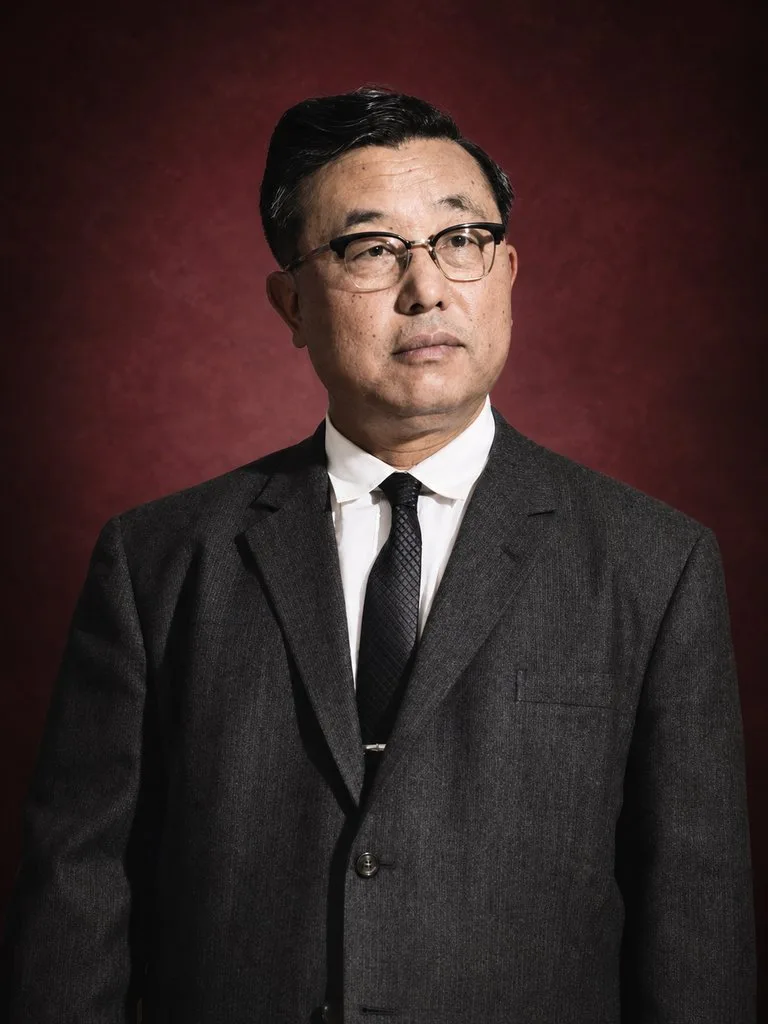
Engine Sphere · Person
Catalogued Entry No. 030Eiji Toyoda
1913–2013JapaneseEXECUTIVE
Longtime Toyota president and chairman who championed the Toyota Production System and launched Lexus in 1989.
The House They Shaped
The Record
Who are they?
Eiji Toyoda is best understood not as Toyota's founder in the literal sense - that role belongs to his cousin Kiichiro Toyoda - but as the executive who guided the company through its transformation from a recovering postwar manufacturer into one of the world's largest and most respected automakers, over a leadership tenure spanning several decades. He championed the formalization of the Toyota Production System alongside Taiichi Ohno, oversaw Toyota's expansion into the American market, and, as chairman in 1989, launched the Lexus luxury division specifically to compete with established European luxury marques.
His connection to this archive's Lexus entry is deliberately framed as a founding-figure anchor rather than a literal founder: Lexus emerged as a corporate initiative under his leadership as Toyota's chairman, not as an independent company he personally established, and that distinction is worth stating plainly.
↓ Read deeper↑ Less
Eiji Toyoda joined the family business in the 1930s and, following a formative study trip to Ford's River Rouge manufacturing complex in the United States in 1950, returned to Japan convinced that mass-production methods needed fundamental adaptation - not wholesale adoption - to fit Japan's smaller market scale and resource constraints. That conviction fed directly into his support for Taiichi Ohno's development of what became the Toyota Production System, emphasizing just-in-time production and continuous improvement (kaizen) over the large-batch methods Ford exemplified.
As Toyota's president from 1967 and later chairman, Eiji Toyoda guided the company's growth into a major exporter and eventually a US manufacturer, and in the late 1980s championed the strategic decision to create a genuinely new luxury brand - Lexus - rather than attempt to sell Toyota-badged vehicles at luxury price points, correctly judging that the Toyota name itself carried associations (affordability, reliability, mass-market positioning) that would work against a premium launch. Lexus debuted in 1989 with the LS 400, an engineering-led entry into a segment dominated by German manufacturers.
Formation
Where did it come from?
Eiji Toyoda's path into Toyota was, in a sense, a birthright shaped into a genuine engineering career: as a cousin of founder Kiichiro Toyoda, he had an early connection to the family's industrial ventures, but he pursued formal mechanical engineering education before joining Toyota's operations directly, ensuring his role in the company rested on technical competence as well as family relation.
↓ Read deeper↑ Less
His 1950 study trip to Ford's massive River Rouge manufacturing complex in Michigan is a frequently cited formative moment in his career: rather than returning simply impressed by American scale, Eiji Toyoda concluded that Toyota needed a fundamentally different manufacturing philosophy suited to Japan's smaller domestic market and more constrained resources, a conclusion that directly shaped his subsequent support for the lean, just-in-time principles Taiichi Ohno was developing.
Career
What did they do?
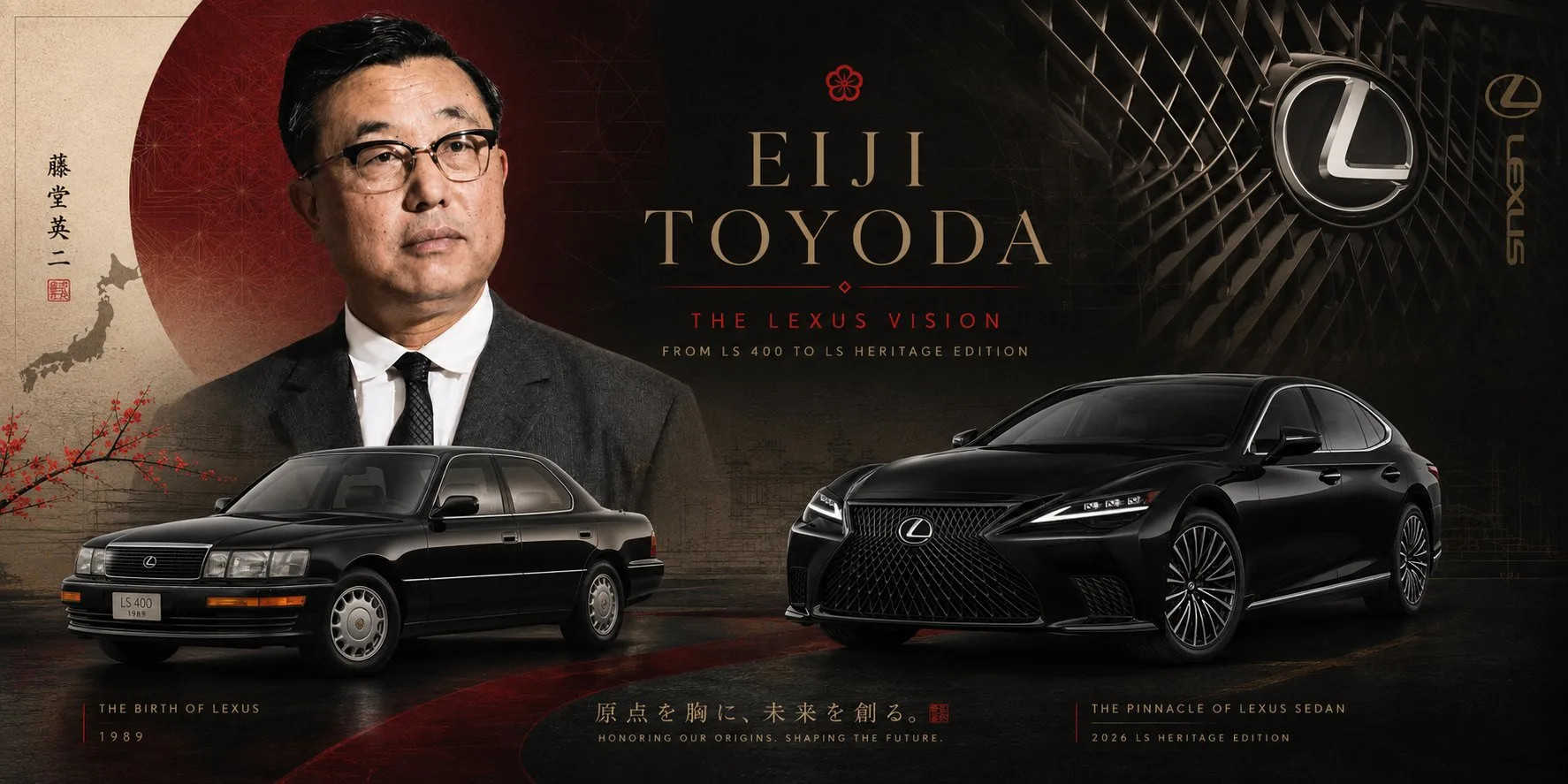
Eiji Toyoda's decades-long career at Toyota culminated in the presidency from 1967 and later the chairmanship, positions from which he guided the company's growth into a major global exporter, its expansion into American manufacturing, and the formalization of the Toyota Production System as a company-wide methodology. In 1989, as chairman, he championed the launch of Lexus, a new luxury division built specifically to compete with established European luxury manufacturers in a segment Toyota's own brand identity could not credibly enter.
↓ Read deeper↑ Less
The decision to create an entirely separate brand for luxury vehicles, rather than simply badge higher-trim Toyota models as premium products, reflected a considered strategic judgment under Eiji Toyoda's leadership: Toyota's reputation for affordability and reliability, while commercially valuable at mass-market scale, would work against credibility in the luxury segment, where European marques' establishment and prestige were themselves part of the product. Lexus launched in 1989 with the LS 400, engineered from the ground up rather than adapted from an existing Toyota platform, and the new brand's early reception validated the strategic bet.
Body of Work
What did it create?
Two achievements define Eiji Toyoda's tenure: his support for Taiichi Ohno's development of the Toyota Production System into a codified, company-wide manufacturing methodology, and his strategic decision as chairman to launch Lexus as an entirely new luxury brand in 1989 rather than attempt to sell premium Toyota-badged vehicles.
↓ Read deeper↑ Less
The Toyota Production System's global influence on manufacturing across industries well beyond automobiles - inspiring 'lean manufacturing' methodology broadly - is one of the most consequential industrial management developments of the 20th century, and Eiji Toyoda's leadership-level backing of Ohno's work was essential to it becoming company doctrine rather than a departmental experiment. Lexus, meanwhile, stands as a case study in brand strategy: launched with the LS 400 in 1989, it succeeded in establishing genuine credibility against BMW and Mercedes-Benz within a remarkably short period, validating Eiji Toyoda's judgment that a clean-sheet new brand was necessary rather than optional.
Encyclopedia1 section
legacy
What did it leave behind?
Editorial inference
Eiji Toyoda's legacy is substantial precisely because it is executive and strategic rather than founding in the narrowest sense: he did not start Toyota, but his decades of leadership shaped it into the manufacturing and market force it became, and his specific decision to launch Lexus created a lasting new business that continues to carry Toyota's engineering reputation into the luxury segment today. He died in 2013 at the age of 100, having outlived nearly every contemporary from Toyota's founding generation.
Sources & Confidence
Claims here reflect Toyota's own published corporate and brand history. Categories of source that would further verify or deepen specific claims include Toyota Motor Corporation's official historical archive, Lexus's own brand history materials, and academic and business-press accounts of the Toyota Production System's development and the Lexus launch strategy.