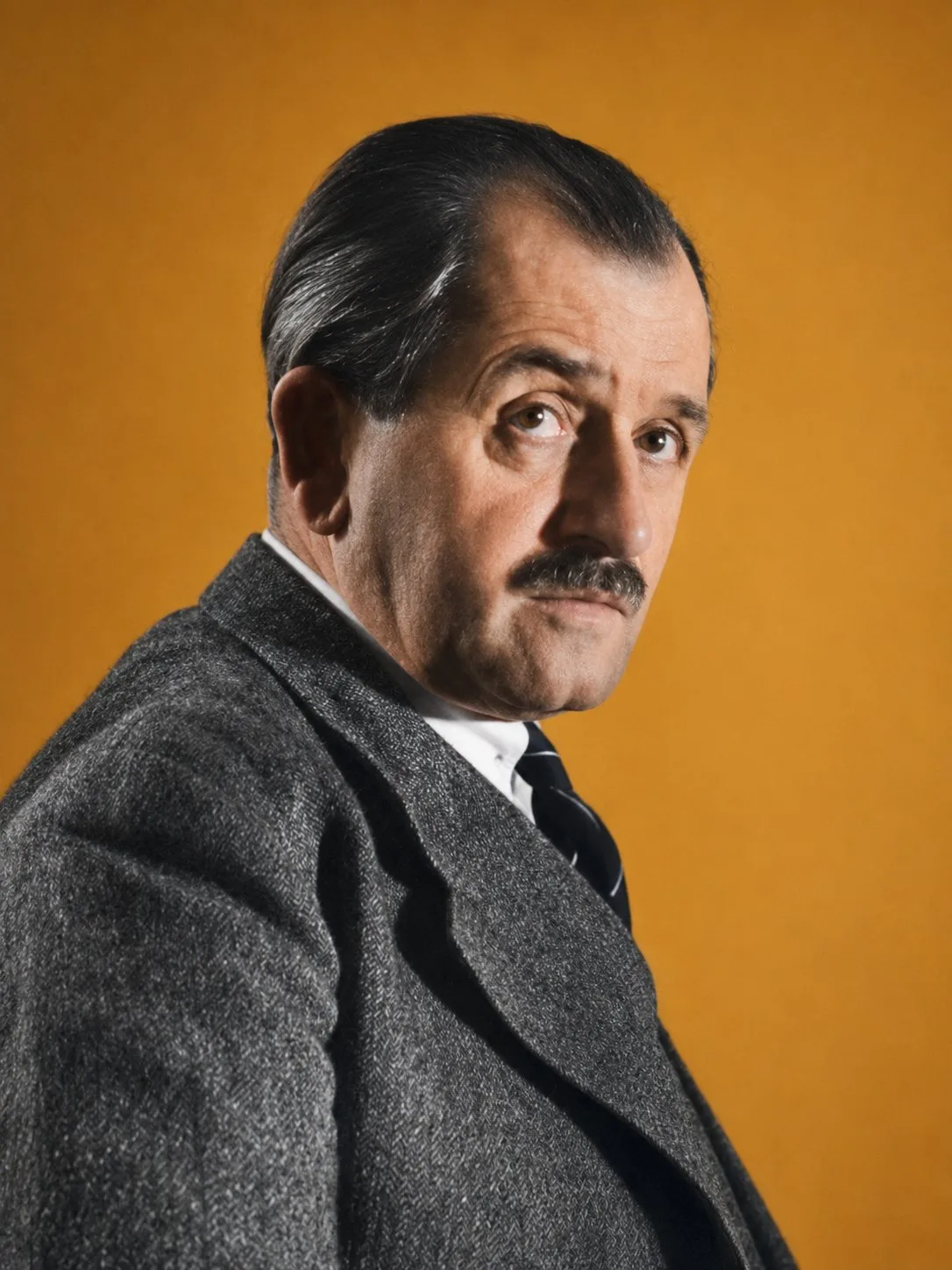
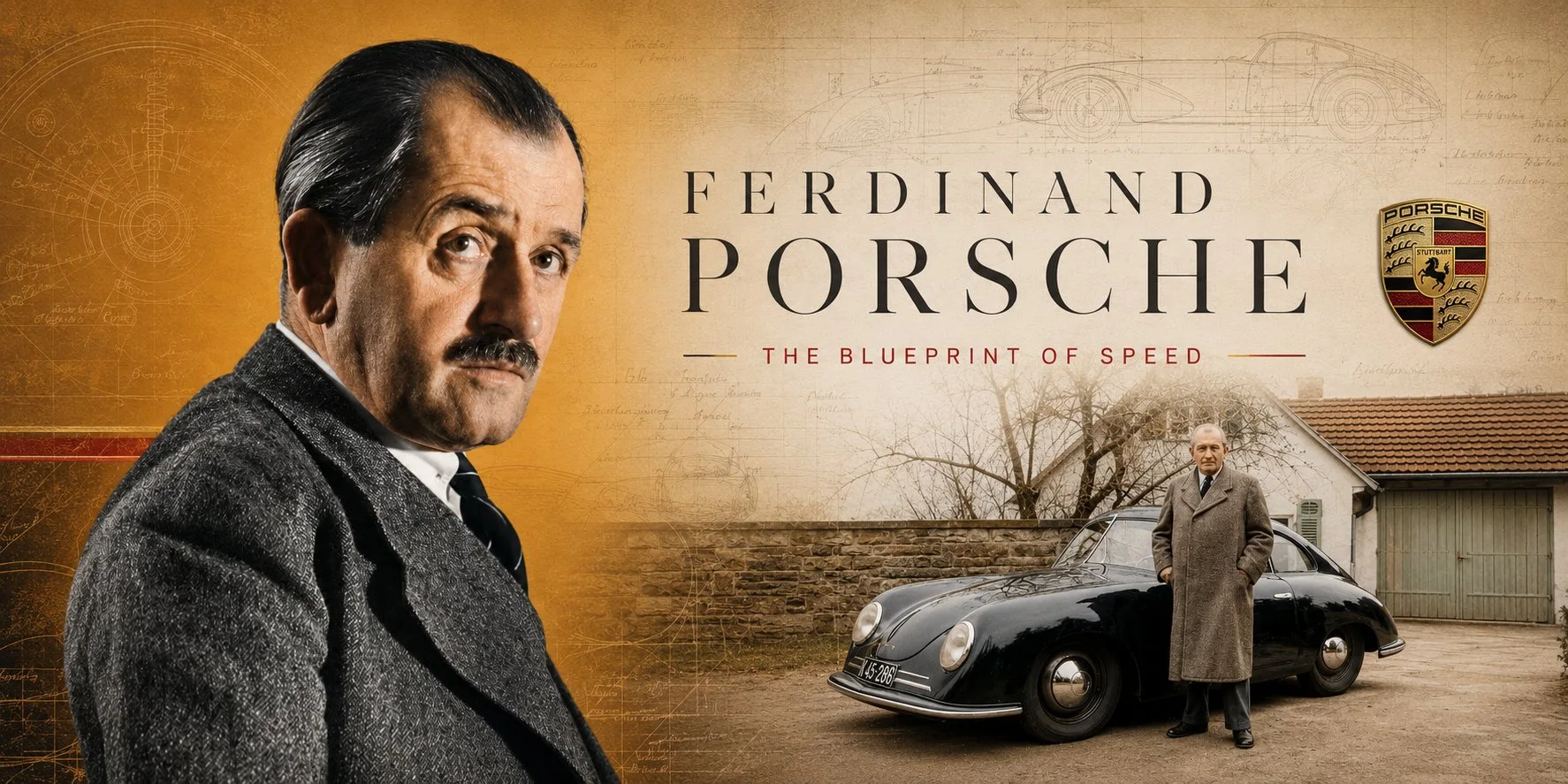
Ferdinand Porsche belongs to that small class of engineers whose fingerprints sit on an entire century of motoring rather than a single marque. Born in 1875 in Maffersdorf, then part of Austria-Hungary, he arrived at the automobile from electrical engineering, and it shows: some of his earliest and most radical work involved electric hub motors decades before anyone spoke of an EV revolution. By the time he opened his own design consultancy in Stuttgart in 1931, he had already worked for Lohner, Austro-Daimler, and Daimler-Benz, and had a reputation as a brilliant, exacting, occasionally impossible engineer to manage.
The consultancy, Dr. Ing. h.c. F. Porsche GmbH, was conceived to sell engineering services to whoever would pay for them - and its most consequential commission became the People's Car project that produced the Volkswagen Beetle. Porsche's name would only appear on a car of his own after the Second World War, when his son Ferry oversaw the first Porsche 356 using many of the same principles - a rear-mounted, air-cooled engine, a lightweight body over a simple platform - that Ferdinand had spent a lifetime refining.
↓ Read deeper↑ Less
Porsche's engineering instincts were formed early and stayed remarkably consistent. At Lohner in the early 1900s he developed the Lohner-Porsche, an electric carriage with motors built into the wheel hubs - a genuinely novel idea that anticipated in-wheel motor technology by more than a century, even if the battery technology of the day could never make it practical. That same appetite for elegant, mechanically direct solutions carried through his racing and touring car work at Austro-Daimler and later at Daimler-Benz, where he was chief engineer during the development of the supercharged Mercedes-Benz SS and SSK sports cars.
His independent consultancy, founded in Stuttgart in 1931, took on projects for multiple manufacturers before its defining commission arrived: a state-sponsored brief to design an affordable car for the German public, which materialized as the KdF-Wagen and, after the war, the Volkswagen Beetle. The brief called for something the industry had rarely prioritized - low cost, mechanical simplicity, and genuine reliability for ordinary buyers - and Porsche answered it with a rear-engine, air-cooled, torsion-bar-suspended layout that would remain in production, essentially unchanged in concept, for decades and tens of millions of units.
Porsche's involvement with the Nazi state apparatus during the 1930s and wartime years - including tank and armaments design work - is a documented and serious part of his biography, not a footnote to be smoothed over; his 1945-47 detention by French authorities followed directly from it. He returned to the firm his son Ferry had kept running, and lived to see the first true Porsche-badged car, the 356, reach production in 1948, though he died in 1951 before the marque's identity was fully its own on the world stage.