

Engine Sphere · Person
Catalogued Entry No. 034Horacio Pagani
b. 1955Argentine-ItalianFOUNDER
Argentine-Italian designer and engineer who founded Pagani Automobili in 1992 after working at Lamborghini.
The House They Shaped
The Record
Who are they?
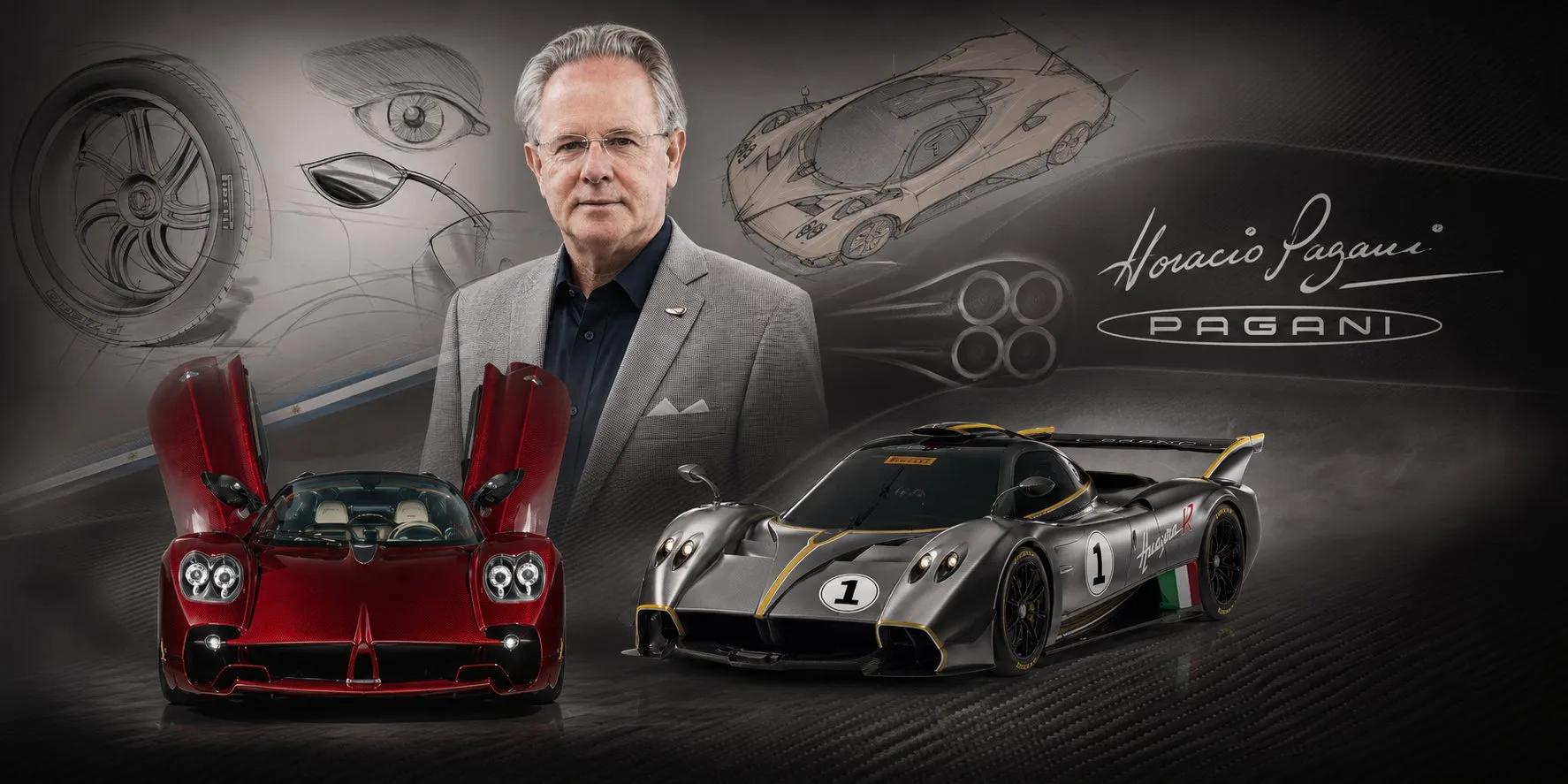
Horacio Pagani's story is that of a genuine obsessive whose obsession happened to align with an emerging technology at exactly the right moment. Born in Casilda, Argentina, in 1955, he built models and go-karts as a boy, moved to Italy in the early 1980s specifically to pursue automotive design and engineering, and spent nearly a decade at Lamborghini, where he became a leading advocate for carbon-fiber composite construction - technology the wider industry had not yet embraced for road cars.
Frustrated that Lamborghini would not invest in the carbon-fiber manufacturing infrastructure he believed the company needed, Pagani left in 1991 and founded his own company the following year, initially as a composites and engineering consultancy before committing fully to building his own hypercar. The result, the Zonda, launched in 1999, established Pagani Automobili as a genuine, if tiny by industry standards, independent hypercar manufacturer built almost entirely around his own aesthetic and engineering vision.
↓ Read deeper↑ Less
Pagani's early fascination with cars in Argentina reportedly included building detailed scale models and, as a teenager, constructing his own go-karts and small vehicles - a hands-on, self-directed engineering education that predates any formal training. His move to Italy in 1982 was a deliberate pilgrimage to the heart of automotive design culture, and after working briefly for other Italian firms, he joined Lamborghini, where his interest in composite materials found a genuine outlet.
At Lamborghini, Pagani worked on composite body panels and structures, including contributing to the Countach Evoluzione concept, which used carbon-fiber body panels as a technology demonstrator - years ahead of composite construction becoming standard in the hypercar segment. His frustration at Lamborghini's reluctance to invest in dedicated carbon-fiber production equipment, even after he personally imported an autoclave for composite curing, is a well-documented catalyst for his 1991 departure.
Modena Design, the company he founded in 1992, initially operated as a design and engineering consultancy for other manufacturers - a pragmatic way to fund development of his own car - before that car, the Zonda, was unveiled in 1999 after roughly seven years of independent development. The company was renamed Pagani Automobili around the Zonda's launch, and Horacio Pagani has remained its chief designer and guiding creative and engineering force ever since, a rarer and rarer arrangement in an industry increasingly dominated by large corporate design teams.
Formation
Where did it come from?
Growing up in provincial Argentina, far from any major automotive design center, Pagani's early fascination with cars and mechanical construction was entirely self-driven, reportedly including building detailed models and small vehicles by hand as a boy and teenager - a formative, largely self-taught foundation that predates his formal move into the industry.
His 1982 relocation to Italy was a deliberate, considered decision to place himself at the center of automotive design culture, a choice that required starting essentially from nothing in a new country before eventually finding his way to Lamborghini.
↓ Read deeper↑ Less
Accounts of Pagani's early life describe a genuinely obsessive, self-motivated relationship with mechanical design well before any formal opportunity to pursue it professionally existed - the kind of origin story that automotive folklore often exaggerates for other figures, but which in Pagani's case is consistently corroborated across interviews and profiles spanning decades of his now well-documented public career.
Career
What did they do?
Pagani's professional career centers on two chapters: nearly a decade at Lamborghini through the 1980s, where he became the company's leading internal advocate for carbon-fiber composite construction, and the independent company he founded after leaving in 1991 - initially a consultancy, Modena Design, before its own hypercar project matured into the Zonda and the company was renamed Pagani Automobili around its 1999 launch.
He has remained the company's chief designer and controlling creative force continuously since its founding, an unusually long and hands-on tenure for an automotive founder still personally shaping every product his company releases more than three decades later.
↓ Read deeper↑ Less
The Lamborghini years gave Pagani both technical grounding in composite manufacturing - then a genuinely novel approach for road car construction, more associated with aerospace and Formula One at the time - and direct frustration at a major manufacturer's institutional reluctance to invest in new production technology, even when Pagani personally imported an autoclave to demonstrate the process was viable. That frustration, rather than any single dramatic falling-out, is the documented catalyst for his 1991 departure and 1992 founding of his own company.
The consultancy period before the Zonda's 1999 launch was a pragmatic necessity: building an independent hypercar manufacturer from scratch required capital Pagani did not have on founding, and Modena Design's engineering and composite-manufacturing consultancy work for other clients funded the roughly seven years of development that produced the Zonda.
Body of Work
What did it create?
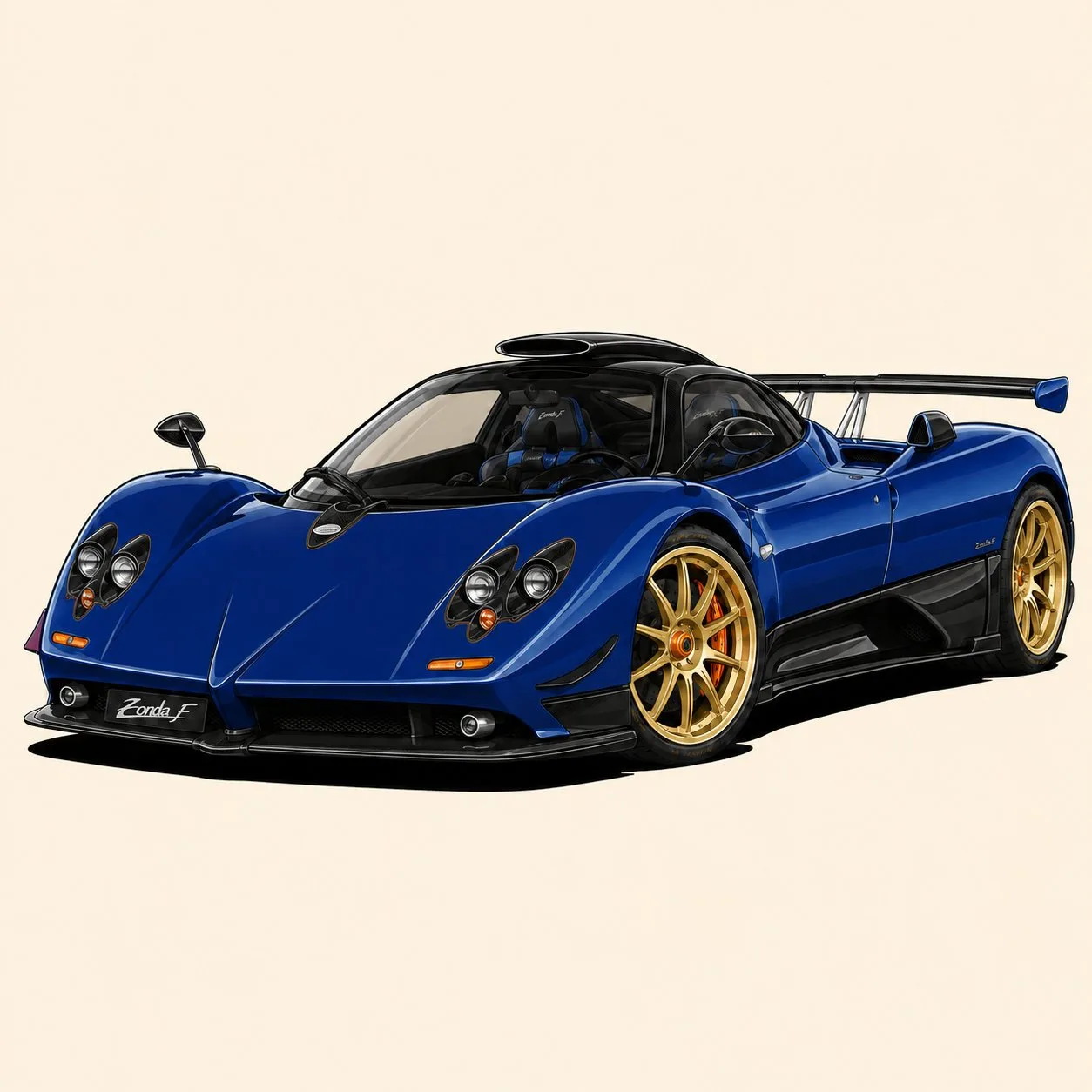
The Zonda and Huayra represent, between them, essentially the entirety of Pagani Automobili's model history to date, and both reflect Horacio Pagani's consistent design and engineering priorities: extensive carbon-fiber composite structure, close attention to visual and mechanical detail down to the smallest component, and a deliberately artisanal production scale far smaller than any mainstream or even most boutique manufacturers.
↓ Read deeper↑ Less
The Zonda's 1999 launch, after roughly seven years of independent development funded by Modena Design's consultancy work, established the template Pagani has followed since: a carbon-fiber monocoque chassis, a large-displacement engine sourced from a partner (Mercedes-AMG, in Pagani's case, across both the Zonda and Huayra), and an obsessive level of detail work extending to components like the company's own distinctive quadruple exhaust design. The Huayra, its 2011 successor, retained this philosophy while introducing active aerodynamics and further refined composite construction, cementing Pagani's reputation as a hypercar maker whose entire identity is inseparable from its founder's personal design sensibility.
Machines They Touched
Encyclopedia3 sections
legacy
What did it leave behind?
Editorial inference
Pagani's ongoing legacy is defined by rarity as much as by any single technical achievement: in an era when nearly every storied automotive marque now sits within a large corporate group, Pagani Automobili remains independently controlled, with its founder still personally directing design and engineering decisions more than thirty years after founding the company - a genuinely unusual continuity in the modern automotive industry.
His early advocacy for carbon-fiber composite construction, formed during his frustrating final years at Lamborghini, proved prescient: composite construction is now standard across the hypercar segment, and Pagani's early, hard-won expertise in it gave his own company a genuine technical head start when it finally launched its own products.
motorsport-competition
Did it race?
Editorial inference
Unlike several other manufacturers in this archive whose founders built racing programs as central to their identity, Pagani Automobili's motorsport presence has been comparatively limited - the company has occasionally supported track-focused and one-make racing variants of its road cars, but has not pursued a sustained factory competition program on the scale of, for example, McLaren's or Porsche's racing history.
pop-culture-sightings
What does it mean in culture?
Editorial inference
Pagani's cars have become fixtures of automotive popular culture disproportionate to the company's tiny production numbers, largely through their frequent inclusion in major racing video game franchises - Gran Turismo and Forza Motorsport among them - which have introduced the Zonda and Huayra to audiences who may never encounter one in person, given how few were ever built.
Television appearances, including on Top Gear, have similarly amplified the cars' cultural visibility, often specifically highlighting Pagani's obsessive attention to detail and the cars' distinctive, artisanal construction as a point of fascination for presenters and audiences alike.
Sources & Confidence
Claims here reflect well-established, widely corroborated automotive industry history and Pagani Automobili's own public company narrative. Categories of source that would further verify or deepen specific claims include Pagani Automobili's official company history materials and period automotive press interviews and profiles.
Questions readers ask
Where was Horacio Pagani born?
In Casilda, Santa Fe Province, Argentina, in 1955.
Did Horacio Pagani work at another automaker before founding his own company?
Yes, he worked at Lamborghini for nearly a decade through the 1980s as a composites specialist before leaving in 1991.
What was Pagani Automobili's first car?
The Pagani Zonda, launched in 1999 after roughly seven years of independent development.
Is Horacio Pagani still involved with the company today?
Yes, he remains the company's chief designer and controlling creative force more than three decades after founding it.