Engine Sphere · Person
Catalogued Entry No. 029Kiichiro Toyoda
1894–1952JapaneseFOUNDER
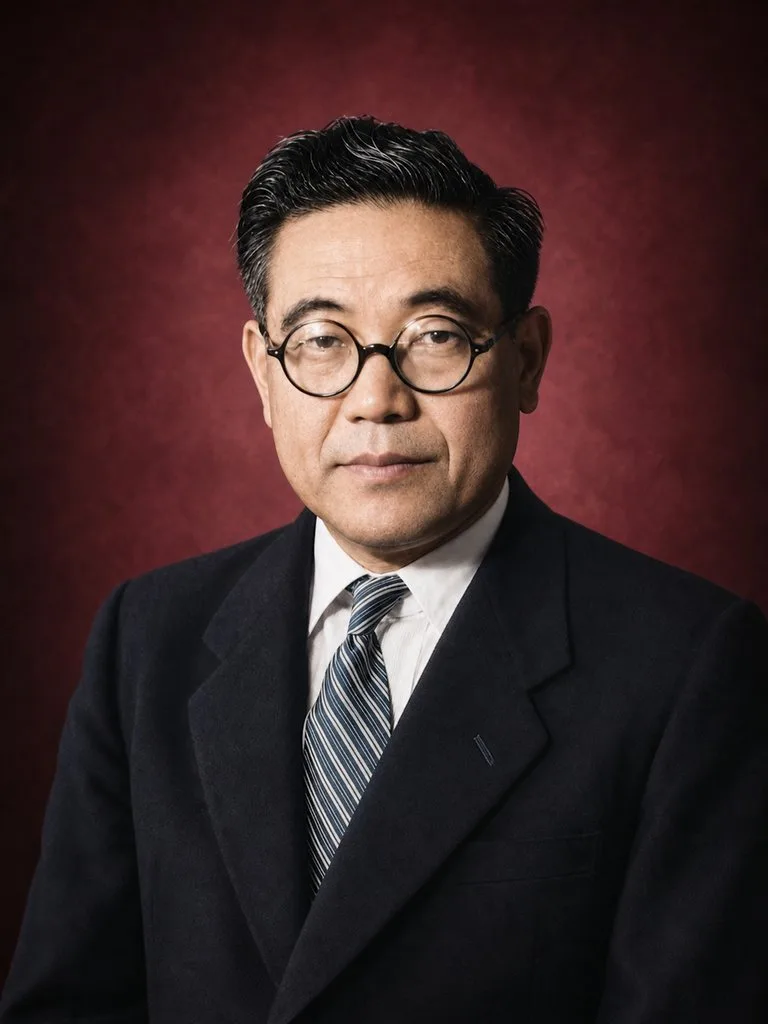
Japanese engineer who founded Toyota Motor Corporation in 1937, building it from his family's loom-machinery fortune.
The House They Shaped
The Record
Who are they?
Kiichiro Toyoda's path into automobiles began, appropriately for a company later famous for manufacturing discipline, in textile machinery. The son of inventor and industrialist Sakichi Toyoda, whose automatic loom patents funded the family's initial industrial fortune, Kiichiro trained as a mechanical engineer at Tokyo Imperial University before turning his attention to automobiles - a field his father's loom company had no direct experience in, but which Kiichiro pursued with the same engineering rigor.
He established an automobile department within Toyoda Automatic Loom Works in the early 1930s, and by 1937 had spun it off into the independent Toyota Motor Corporation (the company's own name deliberately altered from the family name 'Toyoda' for branding reasons). He led the company through its difficult early years and the Second World War, and pioneered early versions of the manufacturing philosophy - eliminating waste, just-in-time production - that would later be formalized as the Toyota Production System.
↓ Read deeper↑ Less
The capital that let Kiichiro pursue automobile manufacturing came directly from his father's success: Sakichi Toyoda sold the patent rights to his automatic loom invention to a British textile machinery company, and that windfall substantially funded the automobile department's early development within Toyoda Automatic Loom Works. This origin - industrial capital from an entirely different manufacturing sector, redirected by a technically curious son into automobiles - is a genuinely distinctive founding story among major automakers.
Kiichiro's early manufacturing philosophy, developed through the 1930s and refined further after the war, emphasized eliminating waste and producing only what was needed when it was needed - principles that Taiichi Ohno and later Toyota engineers would formalize into the Toyota Production System, one of the most influential manufacturing methodologies in global industrial history. Kiichiro did not live to see that system fully codified, but its conceptual seeds are traceable directly to decisions and priorities he set in Toyota's founding years.
His tenure ended in resignation in 1950, following a severe post-war financial crisis and a labor dispute that forced significant layoffs at the company he had founded - a decision he took personal responsibility for by stepping down as president, even though the company recovered and thrived commercially soon after under new leadership, including his cousin Eiji Toyoda.
Formation
Where did it come from?
Kiichiro grew up in a household already defined by his father's inventive drive - Sakichi Toyoda's automatic loom innovations had built a genuine industrial fortune by the time Kiichiro reached adulthood - which gave him both financial resources and a family culture that prized mechanical problem-solving. He studied mechanical engineering at Tokyo Imperial University, a formal technical education that distinguished his path from more self-taught contemporaries elsewhere in this archive.
↓ Read deeper↑ Less
The elder Toyoda's sale of his automatic loom patent rights to Britain's Platt Brothers in the late 1920s provided a substantial capital infusion that Kiichiro would later direct toward automobile manufacturing - a deliberate, considered pivot into an entirely new industrial sector rather than a natural extension of the family's existing textile-machinery expertise.
Career
What did they do?
Kiichiro's career moved deliberately from textile machinery engineering into automobiles: he established an automotive research and development department inside the family's loom company in 1933, and by 1937 had formally separated it into Toyota Motor Corporation, with himself as president. He led the company through the difficult prewar and wartime years and into the early postwar period, developing early production and quality-control philosophies that would later underpin the Toyota Production System.
A severe financial crisis and resulting labor dispute in 1949-1950 forced significant workforce layoffs; Kiichiro resigned as president in 1950 to take personal responsibility, even as the Korean War-driven procurement boom shortly after restored the company's financial health under new leadership.
↓ Read deeper↑ Less
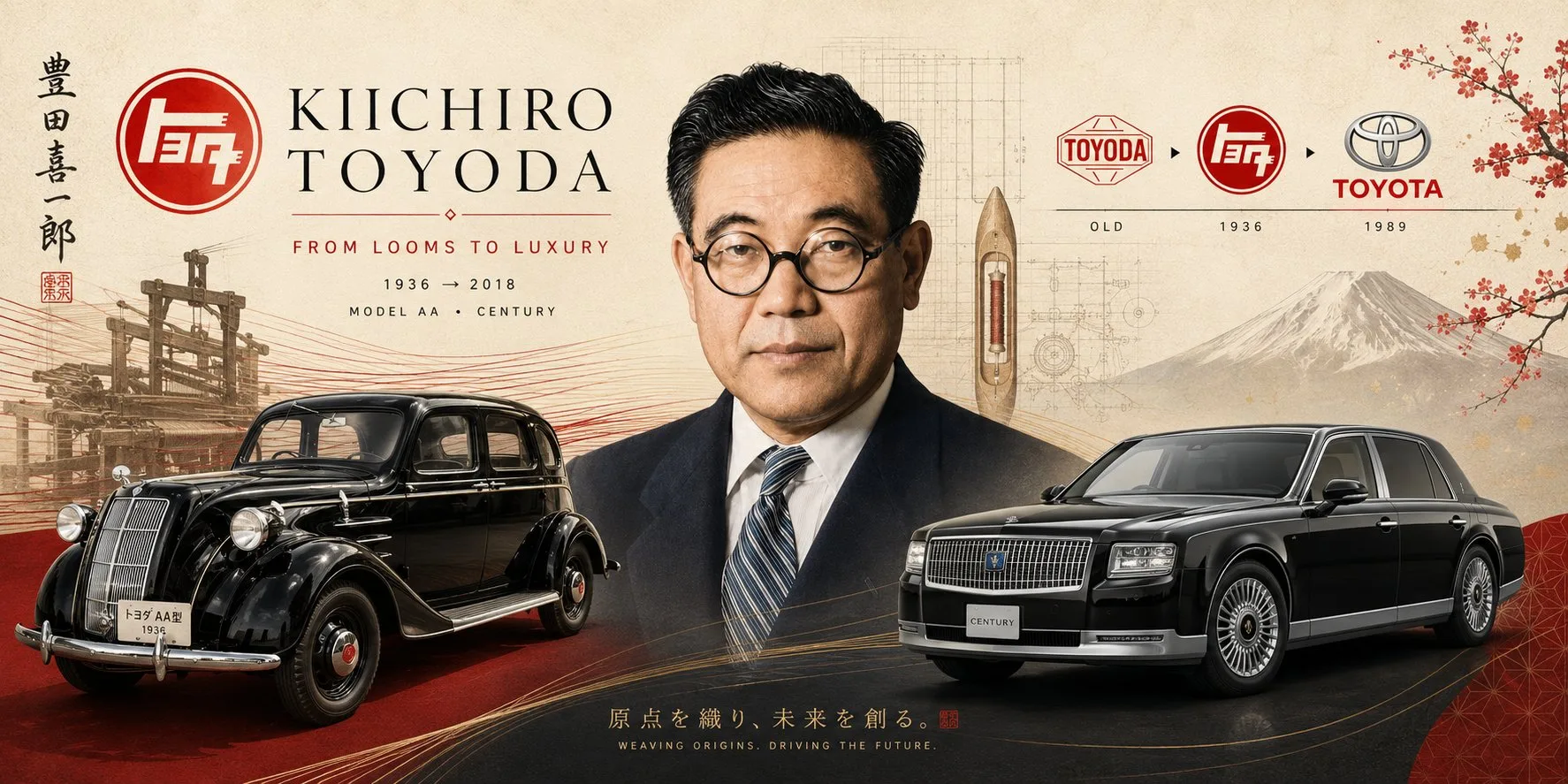
The decision to spell the company 'Toyota' rather than the family name 'Toyoda' for the automobile business was a deliberate branding choice - reportedly chosen partly because the katakana rendering of 'Toyota' required a visually cleaner, luckier stroke count than 'Toyoda' - reflecting the kind of careful, considered decision-making that characterized Kiichiro's approach to building the new venture.
His 1950 resignation, taken as an act of responsibility following the layoffs during Toyota's near-bankruptcy crisis, is a significant and honestly documented part of his career: he did not stay on through the company's subsequent recovery and growth, and his cousin Eiji Toyoda and other leaders guided Toyota through the following decades of expansion. Kiichiro died in 1952, only two years after his resignation, without seeing Toyota reach the global scale it would eventually achieve.
Body of Work
What did it create?
Toyota Motor Corporation itself is Kiichiro's central and enduring work, but his specific contribution to manufacturing philosophy - insisting on eliminating waste and producing efficiently rather than simply at scale - deserves recognition as a distinct achievement, since it became the conceptual root of the Toyota Production System, later formalized by Taiichi Ohno and studied globally as one of the most influential manufacturing methodologies in industrial history.
↓ Read deeper↑ Less
It would overstate the record to credit Kiichiro with the fully formed Toyota Production System, which was developed and codified substantially after his 1950 resignation and 1952 death, primarily through Taiichi Ohno's work over the following decades. What is accurately attributable to Kiichiro is the founding emphasis on efficient, waste-conscious manufacturing that set the cultural and philosophical direction Ohno's later system built upon - a foundational rather than a finished contribution.
Encyclopedia1 section
legacy
What did it leave behind?
Editorial inference
Kiichiro's legacy rests on both the company he founded and the manufacturing philosophy he set in motion, even though he did not personally lead Toyota through the growth decades that followed his 1950 resignation. Toyota's own corporate history treats his founding role and his 1950 resignation - taken out of personal responsibility during a genuine crisis - as a defining, honestly told part of the company's origin story.
Sources & Confidence
Claims here reflect Toyota's own published corporate history and well-established accounts of postwar Japanese industrial development. Categories of source that would further verify or deepen specific claims include Toyota Motor Corporation's official historical archive and academic histories of the Toyota Production System's development.