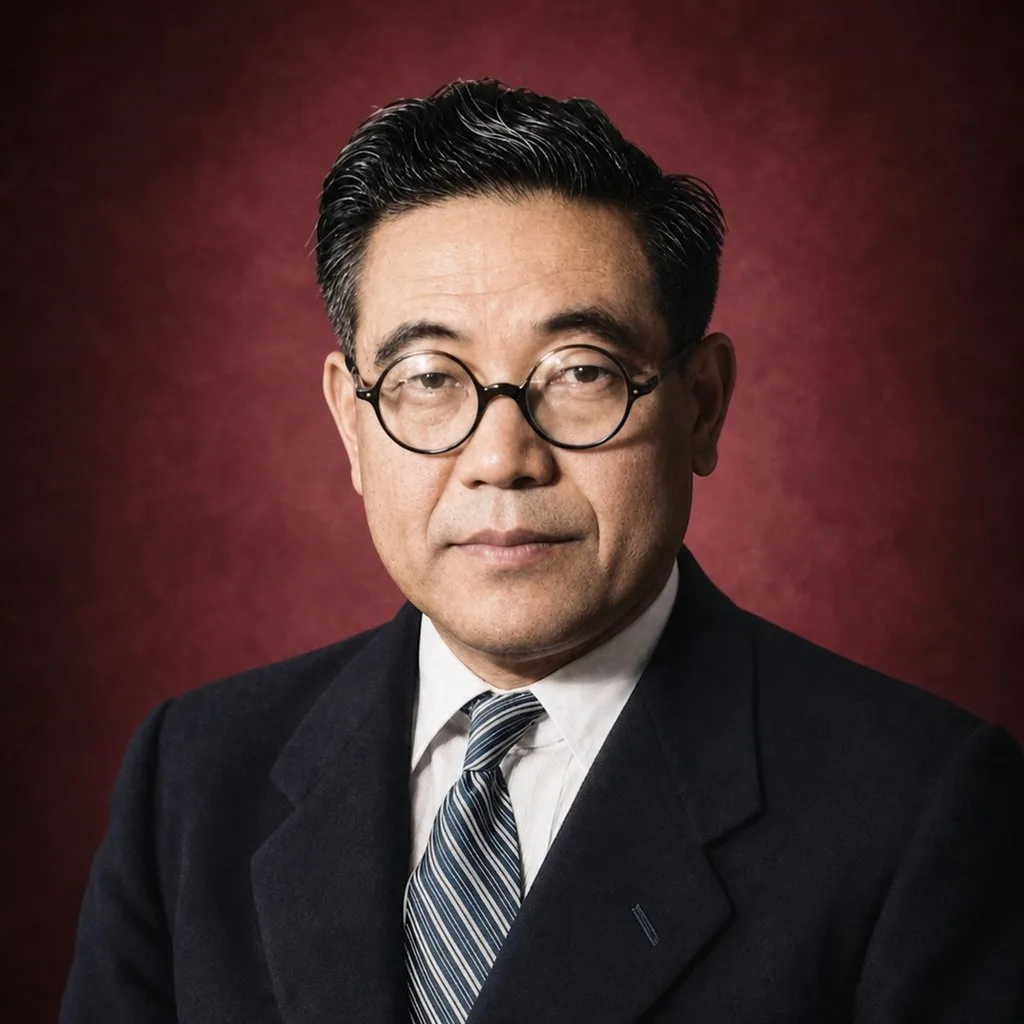
Japanese manufacturer headquartered in Toyota City, the world's largest automaker for much of the 21st century, built on the discipline of the Toyota Production System.
Toyota's global significance rests less on any one iconic model than on how it builds cars at all: the Toyota Production System, developed through the 1950s–70s, formalised "just-in-time" manufacturing and continuous incremental improvement (kaizen) into a management philosophy that the rest of the world's manufacturing industries, automotive and otherwise, spent decades trying to copy. That reputation for relentless, unglamorous reliability is the foundation the company's occasional flights of genuine engineering romance (the 2000GT, the Supra, the modern GR performance sub-brand) are built on top of, rather than a contradiction of it.
The company began as a side venture of a loom manufacturer, and the discipline of precision machine-building that automatic looms demanded carried directly into its automobiles, a lineage Toyota itself has never downplayed.
↓ Read deeper↑ Less
Toyota Motor Corporation was established in 1937 by Kiichiro Toyoda, spun off from his father Sakichi Toyoda's enormously successful Toyoda Automatic Loom Works. Sakichi Toyoda's own invention, an automatic loom that stopped itself the instant a thread broke, preventing defective cloth, became, in slightly abstracted form, the philosophical seed of Toyota's later manufacturing doctrine: build systems that surface and stop for defects immediately, rather than let them propagate. Kiichiro used the sale of the loom patent rights to Platt Brothers of England to help fund the automotive venture.
The company's name was deliberately changed from the family name "Toyoda" to "Toyota" before launch, eight strokes in Japanese katakana versus ten for "Toyoda," considered luckier, and useful in separating the public company from the founding family's personal name. Toyota City itself, the company's headquarters and manufacturing heartland in Aichi Prefecture, was renamed from Koromo in 1959 in the company's honour, a rare instance of a Japanese municipality renaming itself after a corporation.
Toyota's postwar growth was not without crisis: a severe financial squeeze in 1950 forced layoffs and led directly to the spin-off of Toyota Motor Sales as a separate company (not fully remerged until 1982), and to a labour dispute serious enough that Kiichiro Toyoda resigned as president to take responsibility, a moment the company still cites internally as formative to its later emphasis on stable, long-term employment and continuous-improvement culture over short-term efficiency.
Origins
How did it begin?
Toyota's origin lies not in automobiles but in textile machinery. Sakichi Toyoda, one of Japan's most celebrated inventors, built Toyoda Automatic Loom Works into a highly profitable business around his self-stopping automatic loom, a machine so well regarded internationally that the sale of its patent rights to the British firm Platt Brothers provided crucial early capital for his son's very different ambition: building automobiles.
Kiichiro Toyoda established the automotive division within the loom company in 1933 and spun it off as the independent Toyota Motor Corporation in 1937, deliberately choosing the name "Toyota" over the family name "Toyoda" for the new public venture.
↓ Read deeper↑ Less
The name change from "Toyoda" to "Toyota" was not merely cosmetic: company lore holds that "Toyota," written in katakana, requires eight brushstrokes rather than "Toyoda's" ten, and eight was considered a luckier number in Japanese numerology, but the change also served the practical purpose of distinguishing the new public automotive company from the Toyoda family's personal name and their separate loom business.
Kiichiro Toyoda studied mechanical engineering before turning his attention to automobiles, and personally oversaw the technical development of Toyota's early trucks and passenger cars through the difficult 1930s, when Japan's automotive industry was still overwhelmingly reliant on imported American technology and components.
The company's most formative early crisis came in 1950: a severe cash-flow crunch, worsened by a bank-mandated restructuring, forced Toyota to lay off a quarter of its workforce and led Kiichiro Toyoda to resign as president in a gesture of personal accountability, a moment the company still treats as central to its institutional identity, credited with instilling the emphasis on stable employment and slow, careful, continuous-improvement growth (rather than debt-fuelled expansion) that defined Toyota's subsequent decades.
Design Philosophy
What does it stand for, visually?
Toyota's mainstream design language has, for most of its history, prioritized clean, legible, easily manufacturable forms over dramatic styling statements, a design conservatism that mirrors the company's broader manufacturing-discipline culture (the Toyota Production System) more than it reflects a lack of design ambition.
Where Toyota has pursued genuine design ambition, it has typically done so through dedicated halo or performance models rather than across the mainstream lineup, the 2000GT's Yamaha-collaborative styling, the Supra's aggressive 1990s silhouette, and the more recent GR performance sub-brand's deliberately more expressive design language.
↓ Read deeper↑ Less
The 2000GT (1967), styled with input from Count Albrecht Goertz (who had previously designed the BMW 507), represented an unusually ambitious design statement for Toyota at a time when Japanese manufacturers were still generally viewed internationally as producing conservative, derivative styling, its low, sweeping GT proportions were explicitly intended to prove Japanese design could compete with European exotics.
The Supra's fourth generation (A80, 1993) adopted a deliberately more aggressive, rounded-yet-purposeful silhouette distinct from Toyota's more conservative mainstream lineup of the same era, reflecting the model's positioning as the brand's dedicated performance flagship rather than a sportier variant of an everyday car.
Toyota's more recent design language shift (the "Keen Look" and later more expressive front-end treatments introduced in the 2010s–2020s) reflects a broader company effort to inject more visual distinctiveness across the mainstream lineup, a deliberate departure from decades of more conservative styling.
Engineering Philosophy
How does it engineer?
Toyota's engineering identity is fundamentally a manufacturing philosophy first, the Toyota Production System's core principles (jidoka, or automation with a human touch that stops production the instant a defect is detected, and just-in-time delivery) originated from founder Sakichi Toyoda's earlier automatic-loom design and were formalized into automotive manufacturing practice that the rest of the global auto industry spent decades studying and attempting to replicate.
This manufacturing-first culture has historically produced engineering priorities favoring proven reliability and incremental refinement over dramatic technological leaps, Toyota's hybrid powertrain development (the Prius, 1997) exemplifies this pattern: a genuinely significant technological step, but one built on patient, methodical engineering validation rather than rushed market introduction.
↓ Read deeper↑ Less
The "jidoka" principle, tracing directly to Sakichi Toyoda's automatic loom, which stopped itself the instant a thread broke rather than continuing to weave defective cloth, was translated into automobile manufacturing as a philosophy of designing production lines (and, by extension, engineering processes generally) to surface and address defects immediately rather than let them propagate, a principle now studied across manufacturing industries far beyond automotive.
The Prius's hybrid powertrain (1997) represented years of internal research and testing before its commercial launch, reflecting Toyota's broader engineering preference for exhaustive validation over rushing new technology to market, a pattern that, while sometimes criticized as overly conservative, has also protected the brand's reliability reputation across decades of new technology introduction.
Toyota's motorsport-adjacent engineering (the 2000GT's Yamaha collaboration, and later the GR performance sub-brand's rally and endurance-racing-derived technology) has periodically applied a more aggressive, performance-first engineering approach distinct from the company's typically more conservative mainstream engineering culture.
Notable Works
What did it create?
The Toyota Production System, developed internally over decades beginning in the postwar period, stands as arguably Toyota's single most influential contribution to the automotive industry, a manufacturing philosophy so significant that it has been studied and partially adopted across virtually every major global manufacturer and well beyond the automotive sector entirely.
The 2000GT (1967) holds particular historical significance as one of the first Japanese cars to earn genuine respect from the international automotive press and enthusiast community as a match for contemporary European exotics, helping shift global perception of Japanese automotive engineering capability.
↓ Read deeper↑ Less
The Prius's 1997 Japanese launch (followed by global rollout in 2000) represented one of the first genuinely mass-market hybrid powertrains from a major manufacturer, arriving years before most rivals took electrification seriously as a core engineering priority. Its commercial success is widely credited with proving hybrid technology's viability well before the broader industry's own shift toward electrification.
The 2000GT's appearance in the 1967 James Bond film "You Only Live Twice" (in a specially built targa-top variant, created because the standard car's roofline was too low for Sean Connery to fit inside comfortably) further cemented its status as evidence that Japanese engineering and design had arrived on the international stage.
Toyota's Land Cruiser, in continuous production since 1951, represents a different kind of notable work, proof of sustained, unglamorous engineering durability applied to off-road and utility vehicle design, earning a reputation for reliability in extremely demanding conditions across decades and multiple continents.
Key People
Who shaped it?
Toyota is unusual among the world's largest manufacturers in having a founding story rooted in an entirely different industry: textile machinery, whose engineering philosophy, precision, defect-detection, continuous refinement, was carried almost intact into automobile manufacturing by the founder's son.
Sakichi Toyoda's reputation as one of Japan's foremost inventors gave the automotive venture credibility and capital it would have struggled to secure as a standalone startup.
↓ Read deeper↑ Less
Sakichi Toyoda's automatic loom, patented in the early 20th century, was celebrated specifically for its "jidoka" principle, a machine that detects an abnormality (a broken thread) and stops itself automatically rather than continuing to produce defective output. This single concept, translated from textiles to automobile assembly lines, became one of the two structural pillars (alongside "just-in-time" delivery) of the Toyota Production System that defines the company's manufacturing culture to this day.
Kiichiro Toyoda, formally trained in mechanical engineering, used the capital from selling his father's loom patent rights internationally to fund automobile research within the family company from 1933, formally establishing Toyota Motor Corporation as an independent entity in 1937, and personally led the company through both its prewar growth and its severe 1950 financial crisis, resigning as president to take responsibility for the layoffs that crisis required.
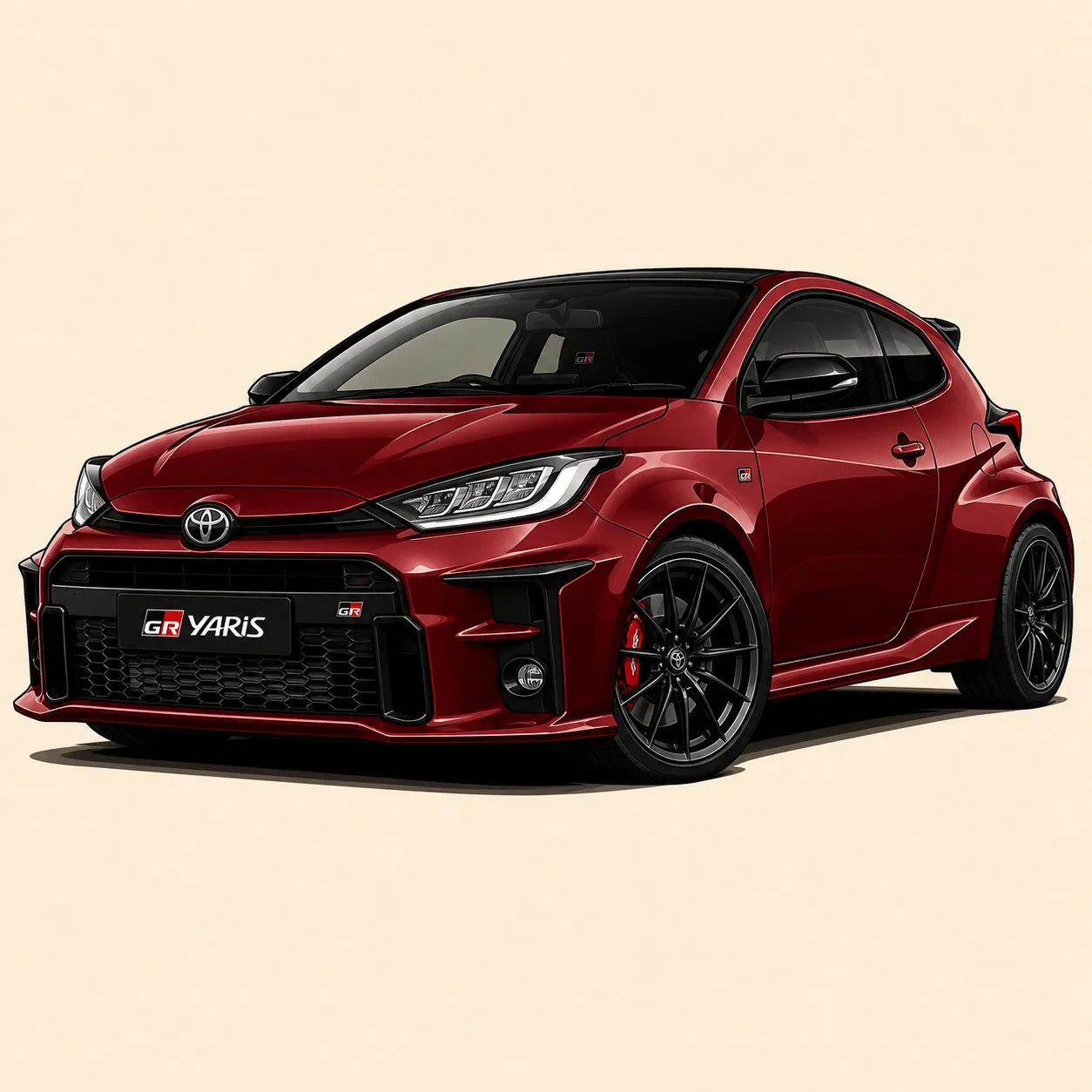
Toyota's most historically significant models split across genuinely different categories: mass-market volume nameplates (Corolla, Camry) whose global sales figures make them among the best-selling cars in automotive history; durability-focused utility vehicles (Land Cruiser) with a reputation built over decades of extreme-condition use; and a smaller but historically significant performance lineage (2000GT, Supra, MR2, GR Yaris) representing the company's more occasional but genuine engineering ambition.
The list below favors genuinely distinct, historically significant nameplates and generations over every individual regional trim.
motorsport-competition
Did it race?
Editorial inference
Toyota's rallying programme (Toyota Team Europe, later Toyota Gazoo Racing) achieved sustained World Rally Championship success across multiple eras and cars, including the Celica and later Corolla WRC, establishing genuine competition credibility distinct from the brand's more conservative mainstream reputation.
At Le Mans, Toyota fielded competitive but long-frustrated prototype efforts across the 1990s and 2010s before finally winning outright in 2018, a hard-won victory following several previous near-misses, including a notorious late-race mechanical failure in 2016 while leading with minutes remaining.
timeline-evolution
How did it evolve?
Editorial inference
Toyota's timeline divides into distinct phases: the loom-manufacturing origins and 1937 automotive spin-off, a severe near-collapse in 1950 that reshaped the company's institutional culture around stability and continuous improvement, the postwar export growth that established Toyota internationally (Corona, Corolla, 2000GT), and the modern hybrid-and-beyond era beginning with the Prius in 1997.
Each phase left a distinct institutional mark still visible in the company's manufacturing philosophy and product priorities today.
rivals-comparisons
What did it compete against?
Editorial inference
Within Japan, Toyota has competed for decades against Honda and Nissan across nearly every market segment, forming the backbone of the country's postwar automotive industry, Toyota's manufacturing-discipline and reliability focus distinguishing it from Honda's engine-first performance culture and Nissan's technology-forward engineering identity.
Globally, Toyota and Volkswagen Group have traded the title of world's largest automaker by sales volume in various years since the 2010s, a rivalry defined by manufacturing scale and market reach rather than any single product comparison.
pop-culture-sightings
What does it mean in culture?
Editorial inference
The Toyota Supra's fourth generation (A80) achieved global pop-culture prominence largely through its central role in the original "The Fast and the Furious" (2001), becoming one of the most recognizable tuner-car icons of the early 2000s and introducing an entire generation of Western audiences to Japanese performance-car and tuning culture.
The Corolla AE86, meanwhile, achieved similarly significant international recognition through the Japanese manga and anime series "Initial D," which built its entire drift-racing narrative around the car and introduced mountain-pass drift culture to audiences far beyond Japan's domestic tuning scene.
myths-misconceptions
What do people get wrong about it?
Editorial inference
Claim: the modern Toyota 86/GR86 is simply a modern Supra. Truth: the two are distinct nameplates with different engineering priorities. The Supra has historically been Toyota's turbocharged, higher-performance flagship coupe, while the 86/GR86 (developed jointly with Subaru) is a more affordable, naturally aspirated, lightweight rear-drive sports car occupying a different market position entirely. attributed
Claim: the Prius was the first hybrid car ever made. Truth: hybrid-electric vehicle concepts and even some limited production examples predate the Prius by decades; the Prius's genuine significance is being one of the first hybrids sold as a genuinely mass-market, dedicated production model from a major global manufacturer, not the literal invention of hybrid technology itself. verified
legacy
What did it leave behind?
Editorial inference
Toyota's most consequential legacy is arguably not any single car but the Toyota Production System itself, a manufacturing philosophy of continuous incremental improvement and defect-prevention that has been studied, partially adopted, and directly credited as inspiration across virtually every major global manufacturer, and well beyond automotive manufacturing into general industrial and business-management practice.
The Prius's 1997 launch and the company's sustained subsequent hybrid-technology investment represent a second, distinct legacy: genuine early industry leadership in electrification, achieved through the same patient, methodical engineering culture that defines the company's manufacturing philosophy broadly.
Sources & Confidence
Claims in this profile draw on categories of source material appropriate to their confidence level: company-published corporate history for founding dates and the Toyota Production System's development; period motorsport results (WRC, Le Mans) for competition claims; and established automotive-history texts for design and engineering narrative.
Questions readers ask
When was Toyota founded?
Toyota Motor Corporation was established in 1937 by Kiichiro Toyoda, spun off from his father Sakichi Toyoda's Toyoda Automatic Loom Works.
What is the Toyota Production System?
A manufacturing philosophy of continuous incremental improvement (kaizen) and defect-prevention (jidoka), developed over decades and studied across the global manufacturing industry.
Was the Prius the first hybrid car?
No. Earlier hybrid concepts and limited-production examples existed before 1997, but the Prius was one of the first hybrids sold as a genuinely mass-market production model from a major global manufacturer.
Is the Toyota 86/GR86 the same as the Supra?
No. They are distinct nameplates: the Supra is historically Toyota's turbocharged performance flagship, while the 86/GR86 is a more affordable, naturally aspirated sports car developed jointly with Subaru.
How many times has Toyota won Le Mans outright?
Toyota's first outright win came in 2018, after decades of prototype racing including a notorious 2016 near-miss caused by a late-race mechanical failure.