
Engine Sphere · Person
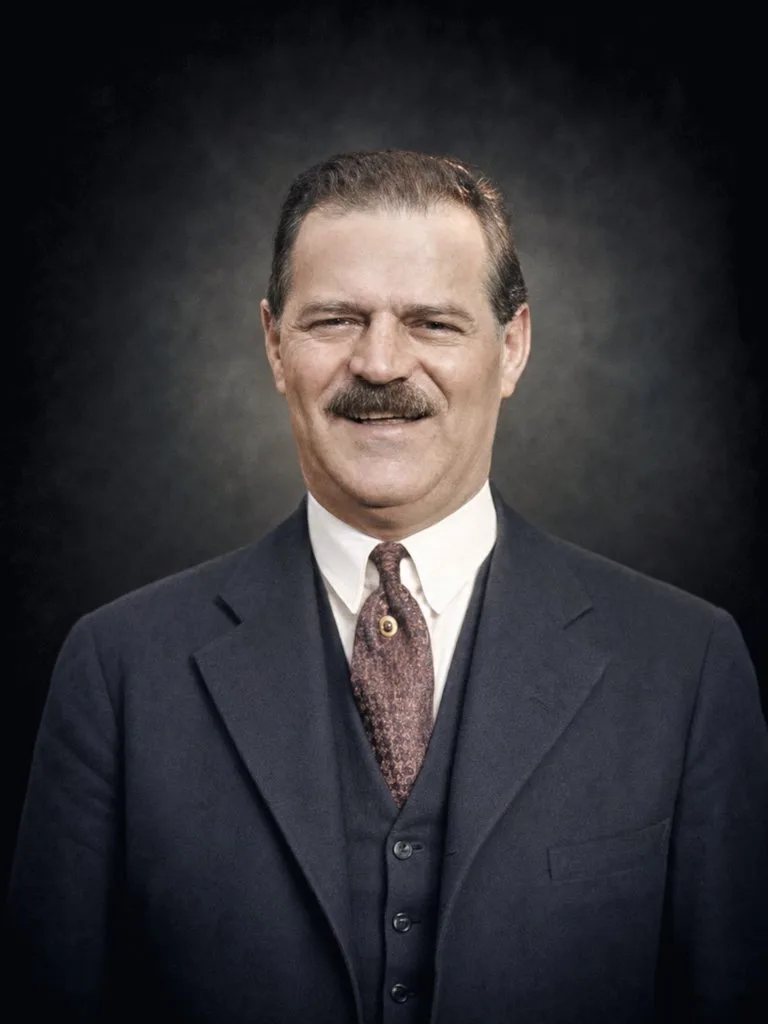
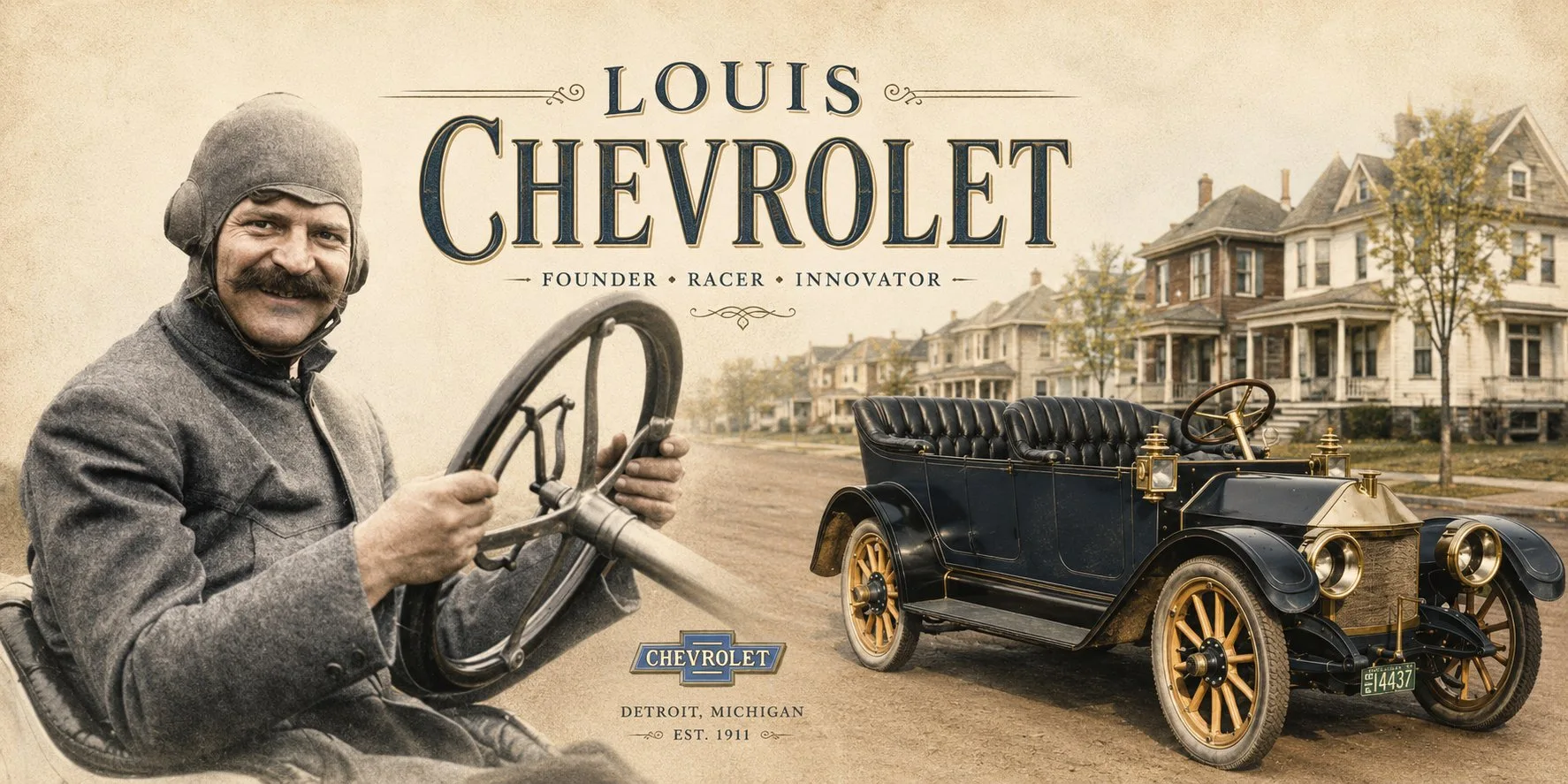
Catalogued Entry No. 028Louis Chevrolet
1878–1941Swiss-AmericanFOUNDER
Swiss-born race car driver and engineer who co-founded the Chevrolet Motor Car Company in 1911.
The House They Shaped
The Record
Who are they?
Louis Chevrolet's story is one of the more genuinely dramatic founder biographies in automotive history: a talented Swiss-born mechanic and race car driver who emigrated first to Canada and then the United States, made his name racing Buicks and Fiats in the 1900s, and lent his name and racing reputation to the company William C. Durant founded in 1911. Within a few years, philosophical disagreements over the direction of the cars bearing his own name led Chevrolet to sell his stake and leave the company entirely.
The rest of his life was, by most accounts, a slow decline in fortune - further racing ventures, aircraft engine work, and eventually a return to working as a mechanic, including reportedly at a Chevrolet dealership, for a company that by then had grown into one of General Motors' cornerstone brands and no longer had any ownership connection to the man whose name it carried.
↓ Read deeper↑ Less
Chevrolet's racing career before the company's founding was genuinely accomplished: he competed in early Indianapolis 500 races, Vanderbilt Cup events, and other prestigious American motorsport competitions of the 1900s and 1910s, building the kind of public reputation that made his name valuable to Durant, who was assembling what would become General Motors and wanted a marque that traded on performance credibility rather than Buick's more staid image.
The partnership soured over a fundamental disagreement: Chevrolet, the engineer and racer, wanted to build lighter, higher-performance cars, while Durant, the businessman, wanted a more affordable, higher-volume product that could compete directly with Ford. Chevrolet sold his shares - at a price that, in hindsight given the company's later value, represented a significant financial loss - and left in 1913 or 1914, only a few years after the company bearing his name was founded.
His subsequent career included further racing (he and his brothers built the Frontenac racing marque), aviation-related engineering work, and eventually financial difficulty severe enough that later biographical accounts describe him working ordinary mechanic's jobs, a genuinely poignant coda for a man whose surname had by then become one of the most recognized brand names in American automotive history.
Formation
Where did it come from?
Chevrolet's Swiss origins in La Chaux-de-Fonds, a region known for precision watchmaking, gave him an early grounding in mechanical craftsmanship before he turned to automobiles specifically. His emigration to North America in the early 1900s - first to Montreal, then into the United States - put him at the center of the young American automobile racing scene at exactly the moment it was becoming a significant public spectacle.
↓ Read deeper↑ Less
His early jobs in North America included bicycle and automobile mechanic work before his driving talent brought him into competitive racing for established marques including Buick and Fiat, where his results built the reputation that would later make his name commercially valuable to Durant's automotive ambitions.
Career
What did they do?
Chevrolet's career moved from competitive racing driver (for Buick, Fiat, and other period marques) into automobile manufacturing when William C. Durant recruited him to lend his name and engineering input to a new company in 1911. The partnership was short-lived in ownership terms - Chevrolet sold his stake and departed within a few years, disagreeing with Durant's push toward more affordable, higher-volume cars rather than the higher-performance machines Chevrolet favored.
After leaving, he continued racing and engineering, including building Frontenac racing cars with his brothers Arthur and Gaston (the latter winning the 1920 Indianapolis 500 in a Frontenac), before moving into aviation-related engineering work and eventually facing significant financial hardship in his later years.
↓ Read deeper↑ Less
The Chevrolet-Durant split reflects a tension common to founder partnerships between a technically driven namesake and a scale-focused businessman: Durant needed a mass-market product that could generate the volume and profit to fund his broader General Motors ambitions, while Chevrolet's engineering instincts favored lighter, faster, more performance-oriented cars closer to what had made his own racing reputation.
The Frontenac venture with his brothers Arthur and Gaston kept Louis Chevrolet in racing and engineering after leaving the company bearing his name, and Gaston's 1920 Indianapolis 500 victory in a Frontenac stands as a genuine, well-documented family racing achievement independent of the Chevrolet automobile brand's own later history. Louis Chevrolet's later career, however, did not achieve comparable commercial success, and he faced real financial difficulty in the years before his death.
Encyclopedia3 sections
legacy
What did it leave behind?
Editorial inference
Chevrolet's legacy is defined by a genuine irony: the brand carrying his name grew into one of the best-selling automotive marques in the world, under General Motors ownership, decades after he sold his stake and lost any financial connection to its success. His racing achievements and engineering contributions to the company's earliest cars are real and documented, but the wealth and lasting institutional role that might have followed from founding a globally recognized brand never materialized for him personally.
motorsport-competition
Did it race?
Editorial inference
Chevrolet's racing career predates and directly enabled his automotive business career: strong results driving for Buick and Fiat in prestigious early American races, including multiple Indianapolis 500 entries and Vanderbilt Cup events, built the public reputation that made his name commercially valuable when Durant was assembling his new automobile company in 1911.
After leaving the Chevrolet company, he returned to racing engineering with his brothers under the Frontenac name, a venture that produced a genuine Indianapolis 500 victory - driven by his brother Gaston in 1920 - even as Louis's own broader business fortunes declined.
myths-misconceptions
What do people get wrong about it?
Editorial inference
Claim: Louis Chevrolet stayed connected to and profited from the Chevrolet brand as it grew into a major automaker. Truth: he sold his ownership stake and left the company by the mid-1910s, disagreeing with William C. Durant's direction for the brand, and had no financial stake in its later success under General Motors. verified
Claim: Chevrolet died wealthy, as would befit the namesake of a major car brand. Truth: documented accounts describe him facing real financial hardship in his later years, including working as an ordinary mechanic. attributed
Sources & Confidence
Claims here reflect well-established American automotive and motorsport history. Categories of source that would further verify or deepen specific claims include General Motors' own corporate archive, Indianapolis Motor Speedway historical racing records, and period business press covering the Chevrolet-Durant partnership and its dissolution.
Questions readers ask
Did Louis Chevrolet own Chevrolet when it became part of General Motors?
No. He had already sold his stake and left the company by the mid-1910s, before it grew into the brand later known globally.
Who did Louis Chevrolet co-found the company with?
William C. Durant, the businessman who was also assembling what became General Motors.
Was Louis Chevrolet a race car driver before founding the company?
Yes, he built a strong reputation racing for Buick and Fiat in early Indianapolis 500 and Vanderbilt Cup events, which made his name commercially valuable to Durant.
What did Louis Chevrolet do after leaving the company?
He built Frontenac racing cars with his brothers and later did aviation-related engineering work, though his later life included significant financial hardship.