Engine Sphere · Person
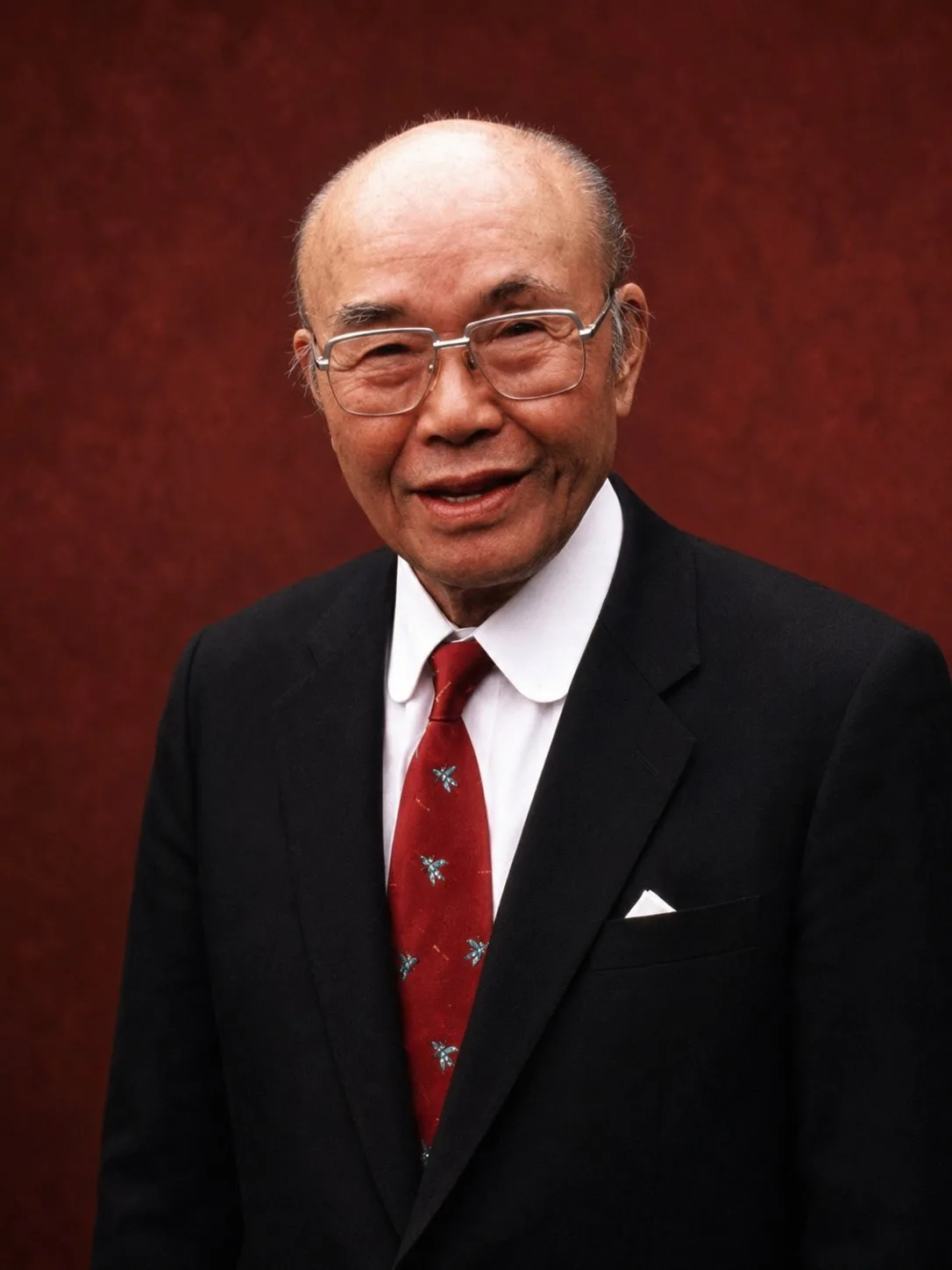
Soichiro Honda
1906–1991JapaneseFOUNDER
Japanese engineer who founded Honda Motor Company in 1948 and built it into a global motorcycle and automobile manufacturer.
The House They Shaped
The Record
Who are they?
Soichiro Honda occupies a nearly mythic place in postwar Japanese industry, and the myth is, unusually, well supported by the documented record. The son of a blacksmith and bicycle-repair shop owner, he left school early to apprentice at a Tokyo auto-repair garage, ran his own successful piston-ring manufacturing business through the 1930s and wartime years, and then - starting almost from nothing after the war, with a small stock of surplus military generator engines - built Honda Motor Company into the world's largest motorcycle manufacturer and, later, a major automaker.
What distinguishes Honda among automotive founders is the consistency of his engineering-first philosophy across four decades: he was, by every credible account, more interested in solving mechanical problems well than in profit for its own sake, a temperament that shaped Honda's corporate culture long after his own retirement from active management in 1973.
↓ Read deeper↑ Less
Honda's formal education stopped after middle school, a fact he referenced throughout his career, sometimes pointedly, as evidence that practical engineering skill mattered more than credentials - though he later received honorary doctorates once his achievements were undeniable. His early piston-ring manufacturing venture, Tokai Seiki, taught him precision-manufacturing discipline, and its eventual sale (partly to Toyota, which took a financial stake) gave him the capital to start what became Honda Motor Company in 1948.
The company's earliest products were motorized bicycles built around small surplus engines, evolving quickly into purpose-built motorcycles as Honda's engineering ambitions grew; by the mid-1950s Honda was already investing heavily in racing, entering the Isle of Man TT with the explicit long-term goal of winning it, which the company did by 1961. Automobile production followed from 1963, and Honda's insistence on developing genuinely novel engine technology - including the CVCC low-emissions engine of the 1970s, developed specifically to meet new US emissions standards without a catalytic converter - became a recurring pattern: enter a field the company had no prior standing in, and win through engineering rather than scale.
Formation
Where did it come from?
Hamamatsu, a provincial city known for textile and instrument manufacturing rather than automobiles, gave the young Honda an early, hands-on exposure to mechanical repair through his father's bicycle shop. At 15 he moved to Tokyo to apprentice at Art Shokai, an automobile repair garage, an experience that gave him practical mechanical training years before any formal engineering education would have.
↓ Read deeper↑ Less
This apprenticeship-first path - workshop experience preceding, and in Honda's case largely substituting for, formal engineering education - is a recurring theme among early automotive pioneers, but Honda made it into something closer to a personal philosophy, later famously dismissive of academic credentials relative to demonstrated mechanical competence. He returned to Hamamatsu in his early twenties to open his own branch of the Art Shokai garage, and it was there that his independent business career, and eventually his piston-ring manufacturing venture, began.
Career
What did they do?
Before Honda Motor Company existed, Soichiro Honda ran Tokai Seiki, a piston-ring manufacturer, through the 1930s and into the war years - a business that gave him precision-manufacturing experience and, eventually through its sale, the capital to start fresh after the war. Honda Motor Company was founded in 1948, initially fitting small surplus engines to bicycles before developing purpose-built motorcycles, and expanded rapidly through the 1950s into Japan's largest motorcycle manufacturer.
Honda entered international motorcycle racing in the mid-1950s with the explicit goal of winning at the Isle of Man TT, achieving that in 1961, and moved into automobile manufacturing from 1963, eventually entering Formula One as an engine supplier and constructor later in the decade. He stepped back from active company leadership in 1973, handing management to a younger generation of Honda engineers while remaining an influential presence at the company he founded.
↓ Read deeper↑ Less
The Tokai Seiki years are an underappreciated part of Honda's career: precision manufacturing of piston rings for engines demanded exacting tolerances, and Honda's persistence through early failures in that business - including a period where his rings failed to meet Toyota's quality standards until he sought further technical education to solve the problem - shows the same iterative, engineering-first persistence that later defined Honda Motor Company's culture.
The postwar founding of Honda Motor Company, starting with motorized bicycles using inexpensive surplus military generator engines, reflects the resource constraints of Japan's immediate postwar economy as much as any specific product vision; Honda's genuine strategic insight was recognizing which small, practical mechanical problem - affordable local transportation - the moment demanded, and then rapidly scaling technical ambition once the company had a foothold.
His decision to pursue international motorcycle racing from the mid-1950s, when Honda was still a relatively small domestic manufacturer, was a deliberate bet that competing against - and eventually beating - established European manufacturers at the Isle of Man TT would validate Honda's engineering credibility globally. It worked, and the pattern (enter competitively against established players in a category new to the company, win through engineering) repeated in automobiles and later in Formula One.
Body of Work
What did it create?
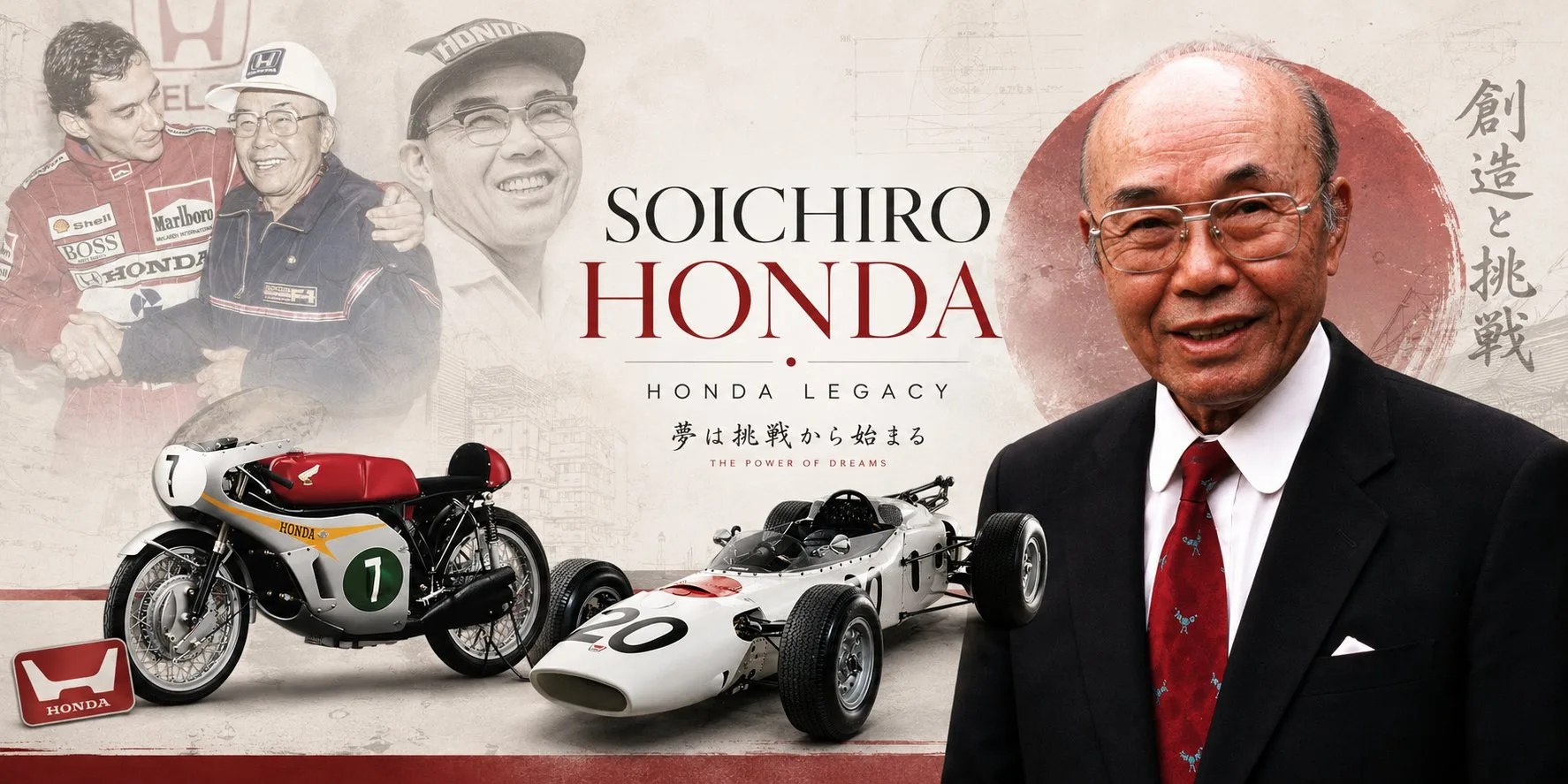
Two achievements stand out as emblematic of Honda's engineering approach. The company's Isle of Man TT motorcycle racing program, pursued from the mid-1950s with the explicit goal of winning against established European manufacturers, achieved a clean sweep of the top finishing positions in the 125cc class by 1961 - proof, delivered on the world's most demanding motorcycle racing stage, that a young Japanese manufacturer could out-engineer the establishment.
The CVCC (Compound Vortex Controlled Combustion) engine, introduced in the mid-1970s, solved the new US Clean Air Act emissions requirements through combustion chamber design rather than the catalytic converters most other manufacturers relied on - a solution developed while Honda was still primarily known as a motorcycle maker with a much smaller automotive engineering base than Detroit's established players, and one that directly embarrassed manufacturers with far greater resources.
↓ Read deeper↑ Less
The CVCC's significance goes beyond a single clever engineering solution: it was developed and brought to market at a moment when Honda's automobile division was still young and resource-constrained relative to American and other Japanese competitors, and its success - meeting stringent new emissions law without expensive add-on hardware - became a defining proof point for Honda's broader engineering-first corporate identity, one Soichiro Honda had insisted on from the company's earliest days.
The Isle of Man TT program similarly reflects a deliberate strategic choice under Honda's direct leadership: rather than compete only in the domestic Japanese market, he pushed the company to prove itself against the world's most established motorcycle manufacturers on their own most demanding stage, a bet that paid off decisively by 1961 and established Honda's international racing and engineering reputation years before its automobiles reached comparable global recognition.
What are the stories behind it?
The Isle of Man TT campaign is one of the best-documented and most consequential decisions of Honda's career: at a time when Honda was still primarily a domestic Japanese motorcycle maker, he committed the company to competing against Europe's most established manufacturers on the most demanding motorcycle racing circuit in the world, explicitly framing it as a test of whether Japanese engineering could match or exceed the West's best. verified
Encyclopedia2 sections
legacy
What did it leave behind?
Editorial inference
Honda's legacy is unusually well internalized by the company he founded: engineers at Honda still reference his stated philosophy - respect for the individual, direct hands-on problem solving over hierarchy, engineering ambition over short-term profit - as an active cultural touchstone rather than a historical curiosity. He remained connected to the company as a senior advisor after stepping back from management in 1973, and died in 1991.
Beyond the company itself, Honda is frequently cited as a defining figure in Japan's broader postwar industrial and economic resurgence, an example of a self-taught engineer building a globally competitive manufacturer from near nothing within a single generation.
myths-misconceptions
What do people get wrong about it?
Editorial inference
Claim: Toyota rejected Honda for an engineering position, motivating him to start his own company out of spite or vindication. Truth: no reliable primary source supports this specific job-rejection narrative; Honda's actual early business relationship with Toyota was as a supplier - his Tokai Seiki piston-ring company sold to Toyota, which took a financial stake in the business - not as a rejected job applicant. myth
Claim: Honda was solely a motorcycle manufacturer before suddenly entering car racing and Formula One with no relevant experience. Truth: Honda built up automotive engineering capability progressively from 1963 onward, including road cars, before its 1964 Formula One entry - the racing program followed real product-engineering groundwork rather than appearing from nothing. attributed
Sources & Confidence
Claims here reflect well-established, widely corroborated business and automotive history. Categories of source that would further verify or deepen specific claims include Honda Motor Company's official corporate archive, period Japanese business press, and Isle of Man TT / Formula One official statistical records.
Questions readers ask
When did Soichiro Honda found Honda Motor Company?
In 1948, initially building motorized bicycles using surplus engines before developing purpose-built motorcycles.
Did Soichiro Honda have a formal engineering degree?
No. He left formal schooling early and trained through hands-on apprenticeship, later receiving honorary doctorates once his achievements were widely recognized.
What was Honda's business before he founded Honda Motor Company?
He ran Tokai Seiki, a piston-ring manufacturing company, through the 1930s and into the war years; its eventual sale provided capital to start Honda Motor Company.
When did Soichiro Honda step back from running the company?
He retired from active management in 1973, handing leadership to a younger generation of Honda engineers while remaining a senior advisor.