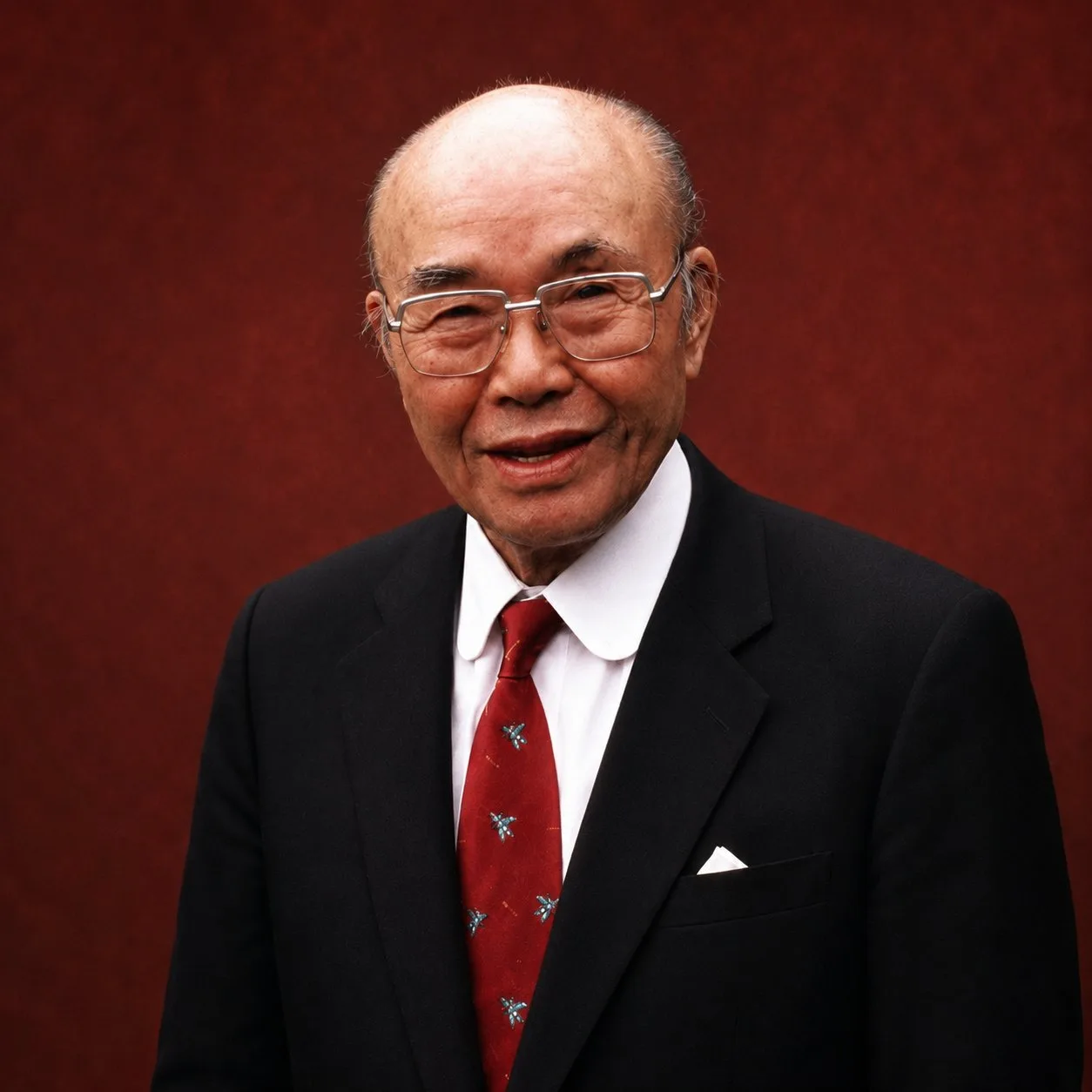
Est. 1948Automobiles, motorcycles, and power equipment
Japanese manufacturer of automobiles, motorcycles, and power equipment, founded in 1948 by engineer Soichiro Honda around a culture of high-revving, engineering-first cars.
Honda is unusual among major manufacturers in having started as neither a car company nor a corporate initiative, but as the personal engineering practice of a single mechanic, Soichiro Honda, whose company built piston rings and then motorcycles for more than a decade before it built its first car. That origin as an engine-first, chassis-second company still shows: Honda's reputation, from the high-revving VTEC four-cylinders of the 1990s to its long and often financially reckless commitment to Formula One, rests overwhelmingly on engine work rather than styling or luxury.
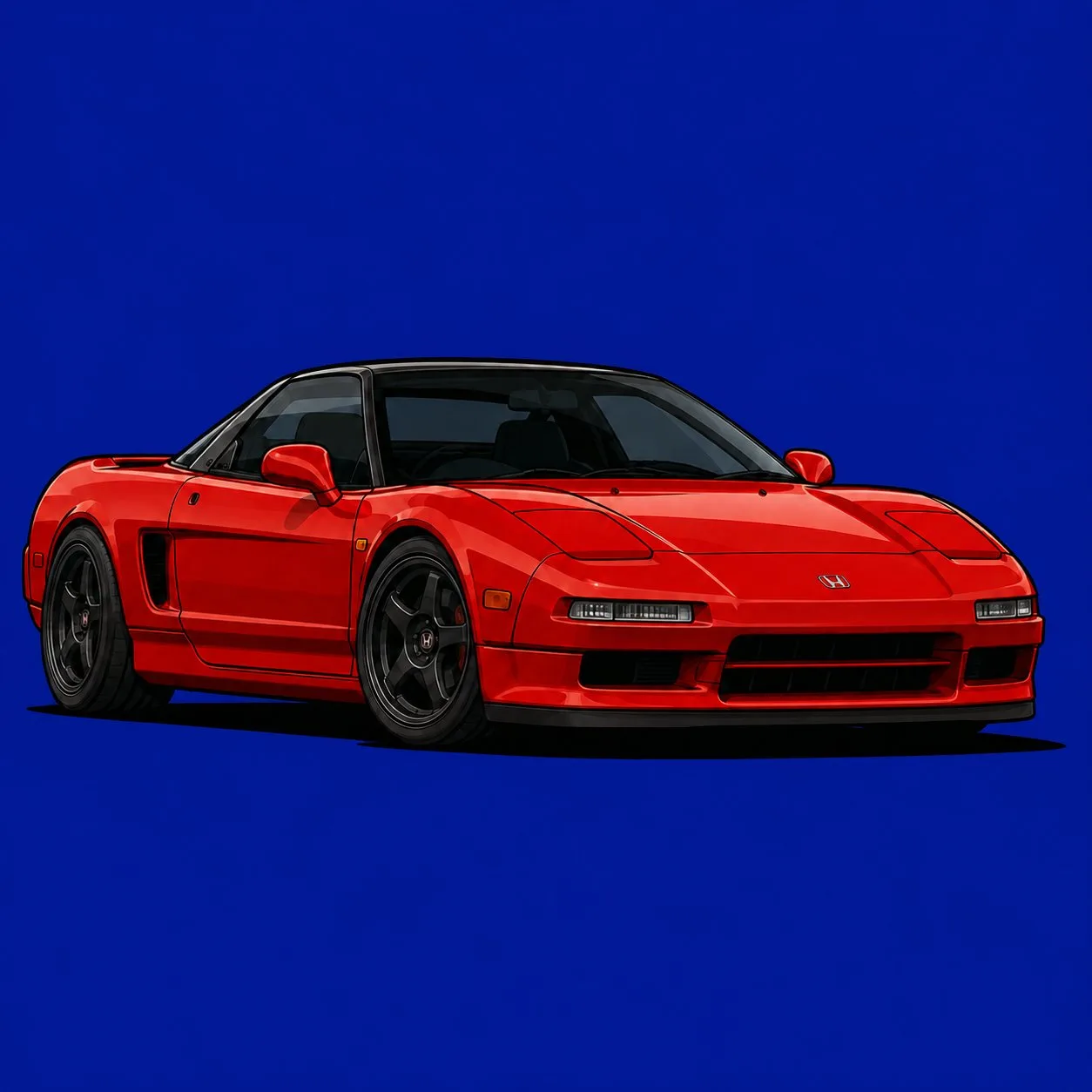
The company's engineering-led culture produced two of the most quietly radical cars of the late 20th century: the NSX (1990), which proved a mid-engined supercar could also be as usable and reliable as a Civic, and the S2000, a front-engined roadster built around an engine that revved to a motorcycle-like 9,000 rpm. Both cars reflect a company more comfortable expressing its ambitions through an engine bay than a design studio.
↓ Read deeper↑ Less
Honda's founding predates its car business by decades. Soichiro Honda, a self-taught mechanic with no formal engineering education, established the Honda Technical Research Institute in 1946 in war-damaged Hamamatsu, initially motorising bicycles with surplus military generator engines. Honda Motor Co., Ltd. was formally incorporated in 1948, with Takeo Fujisawa joining soon after as the business co-founder who handled finance, sales, and distribution, a partnership Honda himself credited as essential, since his own interests began and ended at the engineering bench.
The company built motorcycles exclusively through the 1950s, becoming the world's largest motorcycle manufacturer by the end of that decade, before entering automobile production in 1963 with the T360 kei truck and S500 sports car, both fitted, tellingly, with high-revving, motorcycle-influenced engines rather than the low-revving, torque-focused units typical of contemporaneous small cars. Honda entered Formula One as an engine supplier the very same year, 1964, beginning a motorsport relationship (as both constructor and, later, engine supplier to teams including McLaren and Red Bull) that has run, with interruptions, for six decades.
Honda's approach to variable valve timing, VTEC, introduced in 1989, became the company's signature engineering flourish: a mechanism allowing a single engine to behave, in effect, like two different engines depending on load and rpm, delivering both everyday drivability and a genuinely thrilling top-end. It is difficult to separate Honda's road-car reputation from this piece of engineering theatre, first proven on the road in the CRX and NSX and later democratized across the entire lineup.
Origins
How did it begin?
Soichiro Honda's path to founding a car company began with bicycles, not automobiles. In 1946, in a Hamamatsu workshop still scarred by wartime bombing, he began fitting small surplus military generator engines to bicycles to help a fuel-starved postwar population move around cheaply, the humble beginning of what became the Honda Technical Research Institute.
Honda Motor Co., Ltd. was formally incorporated in 1948, and the following year Takeo Fujisawa joined as co-founder, a partnership that proved decisive, since Honda's own talents and interests were purely mechanical and Fujisawa supplied the business acumen, financing strategy, and sales network the engineering side alone could never have built.
↓ Read deeper↑ Less
Honda had no formal engineering education; his expertise came from years as an auto-repair apprentice and later running his own piston-ring manufacturing business, Tokai Seiki, through the 1930s and into the war, a venture that ended when a 1945 earthquake destroyed his factory, and which he sold to Toyota shortly after. That practical, self-taught engineering background shaped a company culture that, to this day, prizes hands-on mechanical problem-solving over academic credential.
The motorcycle business that followed the bicycle-engine venture grew with startling speed: by the late 1950s, Honda had become the world's largest motorcycle manufacturer, a position it used to fund its entry into car manufacturing in 1963, first with the tiny T360 kei-class truck (Honda's very first four-wheeled production vehicle), then the S500 sports car, both powered by unusually high-revving engines that reflected the company's motorcycle-derived engineering instincts rather than conventional automotive practice.
Honda's decision to enter Formula One as an engine supplier in 1964, barely a year after building its first car, reflected Soichiro Honda's own personal conviction that racing was the fastest and most honest way to prove an engineer's work, a belief that has remained embedded in the company's culture (and its balance sheet, through several loss-making F1 eras) for six decades since.
Design Philosophy
What does it stand for, visually?
Honda's design language has historically been guided by a "man-maximum, machine-minimum" packaging philosophy, maximizing usable cabin space and driver sightlines while minimizing the physical intrusion of mechanical components, a principle traceable to Honda's earliest cars and still cited internally today. This produced distinctive results across very different vehicle types: the low cowl and thin windshield pillars of the original NSX (designed partly around visibility from an F1 cockpit's-eye view), and the boxy, glass-heavy practicality of early Civics and the CR-V.
Unlike marques whose design language is built around a single recognizable silhouette carried across decades (Porsche's 911, for instance), Honda's design identity is more principle-based than shape-based, the same "maximize the human, minimize the machine" thinking applied to wildly different body styles rather than one consistent visual signature.
↓ Read deeper↑ Less
The original NSX's design (1990) was directly shaped by input from Formula One driver Ayrton Senna, who was invited to test early prototypes and reportedly requested a stiffer chassis. His feedback is widely credited within Honda's own engineering culture as improving the car's structural rigidity before launch, an unusually direct instance of a racing driver's design input on a production road car.
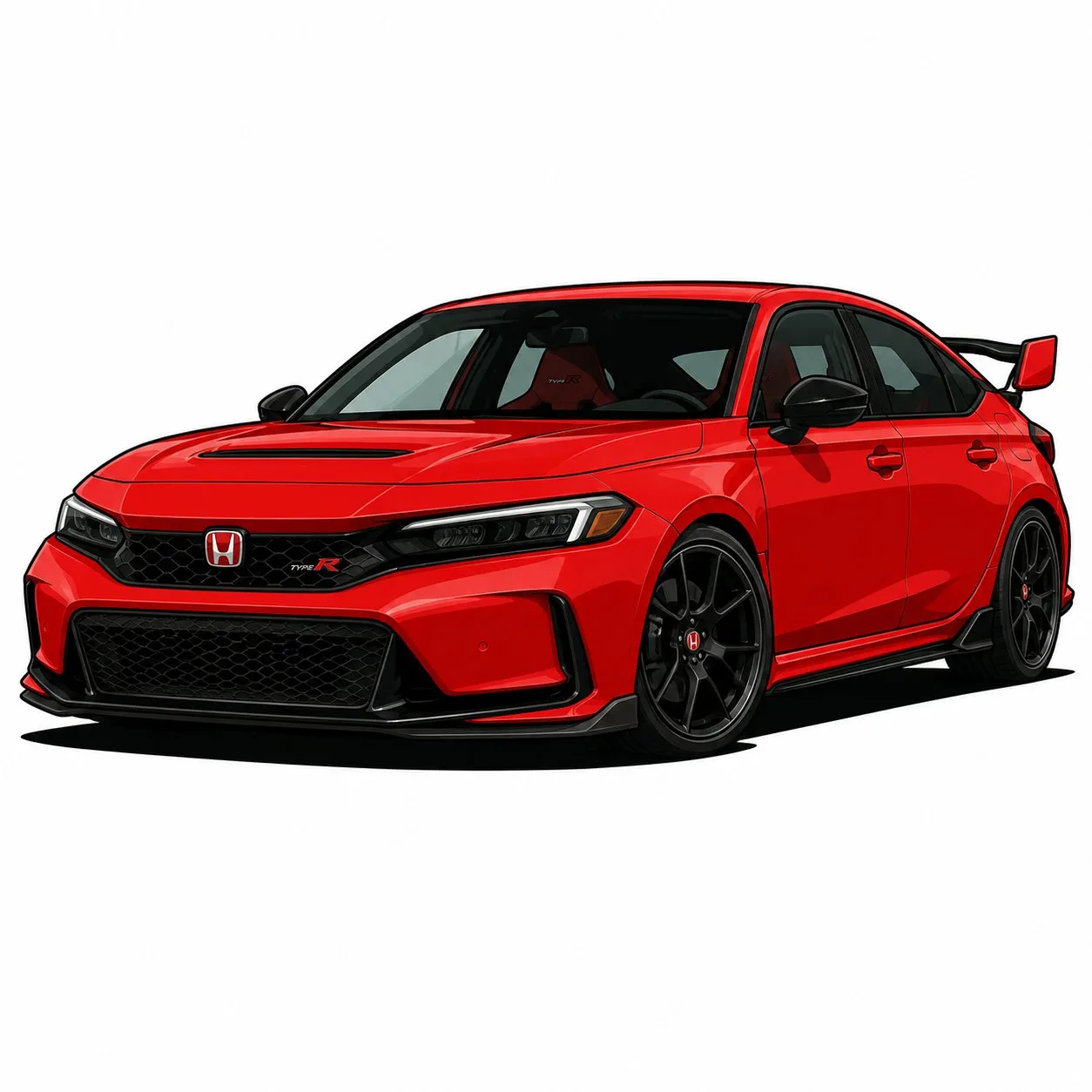
Honda's Civic Type R lineage has pursued a more aggressive, motorsport-influenced design language than the brand's mainstream models, large rear wings, aggressive aero elements, and (in more recent generations) styling deliberately more restrained than the wilder Japanese-market-only earlier generations, reflecting Honda's balancing act between genuine aerodynamic function and broader market taste.
Honda's kei-car and small-vehicle design work (the Beat, and generations of the Civic) reflects a design philosophy shaped by Japan's regulatory size constraints. Designers within Honda have historically treated these limitations as a genuine creative challenge rather than a mere compliance exercise, producing some of the company's most inventive packaging solutions.
Engineering Philosophy
How does it engineer?
Honda's engineering identity centers overwhelmingly on the engine itself, a legacy of founder Soichiro Honda's own personal fixation on engine design, dating to the company's motorcycle-only years. VTEC (Variable Valve Timing and Lift Electronic Control), introduced in 1989, became the clearest embodiment of this philosophy: a mechanism letting a single engine behave differently at low versus high rpm, delivering both everyday drivability and genuine high-rpm performance from the same unit, without resorting to forced induction.
This naturally-aspirated, high-revving preference persisted long after many rivals moved to turbocharging for efficiency and performance, Honda's later adoption of turbocharged engines (including in the current Civic Type R) reflects regulatory and efficiency pressure more than a wholesale philosophical shift away from engine-first engineering.
↓ Read deeper↑ Less
VTEC's engineering principle, using a secondary, more aggressive camshaft profile that engages only above a certain rpm threshold, let Honda engines achieve both fuel-efficient, tractable low-rpm behavior and genuinely high-revving top-end performance (some Honda engines, including in the S2000, revved past 8,000–9,000 rpm) without the complexity or cost of variable-displacement or forced-induction solutions common elsewhere.
Honda's Formula One engine-supply history (beginning 1964, and continuing through multiple distinct eras as both constructor and supplier to teams including McLaren and Red Bull) has repeatedly served as the proving ground for high-output engine technology later filtering down, in spirit if not directly, to road-car engineering practice.
The NSX's original engineering brief (1990), an all-aluminum monocoque chassis, a mid-mounted VTEC V6, and a specific target of matching Ferrari-level performance with Honda-level everyday reliability, reflected an explicit engineering philosophy that a supercar need not sacrifice usability, a genuinely novel proposition in the segment at the time.
Notable Works
What did it create?
The NSX (1990) stands as Honda's most consequential single achievement: an aluminum-bodied, mid-engine supercar engineered with direct input from Ayrton Senna, that proved a car could match established Italian exotics on outright performance while offering everyday reliability and usability those rivals notoriously lacked, a genuinely category-redefining proposition at launch.
Honda's Formula One involvement, spanning multiple eras since 1964 as both a full constructor and an engine supplier, represents the company's most sustained motorsport achievement, including a dominant late-1980s turbo era supplying McLaren (winning multiple consecutive constructors' and drivers' championships) that remains one of the most successful engine-supplier partnerships in the sport's history.
↓ Read deeper↑ Less
The NSX's engineering brief was explicit and unusual for its era: match a Ferrari 328/348-level performance envelope while offering Honda-level reliability and everyday usability, a combination the established Italian exotics of the period notoriously did not offer, and one that directly pressured Ferrari's own subsequent engineering priorities, by several accounts including Ferrari's own engineers at the time.
Honda's 1980s Formula One turbo-era partnership with McLaren (1988–1992) produced one of the most dominant engine-supplier stretches in the sport's history, including the 1988 season in which McLaren-Honda won 15 of 16 races, a level of dominance rarely matched before or since in F1's modern era.
VTEC's 1989 debut (first in the Japanese-market Integra and Civic) represents Honda's most influential single piece of engineering technology: a genuinely novel solution to the tradeoff between low-end drivability and high-rpm performance that other manufacturers would spend years developing their own variable-valve-timing answers to.
Key People
Who shaped it?
Few founding partnerships in automotive history divided responsibilities as cleanly, or as successfully, as Honda's. Soichiro Honda handled engineering and product with almost total authority; Takeo Fujisawa handled money, sales, and dealer relationships with equally total authority, and each man is on record saying the company could not have succeeded without the other.
Both men retired from active management together in 1973, a coordinated handover Honda insisted on specifically so that neither founder's continued presence would overshadow the professional managers who followed.
↓ Read deeper↑ Less
Soichiro Honda's personal engineering obsessions, high-revving engines, racing, and a near-total indifference to conventional business planning, defined the technical culture of the company for decades after his own retirement from day-to-day management.
Takeo Fujisawa, by contrast, is credited with the financial engineering that let Honda survive its riskiest bets: he pioneered Honda's now-famous dealer network strategy for motorcycles in Japan, and later structured the financing that let the company fund its expensive, uncertain 1960s entry into car manufacturing and Formula One without the parent company's motorcycle business collapsing under the strain.
The pair's simultaneous 1973 retirement, handing control to a generation of professional managers rather than either founder's own children, set a precedent for Honda's continued preference for meritocratic, engineering-credentialed leadership over founder-family succession, a notable contrast with several of its Japanese and European rivals.
Honda's most historically significant models cluster around two threads: the mass-market Civic (whose Type R performance variants have their own distinct enthusiast reputation) and a series of standalone, engine-focused performance cars, the S2000, the original NSX, and various Integra/CR-X derivatives, that reflect the company's engineering-first identity more directly than its everyday commuter lineup.
The list below favors genuinely distinct, historically significant nameplates and generations over every individual regional trim.
pop-culture-sightings
What does it mean in culture?
Editorial inference
The Honda Civic, particularly its tuned and Type R variants, occupies an outsized place in global car-modification and street-racing culture, a reputation built through decades of grassroots tuning communities and reinforced by its frequent appearance in racing and tuning-themed films and video games, disproportionate to its mainstream commuter-car origins.
The NSX carries a different cultural weight, closely tied to Ayrton Senna's personal involvement in its development, a story frequently retold in automotive media as a rare, direct instance of a legendary Formula One driver's hands-on input shaping a production road car.
legacy
What did it leave behind?
Editorial inference
Honda's enduring legacy lies in demonstrating that a company built from a single founder's personal engineering obsession could scale into one of the world's largest vehicle manufacturers without abandoning that founding character, VTEC, the NSX, and the company's sustained Formula One involvement all trace directly back to Soichiro Honda's own belief that racing and engine development were the truest measure of engineering worth.
The NSX's specific legacy, proving a supercar didn't have to sacrifice reliability and everyday usability, directly influenced how the entire segment approached the tradeoff between raw performance and daily livability in the decades since.
myths-misconceptions
What do people get wrong about it?
Editorial inference
Claim: Ayrton Senna designed the Honda NSX. Truth: Senna's documented role was as a test driver during the NSX's late-stage development, providing feedback (most notably requesting a stiffer chassis) that Honda's engineers incorporated before production, a genuine and meaningful contribution, but distinct from styling or engineering the car from scratch, which remained the work of Honda's own design and engineering teams. attributed
Claim: Honda has always used naturally aspirated engines and avoided turbocharging as a matter of brand identity. Truth: while Honda's performance reputation was built substantially on naturally aspirated, high-revving VTEC engines, the company has used turbocharging at various points (including its 1980s Formula One turbo era and the current turbocharged Civic Type R) when performance or regulatory requirements favored it. The naturally-aspirated preference reflects a strong historical tendency, not an absolute rule. verified
timeline-evolution
How did it evolve?
Editorial inference
Honda's timeline divides into distinct phases: the motorcycle-only decade (1946–1963) that built the company's manufacturing base and racing culture, the initial entry into car manufacturing (1963) alongside an immediate, ambitious Formula One programme, the VTEC and NSX-defined performance-engineering peak of the late 1980s and 1990s, and the more recent electrification and turbocharging era reflecting broader industry and regulatory shifts.
Each phase built directly on the engineering culture established in the one before it, from motorcycle-derived high-rpm engine expertise to the VTEC technology that came to define the brand's performance reputation.
rivals-comparisons
What did it compete against?
Editorial inference
Within Japan, Honda has competed for decades against Toyota and Nissan across nearly every segment, the three forming the backbone of Japan's postwar "big three" domestic rivalry, each pursuing a distinct engineering personality, Honda's engine-first performance focus distinguishing it from Toyota's manufacturing-discipline reliability emphasis and Nissan's technology-forward AWD performance identity.
The original NSX's most significant rivalry was aspirational rather than segment-based: it was explicitly engineered to match Ferrari's performance while addressing the reliability shortcomings for which contemporary Italian exotics were notorious, a direct challenge Ferrari's own engineers reportedly took seriously at the time.
Sources & Confidence
Claims in this profile draw on categories of source material appropriate to their confidence level: company-published corporate history for founding dates; period motorsport results (Formula One, Japanese touring/GT racing) for competition claims; and established automotive-history texts and period interviews for design/engineering narrative, including the well-documented Senna-NSX development story.
Questions readers ask
When was Honda founded?
Soichiro Honda founded the Honda Technical Research Institute in 1946; Honda Motor Co. was formally incorporated in 1948.
Did Ayrton Senna design the NSX?
No. Senna served as a test driver during the NSX's late development, providing chassis feedback (including a request for a stiffer chassis) that Honda's own engineers incorporated; the car's design and engineering were Honda's own work.
What is VTEC?
Variable Valve Timing and Lift Electronic Control, introduced in 1989, a mechanism letting a single engine use a different camshaft profile at high rpm, delivering both everyday drivability and genuine high-revving performance.
How long has Honda been in Formula One?
Since 1964, across multiple distinct eras as both a full constructor and an engine supplier, including a highly dominant partnership with McLaren from 1988 to 1992.
Is the Honda NSX still in production?
The original NSX (NA1/NA2) was produced from 1990 to 2005; a second-generation hybrid NSX (NC1) was produced from 2016 to 2022.