ENGINE SPHERE
CarsFerrari F40 (F120)
Engine Sphere · Car
Catalogued Entry No. 002

Ferrari F40 (F120)

Ferrari F40 (F120)MODEL
Nicola MaterazziPERSON
Ferrari F40 (F120)

Ferrari F40 F120 — twin-turbo V8 anniversary…

Era

1987–1992

Country

Italy

Model

F40

Designer

Pininfarina

Engineer

Nicola Materazzi

Engine Type

2.9L Twin-Turbo V8

Engine

Tipo F120A/F120D

Power

351.5 kW / approximately 478 PS

Transmission

5-speed manual

Layout

RWD Rear-Mid-Engine

Body Style

Coupe

Overview

What is it?

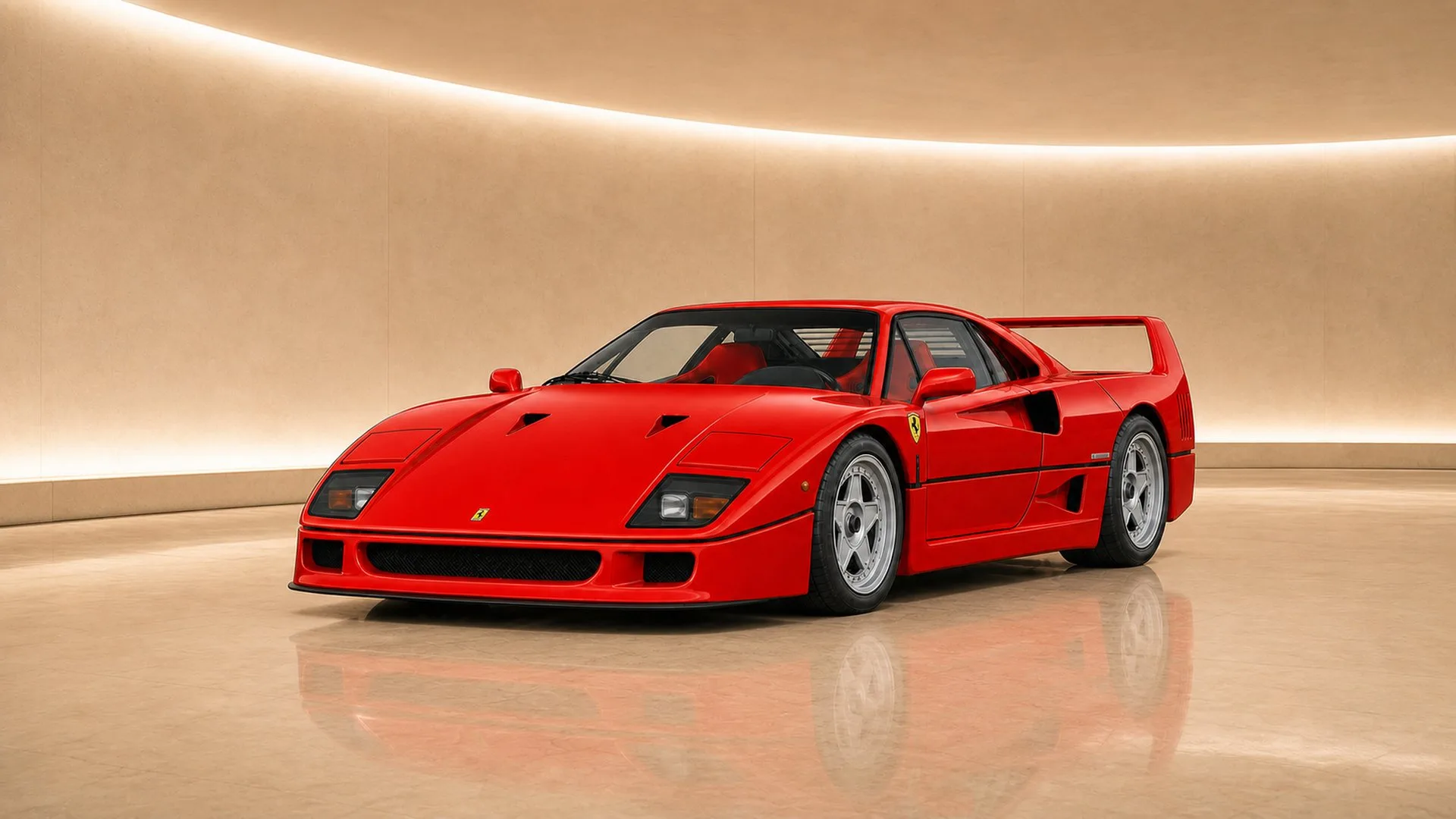
The Ferrari F40 is a rear-mid-engine, rear-wheel-drive supercar powered by a 2.9-litre twin-turbocharged V8 producing 351.5 kW and capable of 324 km/h.

The Ferrari F40 is the car that turned Ferrari’s 40th anniversary into a permanent cultural object. It was not merely a commemorative model; it was Enzo Ferrari’s final public statement about what a road-going Ferrari could be when comfort, politeness, and marketing caution were removed. Ferrari’s own technical page lists the F40 with a V8 engine, 2,936.25 cc displacement, 351.5 kW at 7,000 rpm, and a 324 km/h top speed. Ferrari also states that the car reached 0–100 km/h in 4.1 seconds.
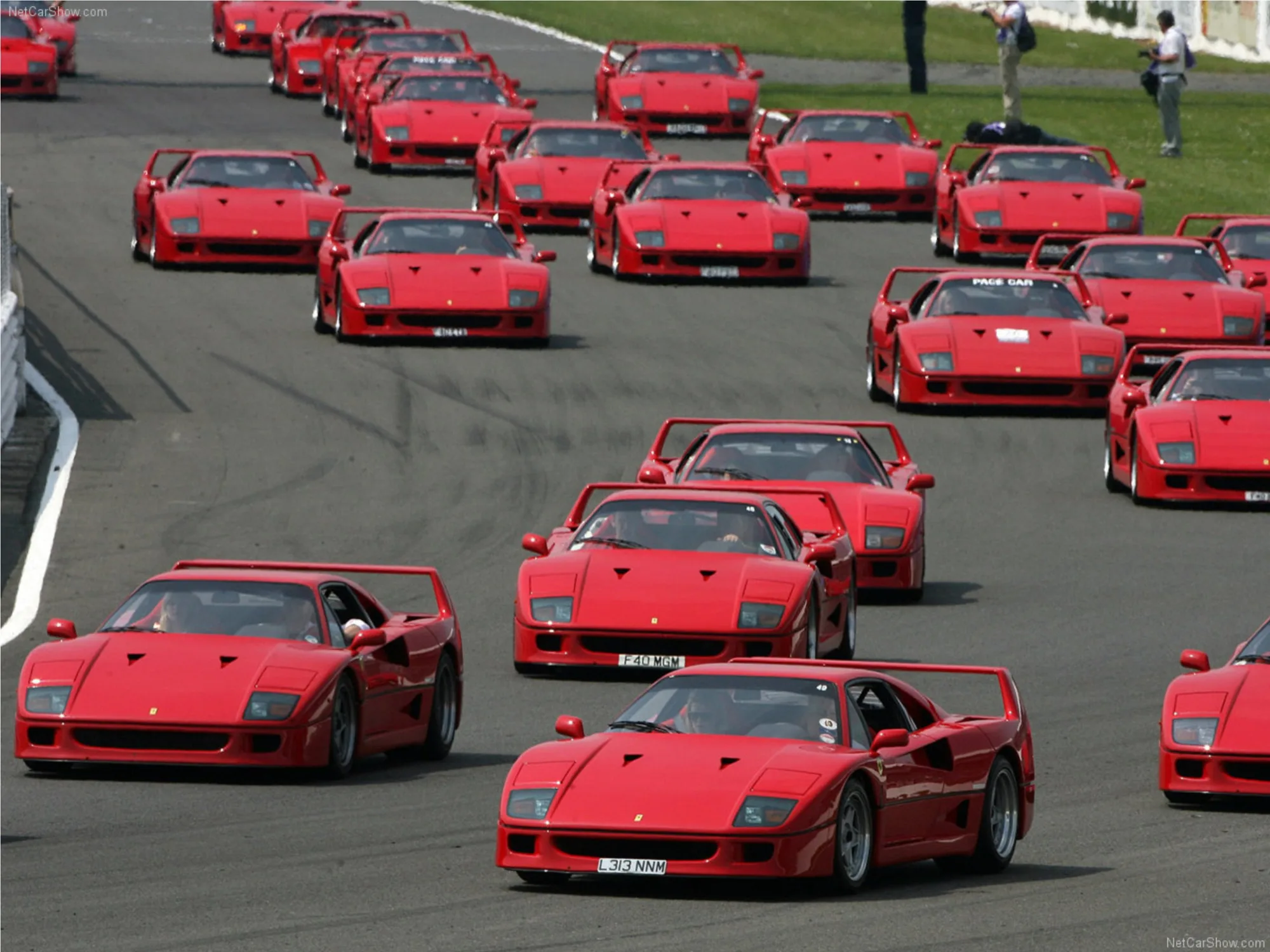
↓ Read deeper
The F40 belongs to the rare class of machines whose myth is not larger than the car. Its reputation was earned by the ingredients: tubular structure, composite panels, Plexiglas, no power steering, no power brakes, no electronic driver aids, a gated five-speed manual, and a twin-turbocharged V8 that arrived not as background force, but as weather. It was the successor to the 288 GTO in spirit and engineering lineage, but it escaped the fate of the stillborn Group B programme. Where the 288 GTO Evoluzione had been a competition ghost, the F40 became a road car with competition bones. Ferrari’s retrospective on the car calls it Enzo’s final masterpiece, and Top Gear’s creator account records the familiar central fact: the F40 was the last car Enzo Ferrari approved. That matters because the F40 is not merely a Ferrari product. It is the closing punctuation of the founder’s road-car philosophy.
Origin & Context

Where did it come from?

The Ferrari F40 was created to celebrate Ferrari’s 40th anniversary and was publicly launched in 1987.

The F40 began as a birthday gift to the company, but it became a farewell from its founder. Ferrari was entering a new age of regulation, electronics, luxury expectation, and expanding global demand. The F40 answered that world with a car that felt almost wilfully primitive. It appeared in 1987, the year Ferrari turned forty. The project carried forward lessons from the 288 GTO and 288 GTO Evoluzione, especially turbocharging, composite construction, and mid-engined performance architecture.
↓ Read deeper
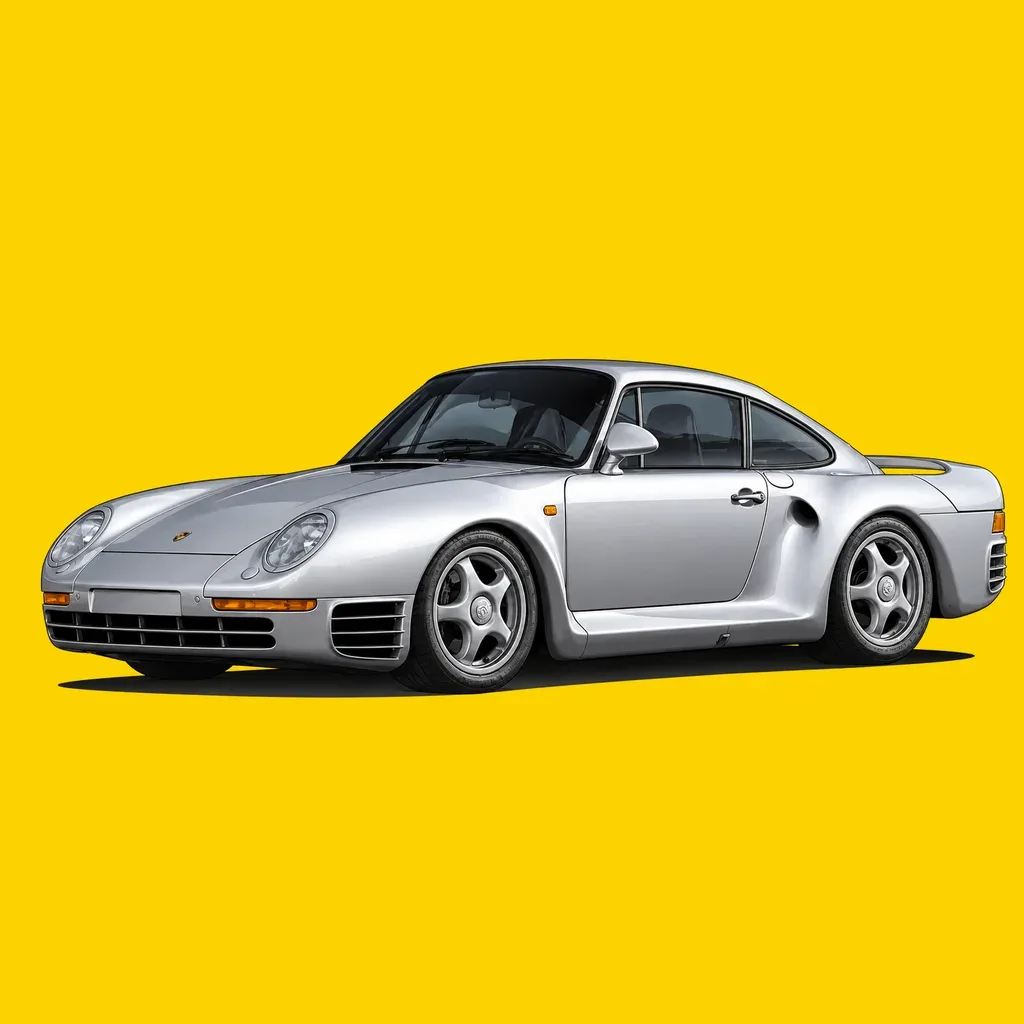
The origin of the F40 cannot be separated from the cancelled Group B era. Ferrari had developed the 288 GTO Evoluzione toward competition that never fully arrived. Rather than bury that work, the company allowed its ideas to inform a new road car. Top Gear’s account of the F40’s creators says the car was developed in an unusually short 13-month period, with chassis, bodywork, and powertrain moving forward together. That urgency helps explain why the car feels so focused: it was not polished into softness. The F40 also arrived against the Porsche 959, the other great technological monument of the late 1980s. But where the 959 presented the future through all-wheel drive, complex boost control, and electronic sophistication, the F40 presented the future through materials, power-to-weight, and refusal.
Design

How was it designed?

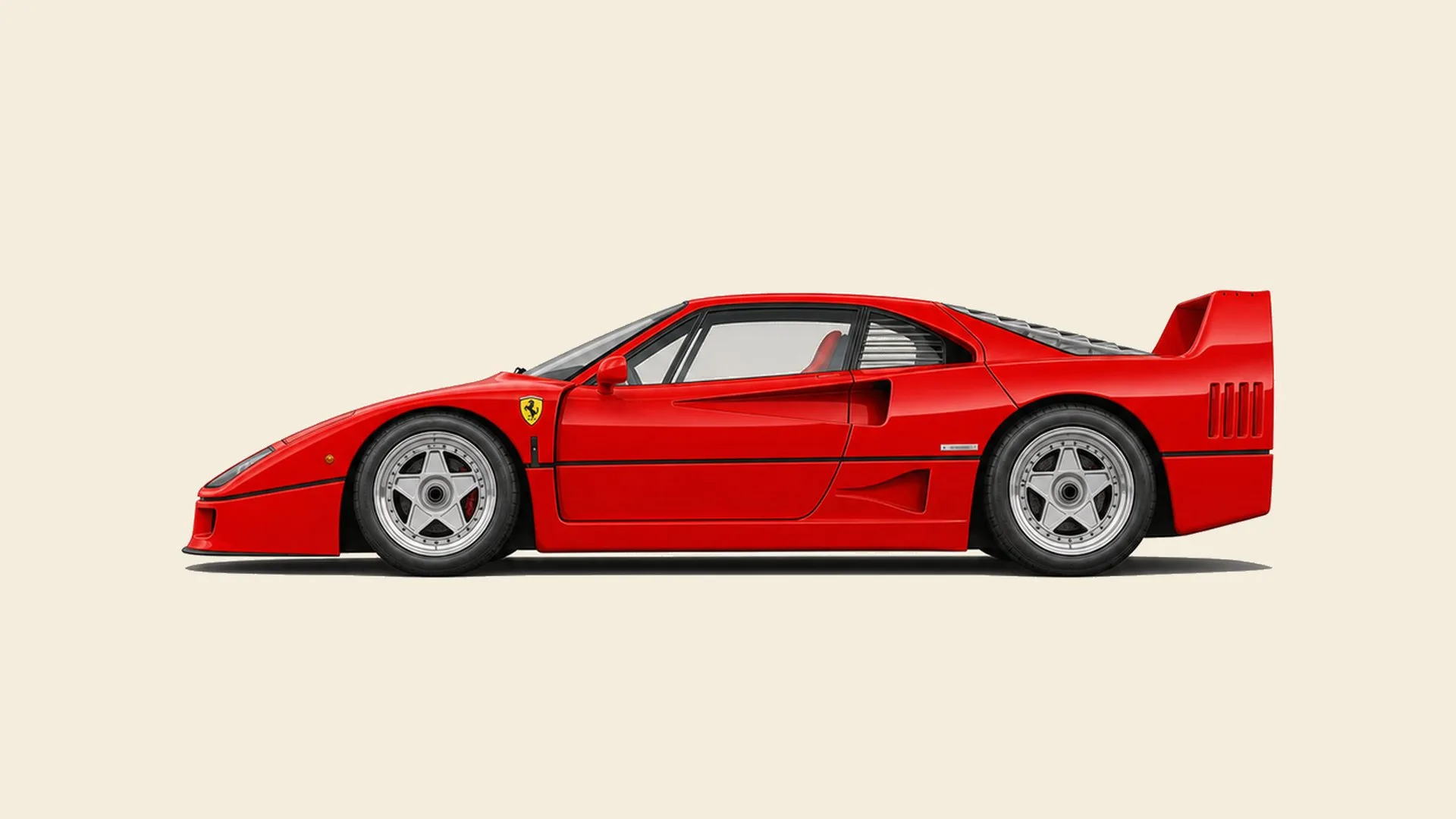
The Ferrari F40 was styled by Pininfarina with a low wedge body, NACA ducts, fixed rear wing, composite panels, and functional cooling surfaces.

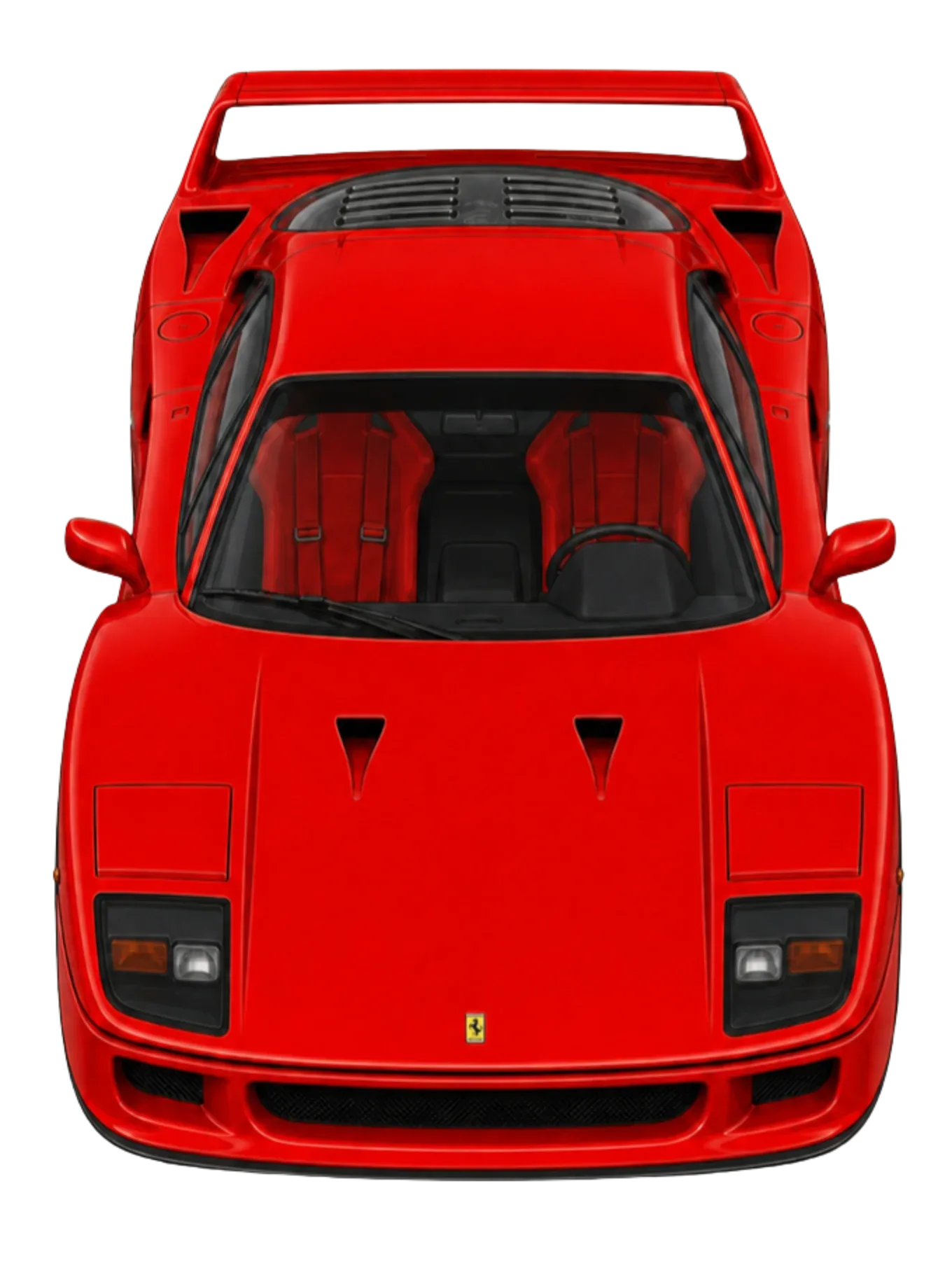
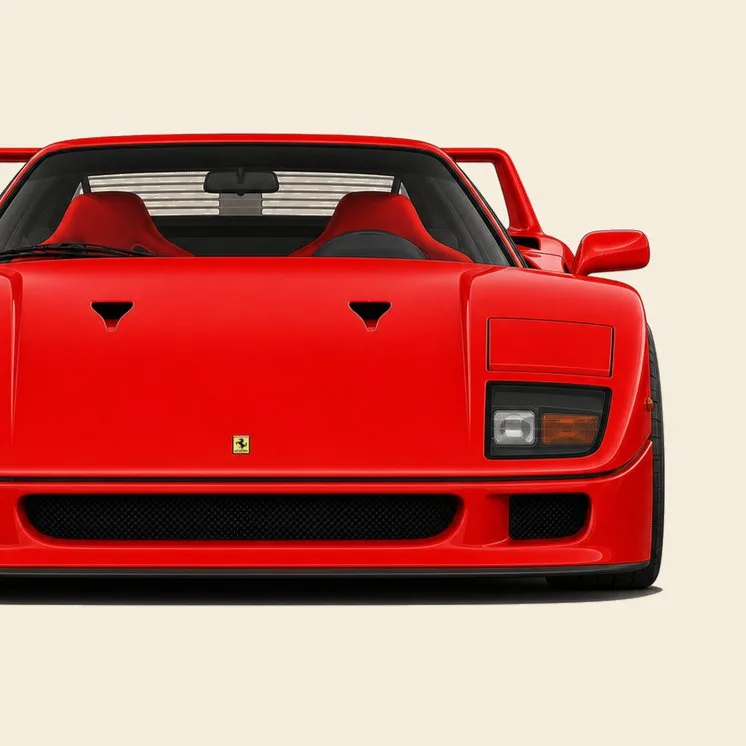
The F40 does not wear beauty in the soft Italian sense. It wears necessity. Its nose is low, its cabin is compact, its flanks are cut open by intakes, and its fixed rear wing looks less like decoration than a structural command. The design was created at Pininfarina, though public authorship is best handled carefully. Pietro Camardella is commonly credited with the body under Aldo Brovarone’s supervision, while Ferrari-linked retrospective material also quotes Leonardo Fioravanti as a Pininfarina designer involved in explaining the car’s aerodynamic style.
↓ Read deeper
The F40’s shape was not an exercise in elegance first. It was a negotiation between cooling, drag, stability, and identity. The NACA ducts, rear grilles, Perspex rear cover, and vast wing all make the car legible as machinery. Top Gear’s creator account quotes Fioravanti describing extensive wind-tunnel work for aerodynamic optimisation, and it specifically notes the low bonnet, small overhang, NACA vents, and rear spoiler as defining elements. The body construction also defines the visual language. Kevlar, carbon fibre, aluminium, and Plexiglas made the car look thin-skinned, almost translucent in purpose. A Testarossa is theatrical; an F40 looks like a race car that has been barely civilised.
Engineering

How was it engineered?

The Ferrari F40 uses a rear-mid-mounted twin-turbo V8, rear-wheel drive, a five-speed manual gearbox, composite bodywork, and a tubular chassis structure.

The F40’s architecture is simple to describe and difficult to improve upon. The engine sits behind the occupants, the rear wheels receive the force, the driver selects gears through an exposed manual gate, and the car’s low mass turns power into consequence. Top Gear’s creator story describes the F40 as built around a tubular steel space-frame chassis with bonded Kevlar panels and carbon-fibre doors, bonnet, and boot lid.
↓ Read deeper
The F40 did not attempt to solve performance with complexity. It solved it with lightness, boost, cooling, and structure. This is why the car remains so clear in memory: there is very little between driver and event. The use of composites was central. The F40 was not the first car to use advanced materials, but it made them visible and culturally meaningful in a Ferrari road car. You could see the weave, the thinness, the absence of luxury insulation. The architecture also explains the car’s intimidation. A short, low, mid-engined Ferrari with abrupt turbo delivery and no modern electronic safety layer is not simply fast; it is demanding by design.
Mythology & Meaning

What do people get wrong about it?

Common Ferrari F40 misconceptions concern whether it was a pure race car, whether it was the first 200 mph production car, whether all production numbers agree, and whether it was designed by one person.

The F40 attracts myth because it already feels mythological. It is easy to exaggerate a car that needs little exaggeration. The better approach is to keep the facts sharp. The truth is more interesting than the folklore: it was a road car with racing ancestry, a deeply collaborative Ferrari-Pininfarina project, and a machine whose production history is less numerically tidy than posters suggest.
↓ Read deeper
The F40 was simply a racing car sold for the road.
The F40 was a road car derived from competition thinking and the 288 GTO Evoluzione lineage; the F40 LM and Competizione were the racing derivatives.verified
All sources agree exactly on F40 production.
Sources vary between 1,311 and 1,315 depending on how road and competition cars are counted, so the safest wording is approximately 1,311–1,315.verified
The F40 was designed by one person.
It was styled by Pininfarina, with public attributions involving Pietro Camardella, Aldo Brovarone, and Leonardo Fioravanti depending on source and role; the safest archive label is Pininfarina design, with named roles handled cautiously.verified
The F40 was comfortable because it was a Ferrari road car.
The F40 was deliberately stripped, with minimal interior equipment and no power steering, power brakes, or electronic devices according to Ferrari creator testimony quoted by Top Gear.verified
The F40’s value is only because it is rare.
Rarity matters, but its value also comes from Enzo approval, analogue character, performance, design, materials, and cultural position.interpretation
Timeline

How did it evolve?

The Ferrari F40 evolved from the 288 GTO and 288 GTO Evoluzione programme, launched in 1987, and remained in production into the early 1990s.

  1. 1984

    Ferrari 288 GTO appears

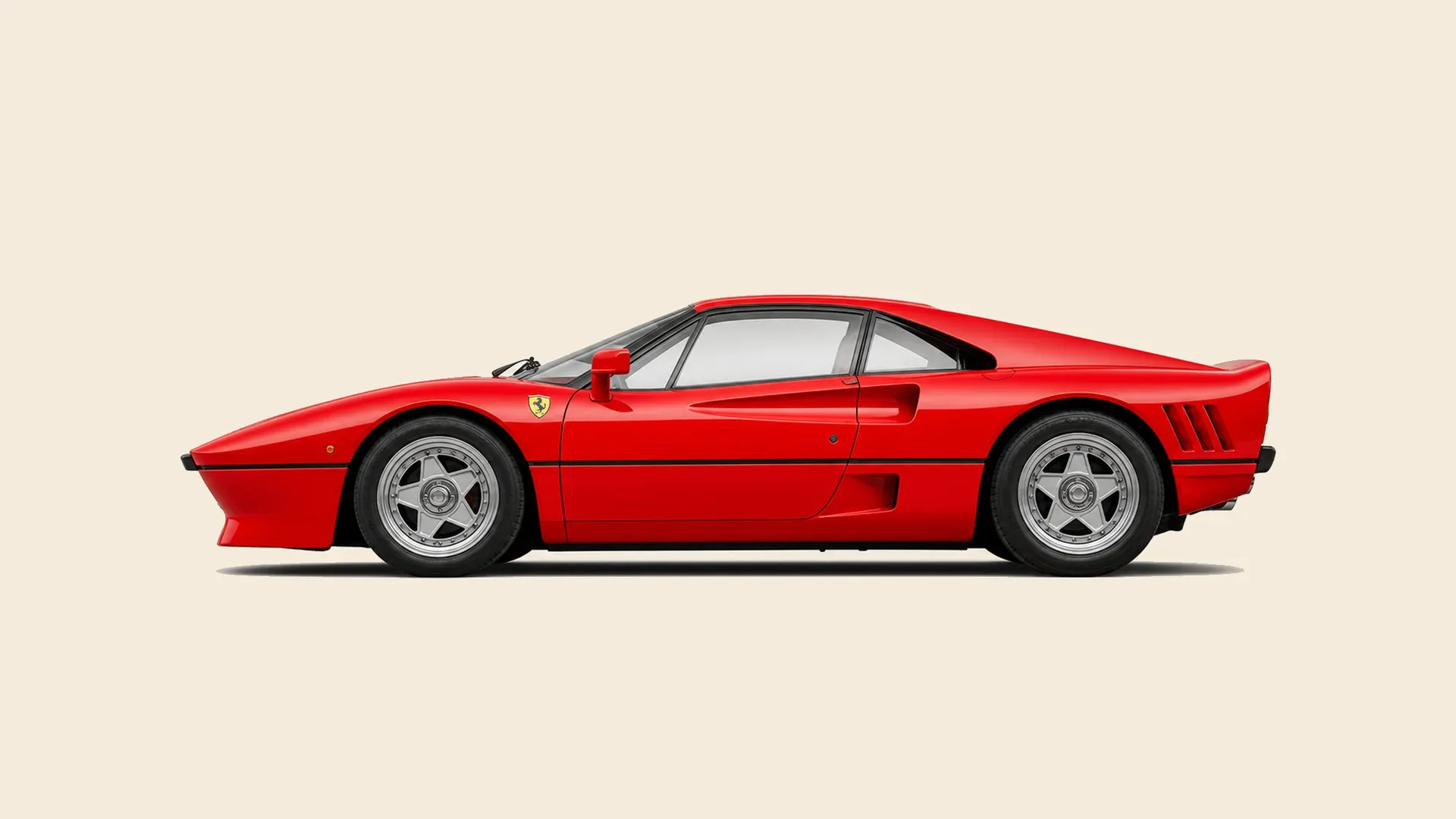
    The 288 GTO establishes the turbocharged mid-engined foundation that leads toward the F40.

  2. 1986

    Group B context collapses

    The 288 GTO Evoluzione’s intended competition logic becomes a foundation for a road car rather than a full works racing programme.

  3. 1987

    Ferrari F40 launched

    Ferrari presents the F40 as its 40th anniversary supercar.

  4. 1988

    Enzo Ferrari dies

    The F40 becomes the final Ferrari personally approved by the company founder.

  5. 1989

    F40 LM competition development

    Michelotto-developed F40 LM cars begin extending the car toward endurance racing.

  6. 1992

    Road-car production ends by common market framing

    Classic.com lists the F40 market as 1987 to 1992.

  7. 1995

    Ferrari F50 follows

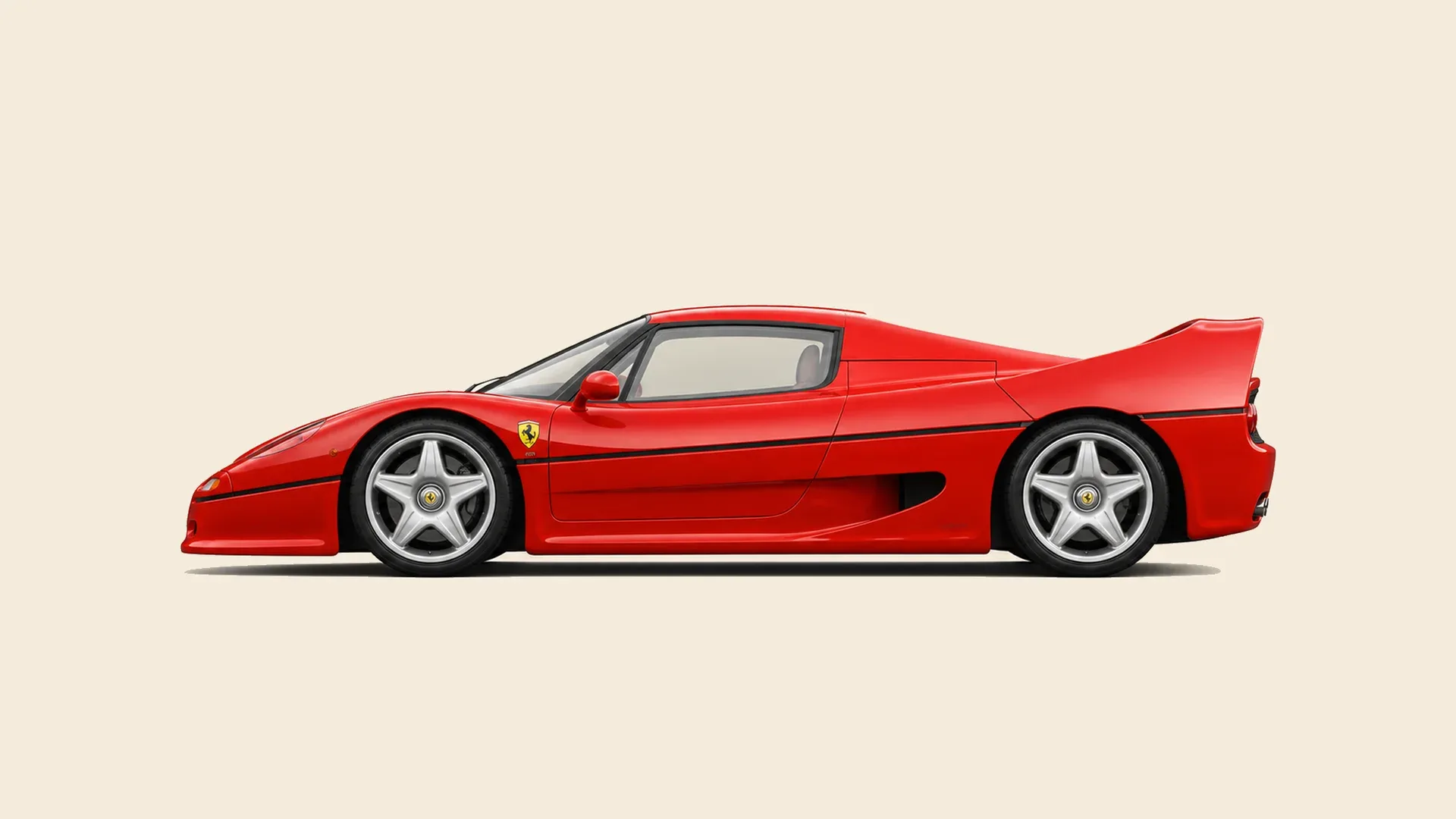
    The F50 succeeds the F40 as Ferrari’s next limited-series supercar.

↓ Read deeper
The 288 GTO Evoluzione provided the conceptual bridge. Its racing future disappeared, but its engineering lessons survived. The F40 was not a clean cultural break; it was the road-going conclusion of an abandoned competition idea. In 1987, the car arrived with Enzo Ferrari still alive. In 1988, Enzo died, and the F40’s significance changed immediately. What had been an anniversary car became a testament. The later LM and competition derivatives extended the car’s life beyond the road model, carrying its shape and power into the racing mythology that many assumed it had always possessed.
Provenance

Who has owned one?

The Ferrari F40 has documented notable ownership examples including Nigel Mansell’s 1989 Ferrari F40.

Nigel Mansell’s 1989 Ferrari F40
Documented ex-Nigel Mansell F40 auctioned by Bonhams in 2014.
verified
Ferrari F40 LM by Michelotto
Competition derivatives prepared by Michelotto form the most historically important public F40 examples outside the road cars.
verified
Low-mileage Classiche-certified F40s
Collector-market examples with strong documentation drive modern F40 valuation narratives.
verified
↓ Read deeper
Claim: Nigel Mansell owned a 1989 Ferrari F40 that was publicly auctioned by Bonhams in 2014. verified Claim: The Mansell F40 became part of the early F40 speculation story, with later ownership history reports discussing a £1,000,000 sale and legal dispute. attributed Claim: Public claims that other celebrities owned F40s should be listed only when supported by auction provenance, direct owner statement, or reputable documentation. verified Claim: Notable F40 LM and competition examples should be documented by chassis number and race history, not by model reputation alone. verified
On Screen & In Games

Where have you seen it?

The Ferrari F40 appears in major driving games including Gran Turismo 7 and Forza Motorsport.

🎮 Game · 2022verified
Gran Turismo 7
Official car list includes the Ferrari F40 ’92.
🎮 Game · 2023verified
Forza Motorsport
Official car list includes the 1987 Ferrari F40.
🎮 Game · 2023verified
Forza Motorsport
Official car list includes the 1989 Ferrari F40 Competizione.
🎬 Film · Unverifiedverified
Major film appearances
No major verified film role for a production Ferrari F40 should be listed without direct production evidence.
↓ Read deeper
Claim: Gran Turismo 7 includes the Ferrari F40 ’92. verified Claim: Forza Motorsport includes the 1987 Ferrari F40 and the 1989 Ferrari F40 Competizione in its official car list. verified Claim: No major verified film role for a production Ferrari F40 should be listed without direct evidence, because replicas and kit cars are often confused with real F40s. verified In games, the F40 communicates a complete character: turbo lag, lightness, rear-drive sensitivity, and the feeling that even a digital version should be treated with respect.
The Stories

What are the stories behind it?

The Ferrari F40 is notable for its Enzo Ferrari connection, 13-month development, composite construction, twin-turbo V8, early market speculation, and long collector afterlife.

Enzo’s Final Approval

verified

The F40 became the last Ferrari personally commissioned and approved by Enzo Ferrari.

Thirteen Months of Pressure

verified

The F40 was developed in an unusually compressed 13-month period according to creator testimony.

The Composite Ferrari

verified

Its tubular structure, Kevlar panels, carbon-fibre pieces and Plexiglas helped make the F40 feel closer to racing practice than luxury tradition.

Benuzzi’s Discipline

verified

Dario Benuzzi’s testing helped turn a difficult prototype into a raw but usable road car.

The Speculation Ferrari

interpretation

The F40’s early demand and later collector surge made it one of the clearest examples of Ferrari supercar market mythology.

The Digital Poster Car

verified

Gran Turismo and Forza helped preserve the F40 as a playable myth for generations beyond the original poster era.

↓ Read deeper
Story: The F40 was the last Ferrari personally commissioned and approved by Enzo Ferrari. verified Story: Top Gear’s creator account records that the F40 was developed in an unusually brief 13-month period. verified Story: The F40 used a tubular steel space-frame, bonded Kevlar panels, and carbon-fibre doors, bonnet, and boot lid. verified Story: Ferrari test driver Dario Benuzzi said the F40 had no power steering, power brakes, or electronic devices, and demanded skill and commitment. verified Story: As of July 2026, Classic.com records a highest sale of $6,600,000 for a 1992 Ferrari F40. verified
Connected Graph

PERSON

ENGINEERED BYNicola Materazzi
PERSONSTUB
DESIGNED BYPininfarina
PERSONSTUB
Encyclopedia
16 sections
engine-powertrain

What powers it?

Editorial inference

The Ferrari F40 is powered by the Tipo F120A/F120D 2,936 cc twin-turbocharged V8 engine paired with a five-speed manual gearbox.

The F40’s V8 is not smooth in the grand touring sense. It is compact, turbocharged, dry in character, and violently effective. Its music is not the operatic twelve-cylinder Ferrari voice; it is mechanical breath under pressure. Ferrari lists the F40’s displacement at 2,936.25 cc and maximum power at 351.5 kW at 7,000 rpm, while period and collector literature commonly translate this into approximately 478 PS or 471–478 hp depending on unit convention.
people-behind

Who built it?

Editorial inference

The Ferrari F40 was personally approved by Enzo Ferrari, engineered under Nicola Materazzi’s direction, developed with Ferrari special-projects and test-driver input, and styled by Pininfarina.

The F40 is one of the rare cars where authorship matters almost as much as specification. Enzo Ferrari gave it the final blessing. Nicola Materazzi is widely associated with its engineering. Pininfarina gave it the shape. Dario Benuzzi helped make it driveable. Top Gear’s creator account identifies Ermanno Bonfiglioli as Ferrari’s head of special projects in the 1980s and records Dario Benuzzi’s role in testing and refining the car; it also quotes the creators discussing the car’s short development, aerodynamic work, and no-compromise character.
ownership-reality

What is it like to own?

Editorial inference

Owning a Ferrari F40 requires specialist care for its twin-turbo V8, composite bodywork, fuel system, cooling system, suspension, brakes, tyres, and provenance-sensitive originality.

The F40 is mechanically honest, but it is not simple to own. Its value, age, materials, and performance demand serious stewardship. This is not a car for casual maintenance or decorative storage alone. Classic.com’s overview highlights the car’s lightweight construction and minimal interior, while Ferrari’s technical data confirms the performance level that makes proper condition essential.
production-rarity

How rare is it?

Editorial inference

Ferrari F40 production is generally recorded at approximately 1,311 to 1,315 cars, with source differences depending on road and competition-car inclusion.

The F40 is rare, but not in the way a 288 GTO or F50 is rare. It was originally intended as a much smaller run, but demand and market fever expanded production. That is part of its story: a car meant as a sharp anniversary statement became a global object of desire. Classic.com lists the Ferrari F40 market as 1987 to 1992 and states that only 1,315 examples were built, while other sources commonly cite 1,311.
rivals-comparisons

What did it compete against?

Editorial inference

The Ferrari F40 is most often compared with the Porsche 959, Lamborghini Countach, Ferrari 288 GTO, Ferrari F50, Jaguar XJ220, Bugatti EB110, and McLaren F1.

The F40’s natural rival is the Porsche 959, because together they define two opposing philosophies of late-1980s performance. The 959 was complex, intelligent, all-wheel-drive, and technologically prophetic. The F40 was light, loud, turbocharged, rear-drive, and deliberately exposed. The Countach supplied visual theatre. The Jaguar XJ220 and Bugatti EB110 later joined the top-speed and exotic-technology conversation. The McLaren F1 changed the entire scale of the argument in the 1990s.
collector-market

What is it worth today?

Editorial inferenceas of 2026

As of July 2026, Classic.com lists the Ferrari F40 CMB at $3,059,057 and an average sale price of $2,831,873.

As of July 2026, the F40 is a blue-chip modern Ferrari. Its market value reflects more than rarity: Enzo provenance, manual gearbox, turbocharged violence, composite construction, and its position as the definitive poster Ferrari of its era. Classic.com lists the Ferrari F40 CMB at $3,059,057, an average sale price of $2,831,873, and a highest recorded sale of $6,600,000 for a 1992 Ferrari F40 sold on January 17, 2026.
motorsport-competition

Did it race?

Editorial inference

The Ferrari F40 was not originally a full factory racing car, but it produced Michelotto-developed competition derivatives including the F40 LM.

The F40’s motorsport story is complicated because the road car feels like a racing car even when it is not one. Its design language, materials, and brutality invite competition mythology, but the standard F40 was fundamentally a road car. The racing story belongs mainly to Michelotto-developed versions such as the F40 LM and later competition cars. RM Sotheby’s describes one 1993 F40 LM by Michelotto as the 14th of 19 examples prepared and built to GTC specifications.
legacy

What did it leave behind?

Editorial inference

The Ferrari F40 is remembered as Enzo Ferrari’s final personally approved road car and one of the defining supercars of the 20th century.

The F40’s legacy is unusually complete. It is a technical object, a cultural object, a market object, and an emotional object. It is the car people invoke when they want to describe a Ferrari without compromise. Ferrari’s own magazine describes the F40 as Enzo’s final masterpiece and the last Ferrari personally commissioned and approved by Enzo Ferrari.
machine-avatar

What does it represent?

Editorial inference

As an Engine Sphere machine-avatar, the Ferrari F40 represents Enzo-era finality, twin-turbo force, composite lightness, and analogue danger.

The F40 avatar is not a gentleman. It is a red warning flare with a gated shifter, Kevlar skin, and turbo breath. It does not persuade; it arrives. Its eyes rise from the nose like an old racing memory. Its wing is a blade. Its rear grille glows with heat. Its voice is not singing; it is pressure escaping from a machine that has very little interest in softness.
dynamics

How does it drive?

Editorial inference

The Ferrari F40 is dynamically defined by low weight, rear-wheel drive, twin-turbo power delivery, manual steering, and the absence of electronic driver aids.

The F40 is not a car that flatters indifference. It expects the driver to understand boost, grip, weight transfer, and fear. It was built before supercars became electronically managed experiences, and it remains famous because of that exposure. Top Gear’s account quotes Ferrari test driver Dario Benuzzi saying the car had no power steering, power brakes, or electronic devices, and that it demanded skill and commitment from the driver.
aerodynamics

How does it cut through air?

Editorial inference

The Ferrari F40 uses functional aerodynamic features including a low nose, NACA ducts, vented bodywork, rear cooling outlets, and a fixed rear wing.

The F40’s aerodynamics are inseparable from its identity. No piece of the car looks decorative. The body is a system of openings and surfaces designed to feed air, release heat, reduce lift, and make 324 km/h possible. Ferrari’s own technical page lists the F40’s top speed at 324 km/h, while Top Gear’s creator account links the car’s wind-tunnel development and aerodynamic features directly to its ability to exceed 320 km/h.
interior-experience

What is it like inside?

Editorial inference

The Ferrari F40 has a stripped two-seat interior with a gated manual shifter, minimal trim, lightweight door panels, and few comfort features.

The F40’s interior is less a cabin than a pact. It offers a seat, a steering wheel, pedals, a gated shifter, instruments, and very little apology. The absence of luxury is not an omission; it is the point. Classic.com’s market overview describes the F40 as having no radio, carpet, or inner-door panels, and notes its plastic windscreen reference in the broader lightweight construction context.
performance-numbers

How fast is it?

Editorial inference

The Ferrari F40 has 351.5 kW, a 324 km/h top speed, and a Ferrari-claimed 0–100 km/h time of 4.1 seconds.

The F40’s numbers are historically important because they broke a psychological barrier. A production Ferrari capable of more than 320 km/h was not simply a fast car; it was a public declaration that the supercar had entered a new speed age. Ferrari lists the F40 at 351.5 kW, 2,936.25 cc, 324 km/h, and 0–100 km/h in 4.1 seconds.
variants-editions

What versions were made?

Editorial inference

The Ferrari F40 road car was followed by racing and competition derivatives including the F40 LM, F40 GT, F40 GTE, and F40 Competizione.

The road F40 is the central object, but it quickly attracted competition development. The car’s ingredients were already close to motorsport: low mass, turbocharged power, composite construction, and extreme cooling demands. The F40 LM was developed by Michelotto for racing use, and auction sources describe 19 examples prepared to LM or Competizione specification.
pop-culture-sightings

What does it mean in culture?

Editorial inference

The Ferrari F40 became a popular-culture object through posters, magazines, television, online video, auctions, and major driving games including Gran Turismo 7 and Forza Motorsport.

The F40 is one of the bedroom-poster cars that never needed explanation. Its silhouette could carry an entire fantasy: red paint, fixed wing, pop-up headlights, air intakes, and the promise that adulthood might contain machinery like this. Gran Turismo 7 officially lists the Ferrari F40 ’92 and describes it as the last road car worked on by Enzo Ferrari and a special model commemorating Ferrari’s 40th anniversary.
connected-entities

What does it connect to?

Editorial inference

No connected entities were recorded for Ferrari F40 in the supplied Engine Sphere prompt.

The supplied Engine Sphere prompt records no connected entities for Ferrari F40, so graph relationships should be treated as recommended additions rather than pre-existing links. Recommended graph links include Ferrari, Enzo Ferrari, Nicola Materazzi, Pininfarina, Pietro Camardella, Aldo Brovarone, Leonardo Fioravanti, Dario Benuzzi, Ermanno Bonfiglioli, Ferrari 288 GTO, 288 GTO Evoluzione, Ferrari F50, Michelotto, F40 LM, Porsche 959, Lamborghini Countach, Jaguar XJ220, Bugatti EB110, McLaren F1, Gran Turismo 7, and Forza Motorsport.
Sources & Confidence
The F40 is well documented, but its mythology is so strong that every claim needs careful framing. Specifications should come from Ferrari. Market values should be date-qualified. Designer attribution should be handled with Pininfarina context. Racing claims should be separated between road car and LM/Competizione derivatives. The 27-section structure and parser requirements for this entry come from the supplied Engine Sphere prompt.
Questions readers ask

What engine does the Ferrari F40 use?

The Ferrari F40 uses a 2,936 cc twin-turbocharged V8 from the F120 engine family.

How much power does the Ferrari F40 make?

Ferrari lists maximum power at 351.5 kW at 7,000 rpm, commonly cited as approximately 478 PS.

How fast is the Ferrari F40?

Ferrari lists a 324 km/h top speed and 0–100 km/h in 4.1 seconds.

How many Ferrari F40s were built?

Production is commonly cited at approximately 1,311 to 1,315 cars depending on source framing.

Was the F40 Enzo Ferrari’s last car?

Yes. It is widely documented as the last Ferrari personally commissioned and approved by Enzo Ferrari.

What transmission does the Ferrari F40 use?

The F40 uses a five-speed manual gearbox.

Who designed the Ferrari F40?

The F40 was styled by Pininfarina; named attributions vary by source, so Pininfarina is the safest primary design credit.

Is the Ferrari F40 collectible?

Yes. As of July 2026, Classic.com lists the Ferrari F40 CMB at $3,059,057.