ENGINE SPHERE
PeopleEnzo Ferrari
Enzo Ferrari
Engine Sphere · Person
Catalogued Entry No. 013

Enzo Ferrari

1898–1988ItalianFOUNDER

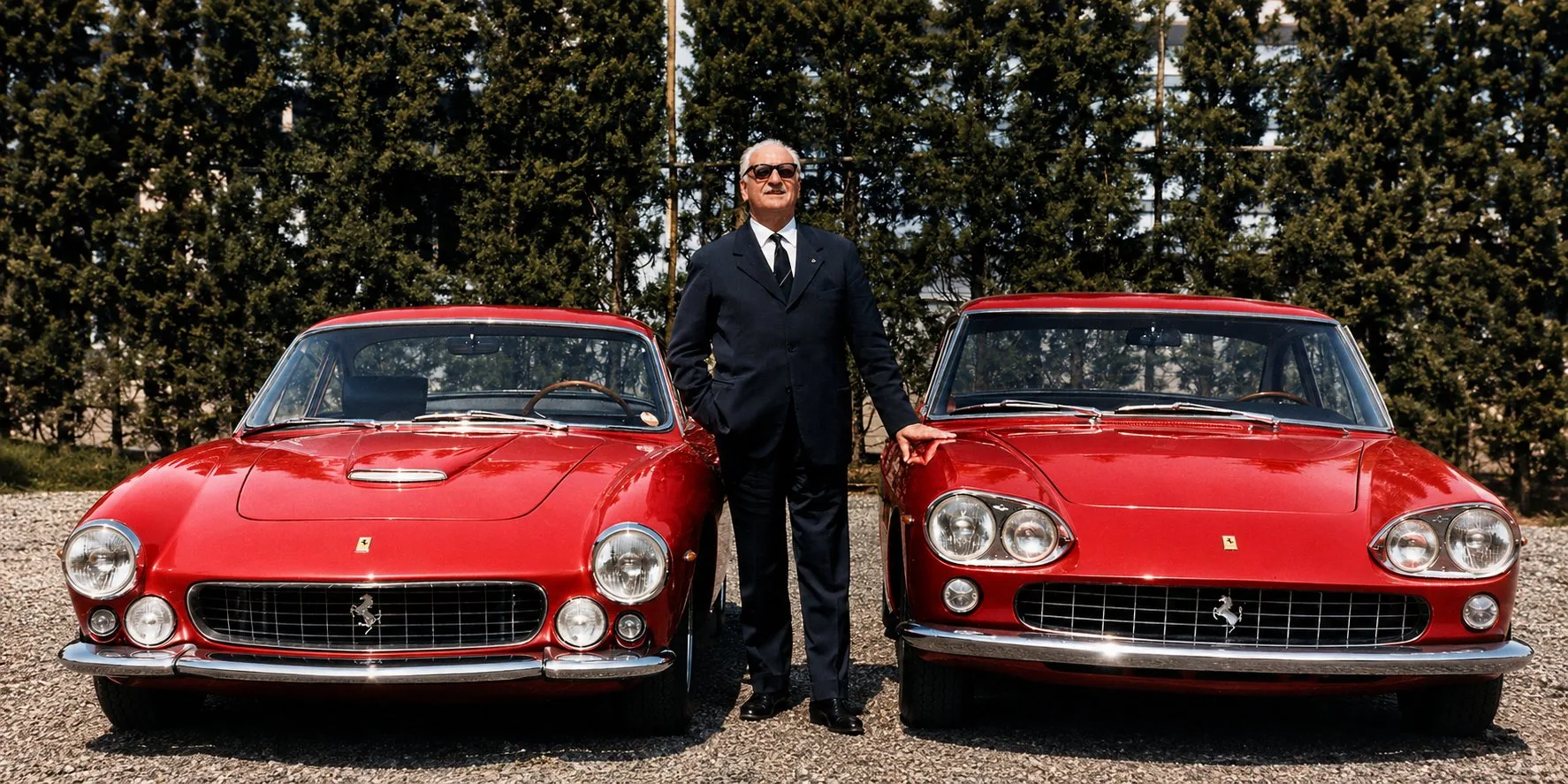
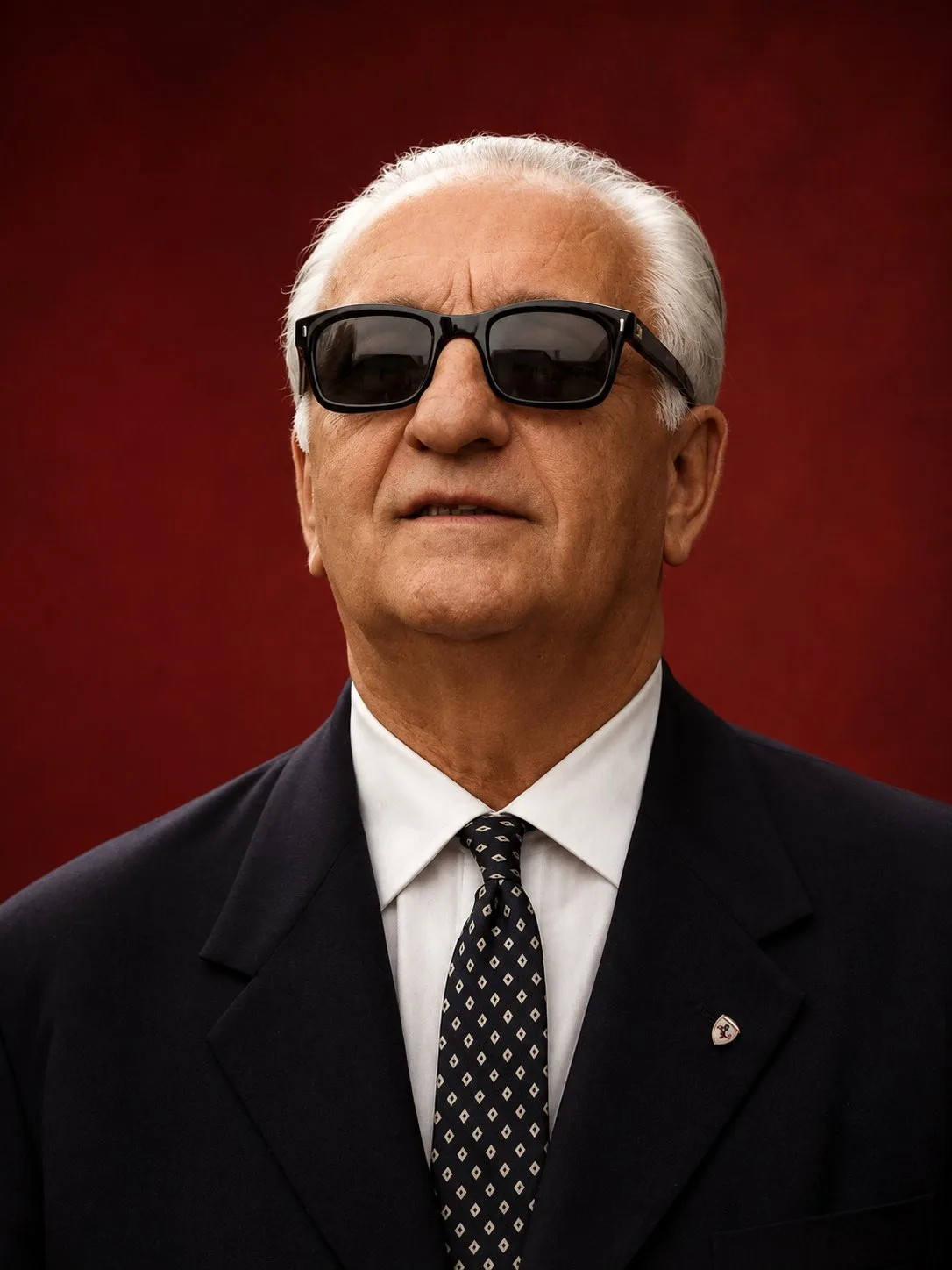
Enzo Ferrari was the Italian founder of Scuderia Ferrari and Ferrari. His career moved from racing driver to organiser, company founder and defining authority behind one of the central marques in automotive history.

The House They Shaped
Formation

Where did it come from?

Enzo Ferrari was born in Modena, Italy, in 1898 and formed his early ambitions around mechanics, racing and the industrial culture of Emilia-Romagna.

Enzo Ferrari’s story begins in Modena, not as an abstract birthplace but as a working environment. His father, Alfredo Ferrari, operated a mechanical workshop, and the young Enzo grew up near the sound and smell of fabrication. That proximity to machinery mattered. It gave him a practical, industrial imagination before he possessed a public career. His childhood encounter with motor racing in Bologna is often treated as the spark. More important is what followed: war, illness, family loss, rejected employment, and the slow passage from tester to racing driver. The mythology of Ferrari is polished red; the origin is much darker, more provincial, and more laborious.
↓ Read deeper
The young Enzo wanted, at different moments, to be an opera singer, a sports journalist, or a racing driver. The eventual result contained traces of all three. Ferrari the man understood voice, publicity and performance. His company became operatic in its emotional register, journalistic in its appetite for reputation, and uncompromisingly competitive in its sporting conduct. The death of his father and brother during the First World War period forced an early confrontation with responsibility. Enzo himself was discharged from military service after illness. These biographical details are not decoration; they help explain the stern economy of his later personality. The old Ferrari rarely appeared casual because his formative years were not casual. Emilia-Romagna also shaped him. Modena, Maranello, Bologna and the surrounding region formed a corridor of workshops, coachbuilders, small manufacturers and sporting roads. Ferrari’s later achievement was global, but its grammar was local: skilled hands, fast roads, family businesses, personal rivalries and pride in mechanical excellence.
What are the stories behind it?

The Prancing Horse

verified

Ferrari's emblem is tied to Francesco Baracca, the Italian First World War aviator, and to the later use of Modena yellow as its field.

Leaving Alfa Romeo

verified

After Alfa Romeo absorbed Scuderia Ferrari's racing activity more closely, Enzo Ferrari left and founded Auto Avio Costruzioni in 1939.

The Ford Negotiations

verified

Ford attempted to acquire Ferrari in 1963, but negotiations failed and the rivalry became linked to Ford's later Le Mans campaign.

Dino Ferrari

verified

The death of Alfredo 'Dino' Ferrari in 1956 became a permanent emotional and technical presence in Ferrari history through the Dino name and engine programme.

The 1957 Mille Miglia

verified

The fatal crash involving Alfonso de Portago during the 1957 Mille Miglia became one of the darkest public episodes associated with Ferrari's racing history.

The Final Commission

verified

The Ferrari F40 was the last Ferrari personally commissioned and approved by Enzo Ferrari before his death in 1988.

Connected Graph

MANUFACTURER

FounderScuderia Ferrari
MANUFACTURERSTUB
FounderAuto Avio Costruzioni
MANUFACTURERSTUB

CAR

Brand ArchitectFerrari F40 (F120)
CAR
Brand ArchitectFerrari 125 S
CARSTUB

THEME

BELONGS TO THEMEFormula One
THEMESTUB
BELONGS TO THEMEItalian Motorsport
THEMESTUB
BELONGS TO THEMEAnalog Supercars
THEMESTUB

MUSEUM

SHOWN AT MUSEUMMuseo Enzo Ferrari
MUSEUMSTUB
Encyclopedia
4 sections
legacy

What did it leave behind?

Editorial inference

Enzo Ferrari’s legacy is the creation of a racing-led carmaker whose identity remains tied to competition, exclusivity and Italian engineering culture.

Enzo Ferrari left behind a company, but also a method of belief. Ferrari became the rare marque in which racing results, road-car desirability and cultural symbolism could reinforce one another for decades. A Ferrari did not merely suggest performance; it suggested proximity to a house that treated competition as a reason for existing. His legacy also contains discomfort. Ferrari’s world was not gentle. It involved risk, fatality, driver politics, financial pressure and a founder whose sense of purpose could appear cold to those caught inside it. To understand Enzo properly is not to soften him. It is to recognise that the beauty of Ferrari was made in a demanding, sometimes severe, human climate.
motorsport-competition

Did it race?

Editorial inference

Enzo Ferrari’s motorsport career moved from driving to founding and directing one of the central racing organisations in automotive history.

Motorsport was not a department of Enzo Ferrari’s life. It was the organising principle. Before Ferrari was a road-car manufacturer, it was a racing concern. Before it was a luxury symbol, it was a paddock identity. That order matters. He drove, but he became important when he stopped driving. His genius lay in making other men’s speed serve an institution. From Alfa Romeo-associated competition to Ferrari’s own post-war racing efforts, he treated victory as both engineering proof and public argument.
myths-misconceptions

What do people get wrong about it?

Editorial inference

The most common misconceptions about Enzo Ferrari concern whether he designed the cars himself, whether he cared only about road cars, and whether the Ferrari myth was created after his death.

Myth: Enzo Ferrari personally designed Ferrari cars. myth Truth: Ferrari employed engineers, designers and coachbuilders; Enzo’s role was founder, organiser, decision-maker and brand authority. verified Myth: Ferrari was born primarily as a luxury road-car company. myth Truth: Ferrari’s road-car business grew from a racing-led enterprise, with road cars helping sustain competition activity. verified
pop-culture-sightings

What does it mean in culture?

Editorial inference

Enzo Ferrari remains a recurring figure in film, documentary, books and games through the cultural identity of Ferrari and the mythology of racing.

Enzo Ferrari’s popular-culture presence does not depend on cameo appearances. verified He appears through the cars, the badge, the factory, the rivalry with Ford, the tragedy of the Mille Miglia and the image of the remote man in dark glasses. verified The public has often met Enzo indirectly, by first meeting the machines. Michael Mann’s 2023 film Ferrari brought Enzo himself back into mainstream cinema, with Adam Driver portraying him during the crisis year of 1957. verified Ford v Ferrari, released in 2019, uses Enzo as a dramatic force in the Ford-Le Mans rivalry, even when the film’s emotional centre sits with Carroll Shelby and Ken Miles. verified
Sources & Confidence
The Enzo Ferrari record requires layered verification. Manufacturer histories are useful, but they should not stand alone. Ferrari’s own materials preserve institutional memory; Alfa Romeo records clarify the pre-Ferrari years; period race entries and contemporary newspapers help separate paddock fact from later legend. The most sensitive areas are authorship, personal motive, family history and famous anecdotes. Where a story is widely repeated but emotionally convenient, it should be treated with restraint until supported by primary or near-primary documentation.
Questions readers ask

Who was Enzo Ferrari?

Enzo Ferrari was an Italian racing driver, motorsport organiser and company founder who created Scuderia Ferrari and Ferrari.

Did Enzo Ferrari design Ferrari cars himself?

No. Ferrari cars were designed and engineered by specialist designers, engineers and coachbuilders. Enzo Ferrari acted as founder, decision-maker and brand authority.

What was Enzo Ferrari’s connection to Alfa Romeo?

He drove for Alfa Romeo, worked with its racing activity, and founded Scuderia Ferrari to race Alfa Romeo cars before eventually leaving and creating his own company.

What was the first Ferrari car?

The Ferrari 125 S of 1947 was the first car to wear the Ferrari badge.

Why is the Prancing Horse Ferrari’s symbol?

The emblem is connected to Francesco Baracca, an Italian First World War aviator, whose family encouraged Ferrari to use the horse symbol; Ferrari later used it with a yellow Modena background.

What happened between Ford and Ferrari?

Ford attempted to buy Ferrari in 1963, but the deal failed. Ford then pursued a racing programme that defeated Ferrari at Le Mans later in the decade.

What was the last Ferrari approved by Enzo Ferrari?

The Ferrari F40 was the last Ferrari personally commissioned and approved by Enzo Ferrari.

Enzo Ferrari | Founder of Ferrari and Scuderia Ferrari | Engine Sphere